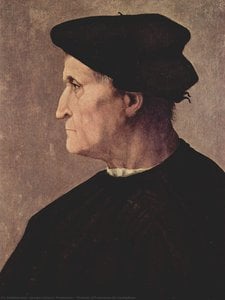
Pontormo, 1494 – 1556

Pontormo Paintings: The 100 Most Famous Works, Ranked

Pontormo's most famous painting is Deposition. With Visitation (1528) and Halberdier (1520), it completes the three works everyone recognises. Our catalogue lists 176 works by Pontormo; the 100 below are the ones the world looks at most, each with its year, the museum that holds it and why it matters.

Ranked by our popularity score, which combines the searches, visits and orders for each work. Updated October 2026. Every masterpiece on this page can be ordered as a museum-quality, hand-painted oil reproduction or a fine art print, at the size you choose.

Portrait of Pontormo
Pontormo · 1494 – 1556
Born · died
1494 – 1556, Empoli
Movement
Mannerism
Works in our catalogue
176
Most famous
Deposition
Most works at
Galleria degli Uffizi

The 10 most famous Pontormo paintings

Deposition by Pontormo
1

Deposition

Tempera On Panel

Pontormo executed the Deposition between 1525 and 1528. Commissioned by Lodovico Capponi in 1526, the work occupies the Capponi Chapel within the Church of Santa Felicita in Florence. The subject matter focuses on the deposition of Christ's body following the crucifixion.

Visitation (1528) by Pontormo
2

Visitation

1528 · Fresco

Jacopo Carucci, known as Pontormo, created this exquisite fresco in 1528, capturing a moment of profound religious significance with his signature Mannerist style. The "Visitation" is a testament to Pontormo's mastery of composition, color, and emotional depth, making it a sought-after piece for art enthusiasts and collectors alike.

Halberdier (1520) by Pontormo
3

Halberdier

1520 · Oil On Canvas · J. Paul Getty Museum, Los Angeles

Captivating Portrait of Strength and Individuality This striking artwork captures a commanding figure, embodying resilience, confidence, and cultural pride. The subject, a young man dressed in traditional attire and holding a halberd, exudes a sense of authority and dignity. His direct gaze engages viewers immediately, inviting them into a moment of introspection and admiration. The artist’s masterful portrayal emphasizes the subject’s physical presence and emotional depth, making it a compelling…

Virgin and Child, known as the Madonna del Libro (1545) by Pontormo
4

Virgin and Child, known as the Madonna del Libro

1545 · Oil On Panel · Yale University Art Gallery, New Haven

The painting presents an intimate, oval-shaped arrangement of two figures set against a dark, indeterminate background. The Virgin Mary occupies the upper portion of the frame, her head tilted slightly as she looks toward the Christ Child. Her skin possesses a smooth, porcelain-like texture, illuminated by a focused light source that creates a sharp contrast against the shadows. She wears a deep crimson red garment, while a dark, midnight blue…

Study of a Woman, possibly Maria Salviati (1543) by Pontormo
5

Study of a Woman, possibly Maria Salviati

1543 · Chalk · Galleria degli Uffizi, Florence

To gaze upon this study of a woman is to step directly into the charged atmosphere of mid-sixteenth-century Florence. It is not merely a portrait, but an intimate psychological excavation, capturing the ephemeral grace and profound introspection characteristic of the Italian Mannerist period. The subject, rendered with exquisite delicacy, possesses a serene yet enigmatic quality; her direct gaze seems to meet the viewer's own, inviting a silent communion across the…

Ten thousand martyrs (1529) by Pontormo
6

Ten thousand martyrs

1529 · Oil On Canvas · Galleria degli Uffizi, Florence

Jacopo Pontormo's "Ten Thousand Martyrs," painted in 1529, is not merely a depiction of historical suffering; it’s a visceral plunge into the heart of religious trauma and defiant resistance. This monumental fresco, now rendered in exquisite detail as a hand-painted reproduction by WahooArt.com, captures a pivotal moment from early Christian history – the brutal execution of ten thousand soldiers who had converted to Christianity during the reign of Emperor Decius.…

Supper at Emmaus by Pontormo
7

Supper at Emmaus

Oil On Canvas

The work before us is Supper at Emmaus, a significant oil on canvas painted by Pontormo in 1525. This piece captures the specific biblical moment of the apparition of Christ to the Apostles, a narrative drawn from the Gospel of Luke, specifically chapter 24, verses 13 through 35. It is a scene of profound recognition, documenting the instant the disciples realize the identity of the man they are dining with…

Portrait of Francesco da Castiglione (1520) by Pontormo
8

Portrait of Francesco da Castiglione

1520 · Oil On Canvas · Palazzo Pitti, Florence

The year is 1520, and within the bustling artistic landscape of Florence, Jacopo Carucci Pontormo—a name now inextricably linked with both innovation and melancholy—crafted a portrait that transcends mere likeness. “Portrait of Francesco da Castiglione” isn’t simply a depiction of an elderly man; it's a carefully constructed meditation on age, wisdom, and the quiet dignity of a life well-lived. The painting immediately draws the eye with its rich, earthy palette…

Cupid and Apollo (1513) by Pontormo
9

Cupid and Apollo

1513 · Oil On Panel

Cupid and Apollo is a painting by the Italian Mannerist painter Pontormo. The work depicts a mythological encounter between the figures of Apollo and Cupid. This composition centers on the interaction between a standing male figure in classical armor on the left and a winged youth on the right. The scene is set against a dark, void-like background that isolates the two subjects.

Apollo and Daphne (1513) by Pontormo
10

Apollo and Daphne

1513 · Oil

In this dramatic scene by Pontormo, the air crackles with the sudden, frantic energy of a chase reaching its breaking point. The painting, created about 1513, captures the very moment of metamorphosis from Ovid's myth. Apollo reaches out, his fingers straining to grasp the nymph, but his pursuit is met with a terrifying transformation. Daphne is no longer merely a fleeing woman; she is caught in the midst of becoming…

Pontormo, paintings 11 to 100

Visitation (1515) by Pontormo
#12

Visitation

1515

The air in the fresco feels heavy, thick with the dust of lime and the silence of a shared secret. Within a shallow, arched space, the figures of…

Saint Francis (1517) by Pontormo
#13

Saint Francis

1517

This work, titled Saint Francis, was executed by the Italian artist Pontormo around 1517. The subject is depicted in a kneeling posture, captured in a moment of prayer…

Order a reproduction →
Study of nude (1518) by Pontormo
#15

Study of nude

1518

We are looking at a Study of nude by the Florentine artist Pontormo. This particular work, created about 1518, offers a glimpse into the artist's process during the…

Bring it home →
Archangel Michael (1519) by Pontormo
#16

Archangel Michael

1519 · St Andreas Picture Gallery

The Archangel Michael emerges from the shadows of history, a figure rendered by the hand of Pontormo. This painting, created about 1519, captures a moment of celestial conflict…

Order a reproduction →
Annunciation (1527) by Pontormo
#18

Annunciation

1527

Executed in 1527, this frescoed scene occupies the wall of the Capponi Chapel in the church of Santa Felicita, Florence, Italy. It surrounds a window, creating a spatial…

Commission a hand-painted copy →
The Holy Family (1525) by Pontormo
#20

The Holy Family

1525

The Holy Family by Pontormo depicts a traditional religious scene centered on the figures of Mary, Joseph, and Jesus. Executed in about 1525, the oil on canvas work…

Order a reproduction →
Noli me tangere (1531) by Pontormo
#21

Noli me tangere

1531 · Casa Buonarroti

The scene captures the moment of recognition between the resurrected Christ and Mary Magdalene. Set against a hazy, atmospheric landscape, the two figures occupy a space that feels…

Bring it home →
Alessandro de' Medici (1535) by Pontormo
#26

Alessandro de' Medici

1535 · Art Institute of Chicago

In the quiet, tension-filled corridors of 16th-century Florence, a new kind of portraiture began to emerge—one that sought not to flatter the sitter with outward glory, but to…

Bring it home →
Portrait of Two Friends by Pontormo
#28

Portrait of Two Friends

Two men occupy a narrow, intimate space, their presence pressing close against the viewer as if we have just stepped into their private circle. One man, wearing a…

Bring it home →
Madonna and Child (1532) by Pontormo
#29

Madonna and Child

1532 · Museum of John Paul II Collection

Madonna and Child is a religious painting by the Florentine Mannerist Jacopo Pontormo. Executed in 1532, the work emerged during a period of significant stylistic transition in the…

Order a reproduction →
Portrait of Alessandro de' Medici (1550) by Pontormo
#30

Portrait of Alessandro de' Medici

1550 · National Museum of Ancient Art

The Portrait of Alessandro de' Medici by Pontormo dates to 1535. This work captures the likeness of Alessandro de' Medici, a figure of significant political weight in sixteenth-century…

Order a reproduction →
St. Sebastian (1515) by Pontormo
#31

St. Sebastian

1515 · Musée des Beaux-Arts de Dijon

Jacopo Pontormo's 1515 depiction of Saint Sebastian is not merely a portrait; it’s an immersion into the heart of Mannerist emotion, a profound exploration of faith, suffering, and…

Bring it home →
Reclining Male Nude (1540) by Pontormo
#32

Reclining Male Nude

1540 · National Gallery of Canada

The image before you – Jacopo Carucci’s “Reclining Male Nude” (1540) – isn't merely a depiction of the human form; it’s a carefully constructed meditation on stillness, vulnerability,…

Bring it home →
Supper at Emmaus (1525) by Pontormo
#49

Supper at Emmaus

1525 · Galleria degli Uffizi

Jacopo Carucci's *Supper at Emmaus*, painted in 1525, is more than just a depiction of a biblical scene; it’s a profound meditation on faith, betrayal, and the human…

Order a reproduction →
Cosimo I de' Medici (1537) by Pontormo
#50

Cosimo I de' Medici

1537 · Palazzo Pitti

Jacopo Carucci, universally known as Pontormo, gifted Florence with an extraordinary series of portraits during the tumultuous years of the late 16th century. Among these, his depiction of…

Bring it home →

Pontormo's paintings by period

The subjects Pontormo painted most

The four subjects that return most often among these masterpieces, with the finest example of each.

Where to see Pontormo's paintings

The 8 museums that hold the most of the paintings on this page.

Museum City Works by Pontormo Paintings from this list
Galleria degli Uffizi, FlorenceGalleria degli Uffizi Florence 10 Study of a Woman, possibly Maria Salviati, Ten thousand martyrs, Birth of John the Baptist
Palazzo Pitti, FlorencePalazzo Pitti Florence 3 Portrait of Francesco da Castiglione, Cosimo I de' Medici
J. Paul Getty Museum, Los AngelesJ. Paul Getty Museum Los Angeles 1 Halberdier
Yale University Art Gallery, New HavenYale University Art Gallery New Haven 1 Virgin and Child, known as the Madonna del Libro
St Andreas Picture Gallery, EmpoliSt Andreas Picture Gallery Empoli 1 Archangel Michael
Casa Buonarroti, FlorenceCasa Buonarroti Florence 1 Noli me tangere
Collezione Vittorio Cini, VeniceCollezione Vittorio Cini Venice 1 Portrait of Two Friends
Art Institute of Chicago, ChicagoArt Institute of Chicago Chicago 1 Alessandro de' Medici

Pontormo's most famous painting of each decade

  1. 1510s
    Cupid and Apollo (1513) by Pontormo
    No. 9 of 100

    Cupid and Apollo

    Age 16 – 25

    Cupid and Apollo is a painting by the Italian Mannerist painter Pontormo. The work depicts a mythological encounter between the figures of Apollo and Cupid. This composition centers…

  2. 1520s
    Visitation (1528) by Pontormo
    Rank 2 / 100

    Visitation

    Age 26 – 35

    Jacopo Carucci, known as Pontormo, created this exquisite fresco in 1528, capturing a moment of profound religious significance with his signature Mannerist style. The "Visitation" is a testament…

  3. 1530s
    Noli me tangere (1531) by Pontormo
    Rank 21 / 100

    Noli me tangere

    Age 36 – 45 · Casa Buonarroti

    The scene captures the moment of recognition between the resurrected Christ and Mary Magdalene. Set against a hazy, atmospheric landscape, the two figures occupy a space that feels…

  4. 1540s
    Virgin and Child, known as the Madonna del Libro (1545) by Pontormo
    No. 4 of 100

    Virgin and Child, known as the Madonna del Libro

    Age 46 – 55 · Yale University Art Gallery

    The painting presents an intimate, oval-shaped arrangement of two figures set against a dark, indeterminate background. The Virgin Mary occupies the upper portion of the frame, her head…

  5. 1550s
    Porträt des Giovanni della Casa (1503-1556) (1550) by Pontormo
    #24 of 100

    Porträt des Giovanni della Casa (1503-1556)

    Age 56 – 62

    The man sits in a quiet, heavy stillness, his gaze meeting the observer with a weight that feels both intellectual and deeply personal. He is positioned in a…

Questions about Pontormo's paintings

What is Pontormo's most famous painting?Show the answer

Deposition. Next come Visitation (1528) and Halberdier (1520).

What are the top 10 paintings by Pontormo?Show the answer

Deposition, Visitation, Halberdier, Virgin and Child, known as the Madonna del Libro, Study of a Woman, possibly Maria Salviati, Ten thousand martyrs, Supper at Emmaus, Portrait of Francesco da Castiglione, Cupid and Apollo and Apollo and Daphne. The ranking above gives the year and the museum of each.

How many paintings did Pontormo make?Show the answer

Our catalogue lists 176 works by Pontormo, dated from 1513 to 1550.

Where are Pontormo's most famous paintings?Show the answer

Most of them are in Galleria degli Uffizi (Florence), Palazzo Pitti (Florence) and J. Paul Getty Museum (Los Angeles). The table above lists the museums one by one.

When did Pontormo paint the most famous works?Show the answer

In 1520s: 21 of the 100 works on this page date from then, among them Visitation.

What are Pontormo's earliest and latest famous paintings?Show the answer

The earliest on this page is Cupid and Apollo (1513), the latest Porträt des Giovanni della Casa (1503-1556) (1550).

What did Pontormo paint most often?Show the answer

Man (11), Renaissance (10) and Woman (7), among the 100 works on this page.

What medium did Pontormo use most?Show the answer

Oil On Panel: 11 of the 100 works on this page.

Which art movement does Pontormo belong to?Show the answer

Mannerism, as the paintings on this page show.

Which Pontormo paintings can I see at the Galleria degli Uffizi?Show the answer

Study of a Woman, possibly Maria Salviati, Ten thousand martyrs and Birth of John the Baptist are among the 6 works on this page held by the Galleria degli Uffizi, Florence.

Can I buy a reproduction of a Pontormo painting?Show the answer

Yes. Every painting on this page can be ordered as a museum-quality, hand-painted oil reproduction or a fine art print, in the size you choose, from the painting's own page.

About Pontormo

The Melancholy Visionary: The Life and Legacy of Jacopo Pontormo

Jacopo Carucci, known to history by the evocative moniker Pontormo, was an artist whose brush captured the very essence of transition. Born in the small Tuscan village of Pontorme around 1494, his early life was marked by a profound sense of solitude and melancholy, qualities that would later infuse his canvases with an unparalleled psychological depth. As a young apprentice in Florence, he moved through a world of shifting artistic paradigms, eventually emerging as a central figure of the Florentine Mannerist movement. Unlike the masters of the High Renaissance who sought perfection through balance and mathematical harmony, Pontormo looked inward, seeking to express the turbulent, often unsettling complexities of the human soul. His formative years were shaped by the shadows of giants. Under the tutelage of Domenico del Pollaiuolo and the monumental influence of Michelangelo Buonarroti, he mastered the anatomical precision required of a Renaissance master, yet he possessed an irrepressible urge to distort that very reality for emotional effect. He drew inspiration not only from the sculptural weight of Michelangelo but also from the intricate, emotive engravings of Albrecht Dürer. This unique synthesis of Italian form and Northern European expressive detail allowed him to pioneer a style where figures seemed to lose their tether to gravity, drifting through ambiguous, dreamlike spaces.

The Architecture of Mannerism: Style and Innovation

To witness a Pontormo painting is to enter a realm where the familiar laws of physics and perspective are suspended. His work represents a deliberate departure from the serene, perspectival regularity of his predecessors. In masterpieces such as his "Visitation" or the haunting "Deposition," one observes the hallmarks of his revolutionary Mannerist aesthetic: elongated limbs, twining and unnatural poses, and a palette of vibrant, almost acidic colors that clash and shimmer with an otherworldly light. He replaced the stable, triangular compositions of the Renaissance with swirling, crowded arrangements that evoke a sense of restless energy and spiritual unrest. The technical brilliance of Pontormo lay in his ability to use color and form as psychological tools. His figures often appear to float within uncertain environments, unhampered by weight, creating a sense of profound instability. This was not mere artifice; it was a deliberate attempt to convey the spiritual anxieties of an era caught between the certainties of the Renaissance and the looming drama of the Baroque. Whether through the dramatic light in his "Supper at Emmaus" or the stark, emotive intensity found in his studies of Christ, Pontormo utilized every brushstroke to explore themes of grief, devotion, and the divine.

A Lasting Impression on Art History

The historical significance of Jacopo Pontormo cannot be overstated. He served as a vital bridge, translating the classical ideals of the 15th century into the expressive, theatrical language that would define much of the 16th-century art. His influence rippled through the Florentine School, shaping the works of successors like Bronzino and ensuring that the tension between beauty and artifice remained a central dialogue in European painting. His oeuvre remains a testament to the power of individual vision over tradition. Through his portraits, such as the regal "Cosimo I de' Medici," and his deeply symbolic religious works, he demonstrated that art could be more than a mirror of reality; it could be a window into the subconscious. Though his life was often shadowed by personal sorrow, the brilliance of his color and the complexity of his compositions continue to captivate, inviting every viewer to lose themselves in the beautiful, distorted, and deeply human world of the Florentine master.

All 176 works by Pontormo →