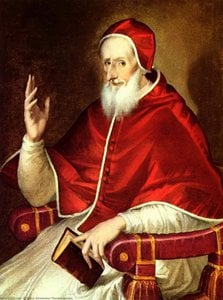
El Greco, 1541 – 1614

El Greco: The 100 Most Famous Paintings

The Burial of the Count of Orgaz (1586) is the most famous painting by El Greco, held by the Santo Tomé in Toledo. View of Toledo (1599) and The Disrobing of Christ (El Espolio) (1577) are the next two works the world knows best. From the 750 works of El Greco in our catalogue, here are the 100 that collectors and museum visitors look at most, with the year, the museum and the story of each.

Ranked by our popularity score, which combines the searches, visits and orders for each work. Updated October 2026. Every masterpiece on this page can be ordered as a museum-quality, hand-painted oil reproduction or a fine art print, at the size you choose.

Portrait of El Greco
El Greco · 1541 – 1614
Born · died
1541 – 1614, Heraklion
Movement
Mannerism
Works in our catalogue
750
Most famous
The Burial of the Count of Orgaz (1586)
Most works at
Metropolitan Museum of Art

Top 10: El Greco's best-known paintings

The Burial of the Count of Orgaz (1586) by El Greco
1

The Burial of the Count of Orgaz

1586 · Oil On Canvas · Santo Tomé, Toledo

Doménikos Theotokópoulos, known as El Greco, delivers a breathtaking spectacle of faith and earthly reverence in this monumental 1586 painting. More than just a historical depiction, it’s a profound exploration of the divine intervention in human affairs, rendered with an emotional intensity that continues to captivate viewers centuries later.

View of Toledo (1599) by El Greco
2

View of Toledo

1599 · Oil On Canvas · Metropolitan Museum of Art, New York

A Masterpiece of Spanish Renaissance Art El Greco's "View of Toledo" is a rare and captivating landscape painting that showcases his unique Mannerist style and dramatic use of color. Created in 1599, this masterpiece offers a panoramic view of the city of Toledo, blending natural elements with architectural details under a turbulent sky. The painting's rich composition and atmospheric depth make it a standout piece in El Greco's oeuvre and…

The Disrobing of Christ (El Espolio) (1577) by El Greco
3

The Disrobing of Christ (El Espolio)

1577 · Acrylic On Canvas · Toledo Cathedral, Toledo

“El Espolio,” or “The Disrobing,” stands as one of El Greco’s most arresting achievements, encapsulating his singular vision and cementing his place among the titans of Mannerist art. Painted in 1577 for the High Altar of Toledo Cathedral—a commission that profoundly shaped his artistic trajectory—this monumental canvas transcends mere depiction; it confronts viewers with a visceral meditation on faith, suffering, and divine grace.

Opening of the fifth seal (The vision of Saint John the Divine) (1610) by El Greco
4

Opening of the fifth seal (The vision of Saint John the Divine)

1610 · Acrylic On Canvas · Metropolitan Museum of Art, New York

A Masterpiece of Spiritual and Artistic Depth El Greco (Doménikos Theotokopoulos), a renowned artist of the Renaissance, created the captivating painting "Opening of the Fifth Seal (The Vision of Saint John the Divine)". This masterpiece, dated 1610, is a testament to El Greco's skill in blending religious themes with artistic innovation. The painting measures 224 x 194 cm and is executed in oil on canvas. Composition and Symbolism The central…

Nobleman with his Hand on his Chest (1583) by El Greco
5

Nobleman with his Hand on his Chest

1583 · Oil On Canvas · Museo del Prado, Madrid

El Greco’s “The Nobleman with His Hand on His Chest,” painted in 1583, is not merely a portrait; it's an immersion into the spiritual intensity of the Spanish Renaissance. Housed within the hallowed halls of the Museo del Prado, this work immediately captivates with its dramatic lighting, elongated forms, and a palpable sense of contained emotion. It’s a piece that whispers stories of status, contemplation, and perhaps even a touch…

Laocoön (1610) by El Greco
6

Laocoön

1610 · Oil On Canvas · National Gallery of Art, Washington

A Masterpiece of Mythological Drama El Greco's "Laocoön" is a powerful depiction of mythological turmoil, capturing the intense struggle between human figures and serpentine creatures. This dramatic scene is rendered in a style that blends Byzantine traditions with Western Mannerism, showcasing El Greco's unique artistic vision. Expressionist Style and Bold Technique The painting exemplifies Expressionism through its emphasis on emotional experience and distorted forms. El Greco employs bold, expressive lines…

Burial of the Count of Orgaz by El Greco
7

Burial of the Count of Orgaz

Oil On Canvas · Nationalmuseum, Stockholm

A Threshold of Earth and Sky The canvas splits into two distinct realms. Below, the heavy air of Toledo settles upon mourners in dark, somber tones. Figures gather around the body of Don Gonzalo Ruiz de Toledo, their faces etched with the weight of loss. Above this earthly plane, a celestial swirl of clouds breaks open. Luminous whites and pale golds pierce through deep shadows. Angels descend through this restless…

The Crucifixion (1594) by El Greco
8

The Crucifixion

1594 · Oil On Canvas · Museo del Prado, Madrid

"The Crucifixion" by El Greco is a profound and emotionally charged depiction of the crucifixion of Jesus Christ. Created in 1594, this masterpiece exudes a sense of solemnity, sacrifice, and divine presence, characteristic of religious art from the Renaissance period. The artwork's vertical orientation draws the viewer's eye upward toward the crucified figure of Jesus at the center, creating a powerful focal point that commands attention and reverence.

Christ Healing the Blind Man by El Greco
9

Christ Healing the Blind Man

Oil On Canvas · Metropolitan Museum of Art, New York

Captivating Subject and Spiritual Significance This powerful artwork vividly depicts the biblical miracle of Christ healing the blind man, a moment of divine compassion and spiritual transformation. Central to the composition, Christ’s gentle yet commanding presence radiates hope and mercy, as he reaches out to restore sight to the afflicted man. Surrounding them, a lively crowd witnesses the miracle, their expressions a mix of awe, reverence, and wonder. The scene…

View of Toledo (1599) by El Greco
10

View of Toledo

1599 · Oil On Canvas · Metropolitan Museum of Art, New York

Doménikos Theotokopoulos: A Visionary Bridging Byzantium and Renaissance El Greco, born Doménikos Theotokópoulos in Crete in 1541, wasn’t merely a painter; he was an artist who fundamentally reshaped Western artistic sensibilities. His journey began in the Orthodox traditions of his homeland, absorbing the solemn grandeur of Byzantine iconography – meticulous detail and spiritual depth were hallmarks of his formative years. Yet, he refused to remain tethered to these roots, embarking…

The rest of the El Greco ranking, 11 to 100

Laocoön (1614) by El Greco
#12

Laocoön

1614 · National Gallery of Art

El Greco’s *Laocoön* transcends mere depiction; it embodies the very essence of Mannerist art—a deliberate rejection of Renaissance ideals in favor of heightened emotion, distorted perspective, and unsettling…

Order a reproduction →
Portrait of a Man (1600) by El Greco
#15

Portrait of a Man

1600 · Metropolitan Museum of Art

A Masterful Gaze: Unveiling El Greco’s “Portrait of a Man” This captivating oil on canvas, created in 1600 by the masterful hand of Doménikos Theotokópoulos – known to…

Commission a hand-painted copy →
The Disrobing of Christ (1600) by El Greco
#16

The Disrobing of Christ

1600 · National Museum Cardiff

Step closer to observe the central figure, where the weight of the scene truly settles. In this composition, we find Christ at a moment of intense spiritual exposure,…

Order a reproduction →
The Resurrection (1600) by El Greco
#18

The Resurrection

1600

Doménikos Theotokópoulos, universally known as El Greco – “the Greek” – possessed a singular artistic vision that continues to captivate and challenge viewers centuries after his death. His…

Bring it home →
Laocoön (detail) (1610) by El Greco
#19

Laocoön (detail)

1610 · National Gallery of Art

El Greco’s “Laocoön,” a detail from the monumental sculpture of the same name, is not merely a depiction of a classical myth; it's a visceral embodiment of human…

Bring it home →
Mary Magdalen in Penitence (1580) by El Greco
#20

Mary Magdalen in Penitence

1580 · Nelson-Atkins Museum of Art

A Vision of Penance and Divine Turmoil: El Greco’s *Mary Magdalen in Penitence* El Greco's (*Doménikos Theotokopoulos*) 1580 masterpiece, *Mary Magdalen in Penitence*, is a profoundly moving depiction…

Commission a hand-painted copy →
Christ on the Cross (1600) by El Greco
#21

Christ on the Cross

1600 · J. Paul Getty Museum

The sky above Golgotha churns with a restless, dark energy, as if the heavens themselves are reacting to the weight of the moment. Deep blacks, murky greens, and…

Order a reproduction →
St. Sebastian (1577) by El Greco
#22

St. Sebastian

1577

Created in 1577, this powerful depiction of Saint Sebastian embodies the dramatic intensity and spiritual depth characteristic of El Greco’s mature style. More than a mere portrayal of…

Order a reproduction →
Christ on the Cross (1585) by El Greco
#23

Christ on the Cross

1585 · Rijksmuseum

A Vision of Suffering and Faith: El Greco’s *Christ on the Cross* El Greco's 1585 masterpiece, *Christ on the Cross*, is a profoundly moving depiction of one of…

Order a reproduction →
Christ (1585) by El Greco
#25

Christ

1585 · McNay Art Museum

A Vision of Divine Suffering: El Greco’s ‘Christ’ (1585) This intimate portrait of Jesus Christ, painted in 1585 by Doménikos Theotokópoulos – known as El Greco – is…

Bring it home →
Holy Family with St Anne (1600) by El Greco
#26

Holy Family with St Anne

1600 · Szépművészeti Múzeum

A Divine Encounter: Exploring El Greco’s *Holy Family with St Anne* El Greco's *Holy Family with St Anne*, painted in 1600 and currently residing at the Szépmûvészeti Múzeum…

Order a reproduction →
The Adoration of the Shepherds (1614) by El Greco
#27

The Adoration of the Shepherds

1614 · Museo del Prado

A Vision of Celestial Reverence: El Greco’s ‘The Adoration of the Shepherds’ Doménikos Theotokópoulos, universally known as El Greco – “the Greek” – stands apart from his contemporaries…

Order a reproduction →
Jerónimo de Cevallos (1610) by El Greco
#31

Jerónimo de Cevallos

1610 · Museo del Prado

“Jerónimo de Cevallos” by El Greco is a captivating portrait executed in 1613 during his final years in Toledo, Spain. Measuring 70 x 62 cm and housed at…

Order a reproduction →
The Disrobing of Christ (1580) by El Greco
#32

The Disrobing of Christ

1580

A Moment of Vulnerability The scene captures the precise instant Jesus is stripped of his garments before crucifixion. A dense, vertical composition pushes a turbulent crowd toward the…

Bring it home →
Christ Carrying the Cross (1610) by El Greco
#36

Christ Carrying the Cross

1610

A single figure dominates the canvas, his body stretched by an unseen tension. Christ leans into the heavy timber of the cross, his form elongated and pulled toward…

Bring it home →
Saint Luke (1610) by El Greco
#37

Saint Luke

1610

Step closer to observe the quiet intensity within this portrait. Here, we find Saint Luke captured in a moment of profound focus, his presence defined by the heavy,…

Bring it home →
St Francis Meditating (1595) by El Greco
#40

St Francis Meditating

1595 · Fine Arts Museums of San Francisco

In the realm of art, few paintings capture the essence of contemplation and spirituality as profoundly as El Greco's "St Francis Meditating". This masterpiece, created in 1595, is…

Order a reproduction →
Christ on the Cross (1605) by El Greco
#42

Christ on the Cross

1605

To stand before this canvas is to enter a space where the physical and the spiritual collide. The composition is anchored by the verticality of the cross, which…

Order a reproduction →
The Annunciation (1597) by El Greco
#49

The Annunciation

1597 · Thyssen-Bornemisza Museum

El Greco's "The Annunciation," painted in 1597, isn’t merely a depiction of a biblical event; it’s an intensely felt experience. This masterpiece, measuring a modest 114 x 67…

Order a reproduction →
Pieta (1566) by El Greco
#51

Pieta

1566

A Moment of Profound Sorrow The scene unfolds within a circular tondo, a focused window into a moment of intense religious grief. At the center, the slumped body…

Order a reproduction →
Christ Bearing the Cross (1600) by El Greco
#54

Christ Bearing the Cross

1600 · Harvard Art Museums

A half-length figure of Christ leans into a heavy wooden cross that cuts diagonally across the frame. He wears a crimson red tunic beneath a dark teal mantle.…

Order a reproduction →
Saint Jerome (1610) by El Greco
#57

Saint Jerome

1610 · Hispanic Society Museum - Library

The painting depicts an elderly man, Saint Jerome, positioned centrally within a shallow space. His torso appears elongated, showing a gaunt anatomy with visible ribs and muscular tension.…

Commission a hand-painted copy →
A View of Toledo (1597) by El Greco
#58

A View of Toledo

1597 · Metropolitan Museum of Art

El Greco’s “A View of Toledo,” painted in 1597 and now residing within the hallowed halls of the Metropolitan Museum of Art, isn't merely a depiction of a…

Order a reproduction →
The Pentecost (1610) by El Greco
#60

The Pentecost

1610

A Descent of Fire The air in the enclosed space thickens with a sudden, unseen weight. Above the gathered group, a white dove hangs suspended within a burst…

Order a reproduction →
Saint James the Greater (1600) by El Greco
#66

Saint James the Greater

1600 · New College

The face emerges from a heavy, dark void. It is a portrait of Saint James the Greater, caught in a moment of quiet, spiritual weight. A single light…

Bring it home →
Mater Dolorosa (1600) by El Greco
#67

Mater Dolorosa

1600 · Museo Lázaro Galdiano

The background is a void, a dark expanse that offers no horizon and no escape. Against this silence, a woman emerges. Her skin possesses a pale luminosity, catching…

Commission a hand-painted copy →
Saint Jerome (1607) by El Greco
#69

Saint Jerome

1607 · Королівська академія витончених мистецтв Сан-Фернандо

The shadows press inward, heavy and dark, as an elderly man sits caught in a moment of profound spiritual struggle. This is Saint Jerome, his body gaunt and…

Order a reproduction →
Annunciation (1602) by El Greco
#70

Annunciation

1602 · Museo de Santa Cruz

The Archangel Gabriel descends from the upper right, a figure carved from flickering light and motion. Below him, the Virgin Mary rests in the lower left, anchored by…

Bring it home →
The Crucifixion (1610) by El Greco
#71

The Crucifixion

1610 · Philadelphia Museum of Art

Step closer to the canvas and observe how the central figure of Christ dominates the vertical space. The cross itself, a dark and heavy wooden structure, stretches from…

Commission a hand-painted copy →
St. Peter (1605) by El Greco
#72

St. Peter

1605 · Fine Arts Museums of San Francisco

A single figure emerges from a deep, shadowy void. St. Peter sits in a three-quarter view, his weathered face caught in a sharp, flickering light. He holds the…

Commission a hand-painted copy →
Annunciation (1610) by El Greco
#75

Annunciation

1610 · Museum der bildenden Künste

The Archangel Gabriel descends from the upper right, a figure carved from flickering light and movement. Below him, the Virgin Mary sits in quietude, her form elongated by…

Order a reproduction →
Saint Peter (1605) by El Greco
#78

Saint Peter

1605 · Toledo Cathedral

To stand before this portrait is to witness a moment of profound stillness. The figure of Saint Peter emerges from an almost impenetrable darkness, his presence defined by…

Order a reproduction →
Saint Francis of Assisi (1610) by El Greco
#80

Saint Francis of Assisi

1610

The painting presents a vertical portrait of Saint Francis of Assisi, positioned slightly off-center within a grayscale composition. The figure is rendered in monochromatic tones, utilizing deep blacks…

Bring it home →
Apostles Peter and Paul (1592) by El Greco
#82

Apostles Peter and Paul

1592 · Hermitage Museum

The Reconciliation Embodied: El Greco’s “Apostles Peter and Paul” Doménikos Theotokopoulos, universally known as El Greco—the Greek—stands apart from his contemporaries as an artist who defied categorization. Born…

Commission a hand-painted copy →
Laoko n (1610) by El Greco
#83

Laoko n

1610 · National Gallery of Art

In the twilight of his illustrious career, between 1610 and 1614, El Greco delivered one of the most visceral and haunting masterpieces of the Baroque era: Laocoön. This…

Bring it home →
Adoration of the Shepherds (1568) by El Greco
#84

Adoration of the Shepherds

1568 · Galleria Estense

A Divine Encounter in the Stable The scene captures the moment shepherds arrive to witness the birth of Christ within a rustic wooden structure. Under an arched top,…

Order a reproduction →
St Francis and Brother Rufus (1600) by El Greco
#85

St Francis and Brother Rufus

1600 · Museo de El Greco

A Portrait of Faith: Exploring El Greco’s “St Francis and Brother Rufus” Doménikos Theotokópoulos, universally known as El Greco – “the Greek” – remains one of the most…

Bring it home →
Adoration of the Shepherds (1580) by El Greco
#86

Adoration of the Shepherds

1580

The scene centers on the Christ Child lying within a manger, acting as the primary source of light for the gathered figures. Around this focal point, shepherds cluster…

Bring it home →
Saint John the Evangelist (1600) by El Greco
#88

Saint John the Evangelist

1600 · Schorr Collection

Step closer to observe the quiet intensity within this portrait. Here, we find Saint John the Evangelist captured in a moment of profound introspection. The figure is rendered…

Order a reproduction →
The Savior (1610) by El Greco
#95

The Savior

1610

The shadows of an indeterminate darkness press against the edges of the canvas, leaving only the central figure to emerge into the light. Jesus Christ appears before us,…

Commission a hand-painted copy →
The Resurrection (detail) (1596) by El Greco
#98

The Resurrection (detail)

1596 · Museo del Prado

A Vision of Resurrection: El Greco’s Dramatic Interpretation Doménikos Theotokópoulos, universally known as El Greco – “the Greek” – stands apart in the annals of European art history.…

Bring it home →
St. Mary Magdalene (1585) by El Greco
#99

St. Mary Magdalene

1585 · Hispanic Society Museum - Library

In this oil on canvas painting, a woman identified as St. Mary Magdalene occupies the right side of the vertical frame. Her head tilts downward toward the lower…

Commission a hand-painted copy →
St. Sebastian (1612) by El Greco
#100

St. Sebastian

1612 · Worcester Art Museum

El Greco's "St. Sebastian," painted in 1612, is not merely a depiction of martyrdom; it’s an intensely felt embodiment of anguish and spiritual torment. The painting immediately confronts…

Commission a hand-painted copy →

El Greco's paintings by period

The subjects El Greco painted most

The four subjects that return most often among these masterpieces, with the finest example of each.

Where to see El Greco's paintings

The 8 museums that hold the most of the paintings on this page.

Museum City Works by El Greco Paintings from this list
Metropolitan Museum of Art, New YorkMetropolitan Museum of Art New York 26 View of Toledo, Opening of the fifth seal (The vision of Saint John the Divine), Christ Healing the Blind Man
Museo del Prado, MadridMuseo del Prado Madrid 49 Nobleman with his Hand on his Chest, The Crucifixion, The Adoration of the Shepherds
National Gallery of Art, WashingtonNational Gallery of Art Washington 19 Laocoön, Laocoön, Laocoön (detail)
Toledo Cathedral, ToledoToledo Cathedral Toledo 15 The Disrobing of Christ (El Espolio), The Tears of Saint Peter, Saint Peter
Hispanic Society Museum - Library, New YorkHispanic Society Museum - Library New York 12 Head of Saint Francis, Saint Jerome, St. Mary Magdalene
Thyssen-Bornemisza Museum, MadridThyssen-Bornemisza Museum Madrid 7 The Annunciation (detail), The Virgin of the Immaculate Conception, The Annunciation
The Louvre, ParisThe Louvre Paris 4 St Louis, King of France, with a Page, Christ on the Cross Adored by Two Donors, Christ on the Cross Adored by Two Donors (detail)
Museo de Santa Cruz, ToledoMuseo de Santa Cruz Toledo 16 Annunciation, Francis receiving the stigmata

El Greco through the decades: one masterpiece for each

  1. 1560s
    Pieta (1566) by El Greco
    #51 of 100

    Pieta

    Age 19 – 28

    A Moment of Profound Sorrow The scene unfolds within a circular tondo, a focused window into a moment of intense religious grief. At the center, the slumped body…

  2. 1570s
    The Disrobing of Christ (El Espolio) (1577) by El Greco
    No. 3 of 100

    The Disrobing of Christ (El Espolio)

    Age 29 – 38 · Toledo Cathedral

    “El Espolio,” or “The Disrobing,” stands as one of El Greco’s most arresting achievements, encapsulating his singular vision and cementing his place among the titans of Mannerist art.…

  3. 1580s
    The Burial of the Count of Orgaz (1586) by El Greco
    Rank 1 / 100

    The Burial of the Count of Orgaz

    Age 39 – 48 · Santo Tomé

    Doménikos Theotokópoulos, known as El Greco, delivers a breathtaking spectacle of faith and earthly reverence in this monumental 1586 painting. More than just a historical depiction, it’s a…

  4. 1590s
    View of Toledo (1599) by El Greco
    Rank 2 / 100

    View of Toledo

    Age 49 – 58 · Metropolitan Museum of Art

    A Masterpiece of Spanish Renaissance Art El Greco's "View of Toledo" is a rare and captivating landscape painting that showcases his unique Mannerist style and dramatic use of…

  5. 1600s
    Portrait of a Man (1600) by El Greco
    No. 15 of 100

    Portrait of a Man

    Age 59 – 68 · Metropolitan Museum of Art

    A Masterful Gaze: Unveiling El Greco’s “Portrait of a Man” This captivating oil on canvas, created in 1600 by the masterful hand of Doménikos Theotokópoulos – known to…

  6. 1610s
    Opening of the fifth seal (The vision of Saint John the Divine) (1610) by El Greco
    Rank 4 / 100

    Opening of the fifth seal (The vision of Saint John the Divine)

    Age 69 – 73 · Metropolitan Museum of Art

    A Masterpiece of Spiritual and Artistic Depth El Greco (Doménikos Theotokopoulos), a renowned artist of the Renaissance, created the captivating painting "Opening of the Fifth Seal (The Vision…

El Greco's paintings: frequently asked questions

What is the most famous El Greco painting?Show the answer

The Burial of the Count of Orgaz (1586), Santo Tomé, Toledo. Next come View of Toledo (1599) and The Disrobing of Christ (El Espolio) (1577).

At what age did El Greco paint The Burial of the Count of Orgaz?Show the answer

45 years old: The Burial of the Count of Orgaz dates from 1586 and El Greco was born in 1541.

Which are the 10 most famous El Greco paintings?Show the answer

The Burial of the Count of Orgaz, View of Toledo, The Disrobing of Christ (El Espolio), Opening of the fifth seal (The vision of Saint John the Divine), Nobleman with his Hand on his Chest, Laocoön, Burial of the Count of Orgaz, The Crucifixion, Christ Healing the Blind Man and View of Toledo. The ranking above gives the year and the museum of each.

How many paintings by El Greco are there?Show the answer

Our catalogue lists 750 works by El Greco, dated from 1566 to 1614.

Where can I see the most famous El Greco paintings?Show the answer

Most of them are in Metropolitan Museum of Art (New York), Museo del Prado (Madrid) and National Gallery of Art (Washington). The table above lists the museums one by one.

In which period did El Greco paint the best-known works?Show the answer

In 1600s: 31 of the 100 works on this page date from then, among them Portrait of a Man.

What is the earliest famous El Greco painting, and the latest?Show the answer

The earliest on this page is Pieta (1566), the latest Laocoön (1614).

What subjects did El Greco paint?Show the answer

Dark background (20), Skull (14) and Man (14), among the 100 works on this page.

What did El Greco paint on, and with what?Show the answer

Oil On Canvas: 77 of the 100 works on this page.

Which movement does El Greco's art belong to?Show the answer

Mannerism, as the paintings on this page show.

What El Greco paintings does the Metropolitan Museum of Art hold?Show the answer

View of Toledo, Opening of the fifth seal (The vision of Saint John the Divine) and Christ Healing the Blind Man are among the 8 works on this page held by the Metropolitan Museum of Art, New York.

Where can I buy a El Greco reproduction?Show the answer

Yes. Every painting on this page can be ordered as a museum-quality, hand-painted oil reproduction or a fine art print, in the size you choose, from the painting's own page.

El Greco: biography

The Cretan Foundation

Doménikos Theotokópoulos, known to history as El Greco, began his life in 1541 on the island of Crete. At that time, the island was a Venetian possession, a fact that would later allow him to bridge the gap between Eastern and Western traditions. He was trained as an icon painter within the Byzantine tradition, a discipline that demanded a meticulous attention to detail and a focus on the spiritual essence of a subject rather than mere physical likeness. This early immersion in the Cretan school provided him with a sense of symbolic precision that would remain a constant, even as his style underwent radical transformations.

By the age of twenty-six, he moved to Venice, seeking to expand his understanding of the natural world. In the Venetian Republic, he encountered the works of Titian and Tintoretto, absorbing their mastery of color and the use of light to define form. He learned to move away from the rigid lines of his youth, embracing a more fluid brushwork and a sense of dynamism. This period was not a rejection of his roots but an expansion of them, as he began to blend the disciplined iconography of his Greek heritage with the atmospheric sensuality of the Italian Renaissance.

The Toledo Transformation

After a period in Rome, where he encountered the elongated forms and sophisticated compositions of Mannerism, El Greco settled in Toledo, Spain, in 1577. This move proved decisive. Toledo was a center of intense religious fervor during the Counter-Reformation, providing a landscape perfectly suited to his increasingly mystical vision. It was here that his style reached its most distinctive phase, characterized by figures that appeared stretched and contorted, as if pulled by an unseen spiritual force. He used color not to mimic reality, but to heighten emotional impact, often employing unnatural hues to depict the divine.

His work in Spain was marked by a tension between the earthly and the ethereal. In The Burial of the Count of Orgaz (1586-1588), he juxtaposed the realistic portrayal of contemporary figures with elongated, celestial forms, creating a visual bridge between the mortal and the divine. His ability to manipulate light and shadow allowed him to create a sense of drama that felt both theatrical and deeply personal. He did not merely paint scenes; he attempted to render the emotional and spiritual realities that exist beyond the surface of the physical world.

A Legacy of Form and Light

The later years of his life saw a move toward even greater abstraction and mysticism. His compositions became more complex, and his figures more distorted, reflecting a growing detachment from conventional artistic norms. While he achieved success and received significant commissions from churches and monasteries in Toledo, his influence was not immediately felt by the broader art world after his death in 1614. For a long period, he was viewed as an eccentric, his work largely overlooked by the mainstream of art history.

It was not until the 20th century that his importance was fully recognized. Modernists found in his work a precursor to the expressive and fragmented styles of the future. His ability to distort proportion and use bold, emotive color resonated with those seeking to convey internal psychological states. Today, his paintings are viewed as windows into the human spirit, celebrated for their unique ability to capture the intensity of faith and the struggle for transcendence.

Notable works include:

All 750 works by El Greco →