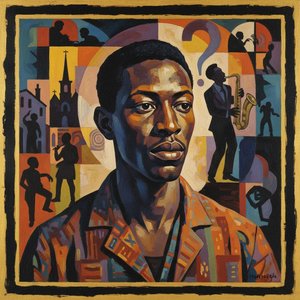
The Life and Journey of Paul Travis
Born in Wellsville, United States, Paul Travis was a painter and a member of the Cleveland School. After studying at the Cleveland School of Art, where he was a protégé of Henry Keller, he served in the Army during World War I. While stationed in France, his artistic abilities led to a transfer to survey work, allowing him to travel widely, paint, and sketch. Upon his return, he dedicated thirty-eight years to teaching at the Cleveland School of Art and became a frequent participant in the May Show exhibitions sponsored by the Cleveland Museum of Art.
In 1928, Travis embarked on an eight-month sabbatical to Africa, traveling a route similar to Henry Morton Stanley from Cape Town, South Africa, to Cairo, Egypt. During this expedition, he sketched, took photographs, and collected artifacts. His experiences and the items he gathered, including works from the Mangbetu people, were preserved in various collections, including the Cleveland Museum of Art and the Cleveland Museum of Natural History.
Notable Works and Legacy
Travis's artistic output is recognized for its historical significance within the city of Cleveland. His documented works include:
His legacy is preserved through his artwork, artifacts, and personal records, such as diary entries and film footage, which are held in the Smithsonian's Archives of American Art.
Questions & Answers
Where can I see the color profile of Paul Travis's work?
Paul Travis's use of color across the works listed on this website can be studied on the artist's Palette Genome page.
Is there an overview of all the subjects Paul Travis painted?
The Subject Atlas of Paul Travis is a page that maps the artist's artworks by their subjects.
What other names is Paul Travis known by?
Paul Travis appears under the alternate names Paul Bough Travis, Paul B. Travis, باول ترافيس.
Is there a chronological account of Paul Travis?
A chronological account of Paul Travis's work is available on the artist's Chronicle page, where the artworks pass in order of creation, chapter by chapter.