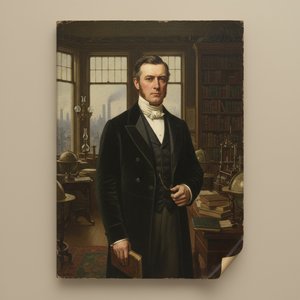
A Life Immersed in Observation: The World of Frank Ernest Beresford
Frank Ernest Beresford, born in Derby in 1881, was a painter whose career spanned a period of immense social and political change. His life’s work offers a fascinating window into early 20th-century Britain, encompassing royal portraiture, poignant wartime documentation, and serene landscapes. From his formative years at the Derby School of Art through to his studies at St John's Wood Art School and the prestigious Royal Academy Schools, Beresford received a thorough grounding in traditional techniques. This rigorous training provided him with the foundation upon which he would build a versatile and remarkably detailed artistic practice. A travel scholarship then afforded him the invaluable opportunity to study art in Asia – an experience that subtly infused his later work with a nuanced understanding of light, composition, and atmosphere.Royal Commissions and Wartime Service
Beresford quickly established himself within the British art establishment, exhibiting regularly at the Royal Academy from 1906 onwards. He became particularly renowned for his portraits, capturing the likenesses of prominent figures, including members of the royal family. Perhaps his most celebrated work is “La vigilia de los príncipes: 12.15 a. m., 28 de enero de 1936” – “The Princes’ Vigil.” This deeply moving painting depicts Edward VIII, the Duke of York (later George VI), the Duke of Gloucester, and the Duke of Kent keeping vigil over the body of their father, King George V. The work resonated profoundly with Queen Mary, who purchased it as a birthday gift for Edward VIII, recognizing its power to convey both grief and solemn respect. However, Beresford’s artistic contributions extended far beyond the realm of royal portraiture. With the outbreak of World War II, he served as an official war artist for both the American and British air forces, a role that saw him documenting the conflict with sensitivity and precision. His dedication was recognized with the “Exceptional Service Award” from the United States Army Air Forces – a rare honor for a civilian artist.Documenting a Nation at War
As a war artist, Beresford’s subject matter shifted to encompass portraits of key figures like Reginald Joseph Mitchell, the brilliant designer of the Spitfire aircraft, and scenes depicting aircraft in flight, military installations, and the impact of bombing raids. His paintings from this period are not merely records of events; they are imbued with a sense of immediacy and emotional weight. He captured the spirit of resilience and determination that defined Britain during those dark years. The wartime experience profoundly shaped his artistic vision, prompting him to explore themes of duty, sacrifice, and the human cost of conflict. His ability to blend technical skill with empathetic observation made his war paintings particularly compelling and historically significant. Beyond aircraft and military scenes, Beresford also documented the civilian impact of the war, including poignant depictions of St. Paul’s Cathedral during repairs – a symbol of London's enduring spirit amidst devastation.Legacy and Lasting Impact
Frank Ernest Beresford’s work provides an invaluable visual record of significant historical events, offering insights into the personalities and experiences of those who lived through them. His royal portraits offer glimpses into the changing dynamics of the British monarchy during a period of transition, while his war paintings serve as powerful reminders of the sacrifices made during World War II. Although perhaps not as widely celebrated as some of his contemporaries, Beresford’s contributions to British art remain substantial and enduring. His paintings are held in various public and private collections, including those of Derby Museum and Art Gallery and Belper Town Council, ensuring that his legacy will continue to inspire and inform future generations. Despite a shift in public tastes following the deaths of King George VI and Queen Mary in the 1950s, diminishing the acclaim for his later royal commissions, Beresford’s earlier works retain their power and resonance. He passed away in 1967, leaving behind a diverse body of work that stands as a testament to his skill, dedication, and unwavering commitment to capturing the world around him with honesty and artistry.Questions & Answers
Can I browse Frank Ernest Beresford's works by movement?
The movements Frank Ernest Beresford worked in can be seen on the artist's All Movements page, which groups the artworks by movement.
Where can I see all artworks by Frank Ernest Beresford?
Every work by Frank Ernest Beresford on this website can be browsed from the artist's All Artworks page.
What are the birth city and country of Frank Ernest Beresford?
Frank Ernest Beresford was born in Derby, in United Kingdom.