Introduction
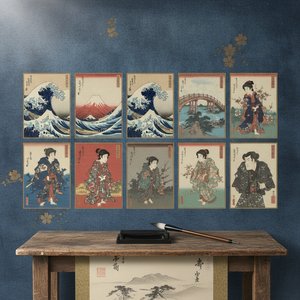
To step into the world of Ukiyo-e is to enter a realm of floating delights, where the ephemeral beauty of a passing moment is captured forever in ink and pigment. The term itself, translating to "pictures of the floating world," evokes the hedonistic, transient lifestyle of Japan’s Edo period—a time of burgeoning urban culture, theater, and the quiet elegance of nature. These woodblock prints were not merely art; they were the vibrant pulse of a society finding joy in the fleeting: the graceful curve of a geisha's neck, the dramatic tension of a Kabuki actor's pose, and the rhythmic surge of a Great Wave crashing against a distant shore.
Emerging from the mid-17th to the 19th century, this movement revolutionized visual storytelling through a sophisticated mastery of line, flat planes of color, and unconventional perspectives. While these works were originally enjoyed by the common people as affordable luxuries, their influence eventually drifted across oceans, profoundly reshaping the trajectory of Western Modernism by inspiring legends like Van Gogh and Monet. Today, these masterpieces remain deeply resonant, offering us a window into a lost era of exquisite craftsmanship and a meditative reminder to find profound meaning in the transient beauty of our own lives.
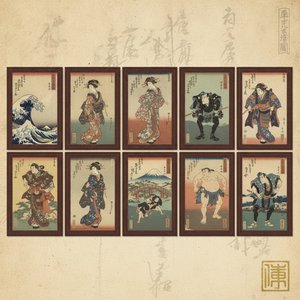
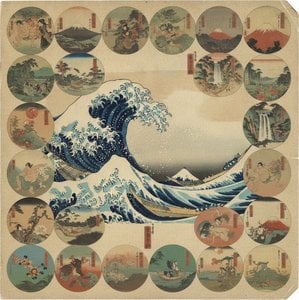
As we wander through this curated selection, we invite you to observe the meticulous precision of the woodblock carvers and the soulful vision of the masters. From the iconic landscapes that define the Japanese spirit to the intimate portraits of urban life, the following ten works represent the zenith of the Ukiyo-e tradition—each a timeless testament to the enduring power of the floating world.
Phoenix - Katsushika Hokusai
 Phoenix - Katsushika Hokusai
What story does the vibrant, swirling environment in Phoenix by Katsushika Hokusai tell? Beyond the mythical creature itself, the circular arrangement of meticulous foliage and smaller birds speaks to the eternal cycle of life and the cosmic order central to Edo-period thought. As a cornerstone of the Japanese Ukiyo-e movement , this work transcends simple woodblock tradition, utilizing layered washes reminiscent of sumi-e to create an ethereal, glowing light that feels both ancient and alive. The fiery reds and golds of the phoenix’s wings emerge from the composition with a dignified power, offering a profound meditation on rebirth and resilience.
In modern interior design, such a masterpiece serves as a curated escape, bringing the prestige of Japanese history into the home. Whether you are drawn to its symbolic transformation or its intricate textures, owning a hand-painted oil reproduction allows you to capture this sense of spiritual renewal. At WahooArt.com, our artists recreate Hokusai’s delicate brushwork on cotton canvas, ensuring the deep tonal range and symbolic majesty of this Ukiyo-e treasure remain a breathtaking focal point in your collection.
Kinoe no komatsu - Katsushika Hokusai
 Kinoe no komatsu - Katsushika Hokusai
In Kinoe no Komatsu , Katsushika Hokusai demonstrates a profound mastery of visual storytelling that transcends the boundaries of traditional ukiyo-e . While often celebrated for his landscapes, this 1814 masterpiece showcases his ability to manipulate subtle light and delicate line work to evoke intense intimacy. The illumination within these woodblock prints is not merely functional; it acts as a soft, atmospheric glow that highlights the intricate textures of silk kimonos and the porcelain skin of the subjects, creating a sense of depth rarely seen in mokuhanga printing.
Hokusai’s command over this delicate interplay of light and shadow—often focusing on the luminous quality of the ōkubi-e portraits—captures the ephemeral nature of desire and beauty. This sophisticated use of tonal range is what secures its place among the top masterpieces of the movement. When brought into a modern interior, a high-quality oil reproduction of such a work introduces a layer of historical luxury and intellectual depth. The visible brushstrokes in a hand-painted version emphasize the original's soft gradients, allowing the light-drenched elegance of Edo Japan to breathe new life into contemporary walls.
The Dish Mansion - Katsushika Hokusai
 The Dish Mansion - Katsushika Hokusai
What spectral secrets are whispered by the churning tides in The Dish Mansion by Katsushika Hokusai? This haunting masterpiece emerges from the heart of the Edo period, a time when the ukiyo-e movement—the "pictures of the floating world"—captured both the ephemeral joys and the supernatural shadows of Japanese life. In this composition, Hokusai transcends mere landscape, presenting a woman perched upon jagged rocks, her gaze lost in the heavens as she smokes a cigarette amidst a sea of profound Prussian blue.
The use of this innovative pigment creates a luminous, spiritual atmosphere, where the deep tones evoke both the vastness of the ocean and the presence of the unseen. A solitary bird and a distant boat add layers of movement to this melancholic scene, making it a quintessential example of how Hokusai blended folklore with technical brilliance. For the modern collector, bringing such a piece into a home offers more than decoration; it provides a curated escape into a historical era of myth and mystery. Whether through a museum-quality oil reproduction or a fine Giclée print, this work invites a sense of timeless, contemplative depth to any interior.
Battle Between Two Warriors - Katsushika Hokusai
 Battle Between Two Warriors - Katsushika Hokusai
Acquiring Battle Between Two Warriors by Katsushika Hokusai is more than a mere purchase; it is an investment in a profound artistic legacy and a testament to the discerning collector's refined taste. As a cornerstone of the Japanese Ukiyo-e movement , this masterpiece transcends simple combat, offering a meditative study on duality. Hokusai masterfully balances the tension of clashing blades with a serene, symbolic landscape where vibrant reds, greens, and blues harmonize with delicate motifs of birds and fish.
The work’s historical provenance and its revolutionary use of flattened perspective—anticipating the very essence of Impressionism—secure its position among the top 10 most influential works of all time. For the modern connoisseur, this piece provides an unparalleled anchor for luxury interiors . Whether through a museum-grade oil reproduction or a fine Giclée print, the aesthetic authority of Hokusai’s vision brings a sense of historical weight and cultural prestige to any contemporary space, transforming a room into a private gallery of timeless elegance.
The Phantom of Kohada Koheiji - Katsushika Hokusai
 The Phantom of Kohada Koheiji - Katsushika Hokusai
What spectral secrets lie within the shadows of Katsushika Hokusai’s 1831 masterpiece, The Phantom of Kohada Koheiji ? This haunting woodblock print does more than depict a Kabuki legend; it captures the chilling intersection of theatrical drama and the supernatural anxieties of Edo-period Japan. As part of our exploration into the top 10 masterpieces that defined the Japanese Ukiyo-e movement, this work stands out for its ability to transform folklore into a visceral sensory experience.
Hokusai utilizes a melancholic palette of deep, cool blues and stark contrasts to illustrate a skeletal figure emerging from the folds of an umbrella. The presence of crows and the symbolic weight of the character's decay evoke a profound sense of mortality and mystery. In modern interior design, such evocative imagery offers a sophisticated way to curate an atmosphere of historical depth and intrigue. For those seeking to bring the soul of the Ukiyo-e era into their homes, our museum-quality handmade oil reproductions capture every meticulous line and atmospheric shade of Hokusai’s genius, allowing this piece of Japanese history to serve as a captivating focal point in any collection.
Cherry Blossoms - Katsushika Hokusai
 Cherry Blossoms - Katsushika Hokusai
In the delicate interplay of light and shadow within Cherry Blossoms , Katsushika Hokusai captures more than a seasonal bloom; he encapsulates the very essence of mono no aware —the pathos of things. This masterpiece stands as a pillar of the Japanese Ukiyo-e movement , offering a profound meditation on impermanence through a deceptively simple composition of vibrant pink petals set against a striking, celestial red orb. The way the blossoms cling to their branch serves as a poignant metaphor for the fleeting nature of life, a theme that continues to resonate in our modern, fast-paced era.
Hokusai’s mastery of woodblock printing technique allows for bold outlines and a flattened perspective that revolutionized visual storytelling. Today, this aesthetic language—characterized by clean lines and symbolic color palettes—findly its echoes in contemporary graphic design and minimalist decor. For the discerning collector, bringing this piece into a curated space provides a window into the Edo period's soul. At WahooArt.com, we honor this legacy through our hand-painted oil reproductions , meticulously recreating Hokusai’s rhythmic brushwork and tonal depth on fine cotton canvas to ensure his vision of eternal spring remains a living part of your home.
Raiko tormented by the earth spider - Utagawa Kuniyoshi
 Raiko tormented by the earth spider - Utagawa Kuniyoshi
In Utagawa Kuniyoshi’s 1843 masterpiece, Raiko tormented by the earth spider , light does not merely illuminate a scene; it orchestrates a psychological drama. As you stand before this triptych, you witness a symphony of fear and resilience where the artist composes shadows to heighten the terror of the supernatural. Kuniyoshi utilizes the bold, dynamic conventions of the ukiyo-e movement to capture the precise moment the legendary samurai Raiko faces an army of demons summoned by a monstrous earth spider.
The visual language is visceral: the textured, circular patterns of the spider’s body contrast with the sharp, decisive lines of Raiko’s traditional armor. Dark, dramatic tones dominate the composition, creating a sense of claustrophobic siege that reflects the Edo period's deep-seated anxieties regarding yōkai and unseen dangers. This is not just a depiction of folklore; it is an exploration of human vulnerability against chaos. To bring this intensity into your own space, consider a hand-painted oil reproduction on cotton canvas. Our artists meticulously recreate Kuniyoshi’s intricate woodblock textures and vibrant pigments, allowing the legendary struggle between light and darkness to transform your walls into portals of historical inspiration.
Station 36, Goyu; Kyoka Tokaido Series - Utagawa Hiroshige
 Station 36, Goyu; Kyoka Tokaido Series - Utagawa Hiroshige
In Station 36, Goyu; Kyoka Tokaido Series , Utagawa Hiroshige achieves a breathtaking structural harmony that defines the pinnacle of the Japanese Ukiyo-e movement . The composition is anchored by a masterful use of linear perspective; a winding pathway acts as a visual guide, drawing the eye past organic foliage and toward the majestic, snow-capped silhouette of Mount Fuji. This geometric progression—moving from the intricate textures of the foreground to the ethereal, atmospheric layers of the distant peaks—creates a sense of timeless perfection that has captivated collectors for centuries.
The balance found within this print mirrors the core principles of modern minimalist design . The deliberate use of negative space and a serene, cool-toned palette of blues and grays provides a grounding element that fits seamlessly into contemporary, clean aesthetics. As you observe the soft, diffused light reflecting off the water, you experience the same quiet contemplation that made Hiroshige a cornerstone of art history. For those looking to bring this historical tranquility into a modern home, our hand-painted oil reproductions capture every delicate bokashi gradation and fine line, preserving the soul of Edo Japan on museum-quality canvas.
Sakai-chô - Katsushika Hokusai
 Sakai-chô - Katsushika Hokusai
In Sakai-chô , Katsushika Hokusai achieves a breathtaking mastery of atmospheric illumination, guiding the viewer’s eye through the bustling streets of Edo. Rather than traditional chiaroscuro, Hokusai utilizes a sophisticated interplay of light and shadow, where the subtle gradations of Prussian blue in the sky meet the soft, diffused light hitting the urban architecture. This command over luminosity creates a sense of temporal depth, capturing that fleeting, golden moment of mid-19th century life. The way light dances across the intricate folds of pedestrians' garments and illuminates the distant clock tower is precisely what secured this work's place among the top 10 masterpieces of the Ukiyo-e movement .
To possess a hand-painted oil reproduction of such a piece is to bring that historical radiance into a modern interior. The visible brushstrokes and deep tonal range of our museum-grade oils capture the delicate light transitions that flat prints simply cannot replicate, adding an unmistakable layer of luxury and intellectual depth to any contemporary wall. It is not merely decor; it is a window into the luminous soul of Japan.
Two Carp In A Cascade - Katsushika Hokusai
 Two Carp In A Cascade - Katsushika Hokusai
In Two Carp In A Cascade , Katsushika Hokusai achieves a breathtaking equilibrium between the violent energy of nature and the profound stillness of the spirit. As a cornerstone of the Ukiyo-e movement, this work transcends simple landscape painting; it is a masterclass in using the vibrant Prussian blue pigments that revolutionized Japanese woodblock printing during the Edo period. The scene captures two carp navigating a turbulent waterfall, a powerful metaphor for resilience and perseverance amidst life's inevitable transitions.
The visual language of Hokusai—characterized by rhythmic lines and layered washes—continues to resonate in modern aesthetics, offering a sense of Zen-like tranquility that complements contemporary minimalist interiors. The interplay of cascading white foam against deep, saturated tones creates a dynamic focal point perfect for sophisticated home galleries. For those seeking to bring this historical legacy into their own space, our museum-quality oil reproductions capture every delicate brushstroke and tonal gradation of Hokusai's original vision, preserving the enduring emotional power of this Japanese masterpiece.
Conclusion
As the light fades on this virtual gallery tour, we are left with more than just images of crashing waves, fleeting blossoms, or the quiet elegance of the Yoshiwara district. To study the Ukiyo-e masters is to witness a profound philosophy of life—the "floating world"—which teaches us to find transcendence in the ephemeral, to seek beauty in the passing moment, and to honor the transient nature of our own existence. These woodblock prints are not merely relics of Edo-period Japan; they are living pulses of creativity that continue to ripple through our modern visual language, from the bold lines of contemporary graphic design to the very way we perceive color and composition today.
To bring these masterpieces into your own sanctuary is to invite that same sense of mindful presence into your daily life. Whether it is the rhythmic strength of a Hokusai landscape or the delicate intimacy of a Utamaro portrait, these works serve as windows into a timeless human connection that transcends borders and centuries. We invite you to continue your journey through this evocative era by exploring our full collection , where each hand-painted reproduction is crafted to preserve the soul and vibrant energy of these historic treasures. As you depart this exploration, may the spirit of the floating world remain with you, reminding you that even in a world of constant change, true beauty remains eternal.