Edward Lear, 1812 – 1888

Edward Lear Paintings: The 100 Most Famous Works, Ranked

Edward Lear's most famous painting is Cogoleto, Italy. With Crescenza and Blue And Yellow Macaw, it completes the three works everyone recognises. Our catalogue lists 419 works by Edward Lear; the 100 below are the ones the world looks at most, each with its year, the museum that holds it and why it matters.

Ranked by our popularity score, which combines the searches, visits and orders for each work. Updated November 2026. Every masterpiece on this page can be ordered as a museum-quality, hand-painted oil reproduction or a fine art print, at the size you choose.

Portrait of Edward Lear
Edward Lear · 1812 – 1888
Born · died
1812 – 1888, Highgate
Movement
Romanticism
Works in our catalogue
419
Most famous
Cogoleto, Italy
Most works at
Yale Center for British Art

The 10 most famous Edward Lear paintings

Cogoleto, Italy by Edward Lear
1

Cogoleto, Italy

Watercolor

The sun rests upon a sandy shore in Cogoleto, Italy. A mountain rises in the background, its silhouette watching over the water. Along the edge of the sea, small figures move through the light. Some people gather near the tide, while others linger further away, lost in the vastness of the landscape. A single dog wanders toward the right, a small presence against the expanse of the beach. The scene…

Hand-painted oil reproduction from $181 39 × 26 cm
Crescenza by Edward Lear
2

Crescenza

Watercolor

Edward Lear’s Crescenza presents a hilly terrain defined by rolling elevations and a prominent fortress perched atop one of the heights. This landscape, likely inspired by Lear's travels through Europe or the Middle East, focuses on the relationship between the natural topography and the man-made structure. The castle dominates the background, overlooking the terrain below.

Hand-painted oil reproduction from $181 46 × 22 cm
Blue And Yellow Macaw by Edward Lear
3

Blue And Yellow Macaw

Watercolor

The painting Blue And Yellow Macaw brings a vivid presence to the viewer, capturing a moment of stillness in the life of a bird. Created by the artist Edward Lear, this work focuses on the striking features of a Blue-and-yellow Macaw. This particular subject is also recognized by the name Blue-and-gold Macaw. The bird sits poised, its plumage a central focus of the composition.

Hand-painted oil reproduction from $181 26 × 39 cm
View of Taormina in Sicily with Etna in the distance (1852) by Edward Lear
4

View of Taormina in Sicily with Etna in the distance

1852 · Oil On Canvas

This 1852 oil on canvas presents a wide-angle view of the Sicilian landscape, looking toward the silhouette of Mount Etna. The composition is organized through a series of receding planes. In the immediate foreground, the terrain is rugged and rocky, rendered in shades of ochre, terracotta, and sienna. Small figures and animals occupy this lower section, providing a sense of scale against the stone. The middle ground contains the remains…

Hand-painted oil reproduction from $181 40 × 25 cm Same size as the original $278 82 × 51 cm Order at original size →
The Pyramids of Ghizeh (1873) by Edward Lear
5

The Pyramids of Ghizeh

1873 · Watercolor

In "The Pyramids of Ghizeh" by Edward Lear, the composition is dominated by the pyramids positioned centrally against a muted sky. These massive, triangular shapes provide a strong visual anchor for the entire scene. Below them, a body of water occupies the foreground, its surface reflecting the soft colors of the landscape. A line of small figures in boats is positioned along the water’s edge, offering a sense of scale…

Hand-painted oil reproduction from $206 45 × 22 cm
The Temple of Apollo at Bassae (1855) by Edward Lear
6

The Temple of Apollo at Bassae

1855 · Oil On Canvas · Fitzwilliam College, Cambridge

The ruins of the Temple of Apollo at Bassae emerge from a rugged landscape, defined by heavy stone columns that support a weathered roof structure. In the foreground, the primary temple dominates the view, its pillars standing as silent witnesses to a lost era. Beyond this central structure, two smaller temples are visible in the distance, partially obscured by the natural terrain. The composition places the viewer amidst a scattering…

Hand-painted oil reproduction from $181 40 × 25 cm Same size as the original $1159 230 × 146 cm Order at original size →
Plains Of Ashdod, Israel by Edward Lear
7

Plains Of Ashdod, Israel

Watercolor

Plains Of Ashdod, Israel is a landscape painting by Edward Lear. The work depicts the Plains of Ashdod in Israel, focusing on the specific geography of the region. The scene presents a wide, flat expanse of land that characterizes the local terrain. This landscape captures the essential physical features of the area through a series of horizontal planes.

Hand-painted oil reproduction from $181 49 × 20 cm
View Of Eze, Italy by Edward Lear
8

View Of Eze, Italy

Watercolor

View Of Eze, Italy is a landscape painting by Edward Lear. The work captures a coastal scene in Italy, focusing on a village perched amidst rugged cliffs. The Mediterranean Sea extends toward the horizon, providing a vast backdrop to the terrestrial features. A distant castle sits atop one of the peaks, adding a sense of history to the topography.

Hand-painted oil reproduction from $181 39 × 26 cm
Ithaca, Ionian Islands by Edward Lear
9

Ithaca, Ionian Islands

Watercolor

Ithaca, Ionian Islands is a watercolor sketch by Edward Lear, executed in April 1863. The work captures a landscape scene of Ithaca, one of the Ionian Islands, focusing on the region's topography and vegetation. It was produced during a period when Lear was documenting the natural beauty of the Mediterranean through intimate observations of place.

Hand-painted oil reproduction from $181 38 × 26 cm
A Great Green Macaw by Edward Lear
10

A Great Green Macaw

Watercolor

Edward Lear presents A Great Green Macaw with the precision of a trained draughtsman. The subject is rendered with scientific accuracy and meticulous artistic detail, focusing on the specific anatomical features of the bird. Every feather and the texture of the wood are documented with clarity, suggesting the work was intended as an ornithological illustration. The macaw is positioned on a branch, its form defined by fine lines that distinguish…

Hand-painted oil reproduction from $181 26 × 39 cm

Edward Lear, paintings 11 to 100

Philae, Egypt (1863) by Edward Lear
#13

Philae, Egypt

1863 · Yale Center for British Art

Edward Lear's "Philae, Egypt, 1863" isn’t merely a landscape painting; it’s a portal. A meticulously rendered vista of the ancient Egyptian island city of Philae, nestled within the…

Order a reproduction from $181 →
Civita Castellana (1839) by Edward Lear

In this watercolor titled Civita Castellana, Edward Lear captures a quiet moment within a picturesque landscape. Created about 1839, the work reflects the artist's ability to translate the…

Bring it home from $181 →
The Mountains of Thermopylae (1852) by Edward Lear
#17

The Mountains of Thermopylae

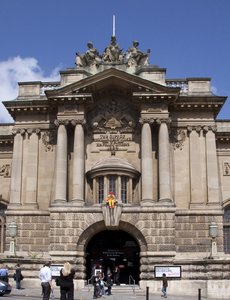
1852 · Bristol Museum - Art Gallery

Edward Lear’s Thermopylae: A Landscape of Quiet Resolve Edward Lear (1812–1888), a figure largely remembered for his delightfully absurd verse and whimsical illustrations—particularly “The Owl and the Pussy…

Order a reproduction from $181 →
Thermopylae (1872) by Edward Lear
#43

Thermopylae

1872 · The Ashmolean Museum of Art And Archaeology

In his 1872 masterpiece, Thermopylae, Edward Lear invites the viewer to step beyond the boundaries of the everyday and into a realm where the majesty of the earth…

Bring it home from $181 →

Edward Lear's paintings by period

The subjects Edward Lear painted most

The four subjects that return most often among these masterpieces, with the finest example of each.

Where to see Edward Lear's paintings

The 8 museums that hold the most of the paintings on this page.

Museum City Works by Edward Lear Paintings from this list
Yale Center for British Art, New HavenYale Center for British Art New Haven 16 Philae, Egypt, Between Olavano and Civitella, A Study of Ferns, Civitella
Government Art Collection, LondonGovernment Art Collection London 4 View of Florence from Villa San Firenze, A View of Adam's Peak, Ceylon
The Ashmolean Museum of Art And Archaeology, OxfordThe Ashmolean Museum of Art And Archaeology Oxford 3 The Plains of Lombardy from Monte Generoso, Thermopylae
Fitzwilliam College, CambridgeFitzwilliam College Cambridge 1 The Temple of Apollo at Bassae
Bristol Museum - Art Gallery, BristolBristol Museum - Art Gallery Bristol 1 The Mountains of Thermopylae
Rhode Island School of Design Museum of Art, ProvidenceRhode Island School of Design Museum of Art Providence 1 Corfu from near the Village of Virós
Israel Museum, JerusalemIsrael Museum Jerusalem 1 Jerusalem from the Mount of Olives
Fine Arts Museums of San Francisco, San FranciscoFine Arts Museums of San Francisco San Francisco 1 Masada on the Dead Sea

Edward Lear's most famous painting of each decade

  1. 1830s
    Civita Castellana (1839) by Edward Lear
    Rank 16 / 100

    Civita Castellana

    Age 18 – 27

    In this watercolor titled Civita Castellana, Edward Lear captures a quiet moment within a picturesque landscape. Created about 1839, the work reflects the artist's ability to translate the…

  2. 1840s
    Between Olavano and Civitella (1842) by Edward Lear
    #15 of 100

    Between Olavano and Civitella

    Age 28 – 37 · Yale Center for British Art

    Between Olavano and Civitella by Edward Lear presents a serene and atmospheric landscape. In the right foreground, a large, detailed tree dominates the composition, its heavy branches extending…

  3. 1850s
  4. 1860s
    Philae, Egypt (1863) by Edward Lear
    #13 of 100

    Philae, Egypt

    Age 48 – 57 · Yale Center for British Art

    Edward Lear's "Philae, Egypt, 1863" isn’t merely a landscape painting; it’s a portal. A meticulously rendered vista of the ancient Egyptian island city of Philae, nestled within the…

  5. 1870s
    The Pyramids of Ghizeh (1873) by Edward Lear
    Rank 5 / 100

    The Pyramids of Ghizeh

    Age 58 – 67

    In "The Pyramids of Ghizeh" by Edward Lear, the composition is dominated by the pyramids positioned centrally against a muted sky. These massive, triangular shapes provide a strong…

  6. 1880s
    The Plains of Lombardy from Monte Generoso (1880) by Edward Lear
    Rank 14 / 100

    The Plains of Lombardy from Monte Generoso

    Age 68 – 76 · The Ashmolean Museum of Art And Archaeology

    In the quiet majesty of The Plains of Lombardy from Monte Generoso, we are invited to stand upon a precipice of history and nature. Created in 1880 by…

Questions about Edward Lear's paintings

What is Edward Lear's most famous painting?Show the answer

Cogoleto, Italy. Next come Crescenza and Blue And Yellow Macaw.

What are the top 10 paintings by Edward Lear?Show the answer

Cogoleto, Italy, Crescenza, Blue And Yellow Macaw, View of Taormina in Sicily with Etna in the distance, The Pyramids of Ghizeh, The Temple of Apollo at Bassae, Plains Of Ashdod, Israel, View Of Eze, Italy, Ithaca, Ionian Islands and A Great Green Macaw. The ranking above gives the year and the museum of each.

How many paintings did Edward Lear make?Show the answer

Our catalogue lists 419 works by Edward Lear, dated from 1839 to 1882.

Where are Edward Lear's most famous paintings?Show the answer

Most of them are in Yale Center for British Art (New Haven), Government Art Collection (London) and The Ashmolean Museum of Art And Archaeology (Oxford). The table above lists the museums one by one.

When did Edward Lear paint the most famous works?Show the answer

In 1860s: 14 of the 100 works on this page date from then, among them Philae, Egypt.

What are Edward Lear's earliest and latest famous paintings?Show the answer

The earliest on this page is Civita Castellana (1839), the latest The Marble Rocks - Nerbudda Jubbolpore (1882).

What did Edward Lear paint most often?Show the answer

Landscape (17), Sky (13) and Scenes (10), among the 100 works on this page.

What medium did Edward Lear use most?Show the answer

Watercolor: 15 of the 100 works on this page.

Which art movement does Edward Lear belong to?Show the answer

Romanticism, as the paintings on this page show.

Which Edward Lear paintings can I see at the Yale Center for British Art?Show the answer

Philae, Egypt, Between Olavano and Civitella and A Study of Ferns, Civitella are among the 14 works on this page held by the Yale Center for British Art, New Haven.

Can I buy a reproduction of a Edward Lear painting?Show the answer

Yes. Every painting on this page can be ordered as a museum-quality, hand-painted oil reproduction or a fine art print, in the size you choose, from the painting's own page.

About Edward Lear

A Life Painted in Nonsense and Light

Edward Lear, a name synonymous with whimsical verse and delightfully peculiar illustrations, was far more than the purveyor of limericks and fantastical creatures that often define his legacy. Born in 1812 in Holloway, North London, into a family teeming with twenty-one children, Lear’s early life was marked by both financial instability and a burgeoning artistic talent. His father, Jeremiah Lear, faced hardship after the Napoleonic Wars, forcing young Edward to begin earning a living through his drawings at the tender age of fifteen. This necessity, however, ignited a lifelong passion that would see him traverse continents and capture the world in vibrant hues and playful lines. The shadow of familial difficulty, coupled with early health challenges – including epilepsy and bouts of melancholia he termed “the Morbids” – instilled within Lear a sense of gentle solitude and an inclination towards imaginative escape, qualities profoundly reflected in his art and writing.

From Ornithological Precision to Landscape’s Embrace

Lear's artistic journey began with meticulous precision. Initially employed by the Zoological Society, he honed his skills illustrating birds and animals, demonstrating a remarkable eye for detail and anatomical accuracy. This early work brought him to the attention of Edward Stanley, the 13th Earl of Derby, who commissioned Lear to document the exotic creatures within his private menagerie at Knowsley Hall. These years spent amongst lions, tigers, and parrots not only refined his draftsmanship but also fostered a deep connection with the natural world – a connection that would permeate his later landscapes. However, failing eyesight and respiratory issues eventually led him away from the exacting demands of ornithological illustration. He turned instead to landscape painting, embarking on extensive travels throughout Europe and beyond. Italy became a particular haven, offering not only respite for his health but also an abundance of inspiring vistas. His landscapes are characterized by a unique blend of topographical accuracy and atmospheric sensitivity, often rendered in delicate watercolors that capture the subtle nuances of light and shadow.

The Poet of Nonsense: A World Unbound

While celebrated as a painter, it is perhaps for his literary contributions that Edward Lear is most widely remembered. His “nonsense” poetry – particularly his limericks – revolutionized children’s literature and captivated audiences of all ages. *A Book of Nonsense*, published in 1846 under the pseudonym "Derry down Derry," introduced a world populated by owls and pussycats sailing in pea-green boats, dongs with luminous noses, and other delightfully absurd creations. These verses weren’t merely frivolous; they were imbued with a subtle melancholy and a playful subversion of conventional logic. Lear's limericks often explored themes of loneliness, longing, and the absurdity of existence, cloaked within a veneer of whimsicality. He didn’t simply invent nonsense words; he crafted entire worlds governed by their own internal rules, inviting readers to suspend disbelief and embrace the joy of imagination. The Owl and the Pussy-Cat, arguably his most famous poem, remains a beloved classic, its enduring appeal stemming from its lyrical rhythm and evocative imagery.

A Legacy of Innovation and Enduring Charm

Edward Lear’s influence extends far beyond the realm of children's literature. He pioneered a new form of poetic expression, liberating verse from rigid structures and embracing playful experimentation. His landscapes, though often overshadowed by his poetry, demonstrate a keen artistic sensibility and a mastery of watercolor technique. He was a true polymath – artist, illustrator, musician (he composed musical settings for Tennyson’s poems), author, and poet – whose diverse talents converged to create a unique and enduring legacy. He challenged conventional boundaries, blurring the lines between art, literature, and music. His work continues to inspire artists, writers, and dreamers alike, reminding us of the power of imagination and the beauty of embracing the absurd. His paintings can be found in esteemed collections like The Ashmolean Museum, Oxford, a testament to his skill as a landscape artist. Lear’s life, marked by both personal struggles and creative triumphs, serves as a poignant reminder that even amidst darkness, there is always room for light, laughter, and the boundless possibilities of the human spirit.

Influences and Artistic Development

  • Early Influences: Lear’s initial artistic training focused on scientific illustration, demanding precision and observation. This foundation shaped his meticulous approach to detail, even as he later embraced more expressive styles.
  • Travel & Landscape Painting: His extensive travels through Italy, Greece, Egypt, and beyond profoundly influenced his landscape work. He absorbed the light, colors, and textures of these diverse regions, developing a distinctive style characterized by atmospheric perspective and delicate brushwork.
  • Literary Inspiration: While he popularized the limerick, Lear was also inspired by earlier nonsense verse traditions. His unique contribution lay in his ability to imbue this form with emotional depth and lyrical beauty.
  • Personal Experiences: Lear’s lifelong struggles with health issues and melancholy deeply informed his artistic vision. The sense of isolation and longing that permeates much of his work reflects his own personal experiences.