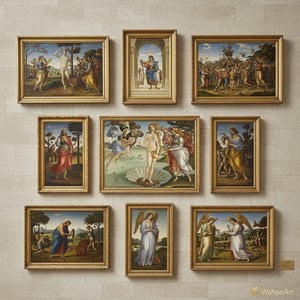
Bartolomeo Suardi (Bramantino): A Milanese Master of Serene Classicism
Bartolomeo Suardi, better known as Bramantino, stands as a singular figure in the artistic landscape of Renaissance Italy – specifically Milan. Born around 1465 in Milan itself, he emerged from a milieu steeped in architectural innovation and humanist ideals, profoundly shaping his artistic vision. While overshadowed by contemporaries like Leonardo da Vinci and Michelangelo, Bramantino’s meticulous approach to painting and his unwavering dedication to capturing the beauty of classical forms cemented his legacy as one of Milan's most important artists.
Early Life & Training: Little is known definitively about Suardi’s formative years. He apprenticed under Piero della Francesca, absorbing the principles of linear perspective and idealized representation – techniques that would become hallmarks of his oeuvre. This mentorship instilled in him a deep appreciation for mathematical precision combined with artistic sensitivity.
Milanese Architectural Patronage: Bramantino's career truly flourished during the reign of Ludovico Sforza, Milan’s formidable patron of the arts. He collaborated extensively on monumental architectural projects, notably the ambitious reconstruction of the Duomo – a project spearheaded by Leonardo da Vinci himself. Suardi’s role wasn’t merely decorative; he meticulously crafted detailed drawings and oversaw construction, demonstrating his mastery of both artistic conception and technical execution.
Painting Style & Influences: Bramantino's distinctive style is characterized by an almost meditative serenity. Unlike the dramatic dynamism favored by many of his peers, he prioritized clarity of form and subtle tonal gradations—a deliberate echo of Leonardo’s compositional strategies. His paintings often depict religious subjects with a profound sense of stillness and grace, imbued with luminous colors reminiscent of Piero della Francesca's frescoes.
Notable Works: Among Bramantino’s celebrated achievements are “Madonna and Child,” a poignant depiction of Mary cradling Jesus—a piece that exemplifies his masterful use of perspective and idealized beauty. Furthermore, "Adoration of the Magi," commissioned for private devotion, showcases his meticulous attention to detail and symbolic resonance, particularly the inclusion of John the Baptist as an adult figure.
Legacy & Historical Significance: Bramantino’s contribution to Milanese art history is undeniable. He represents a crucial link between Florentine classicism and Venetian coloristic innovation—a synthesis that profoundly impacted artistic sensibilities throughout Europe. His architectural designs continue to inspire awe, and his paintings endure as testament to the enduring power of serene beauty and humanist contemplation.
Journey through the divine elegance of Duccio di Buoninsegna. Explore 25 iconic Sienese masterpieces, from the Maestà to the Rucellai Madonna. Find inspiration for museum-quality art reproductions and timeless decor. Discover all masterpieces on WahooArt.com.
Journey through the Early Renaissance! Explore 10 iconic paintings by Botticelli, Leonardo da Vinci & Michelangelo. Discover their stories, techniques & lasting impact. Find museum-quality art reproductions and elevate your home decor with .
What is the top-ranked painting by Bramantino on ArtsDot.com?
Madonna and Child
Who is Bramantino?
Bartolomeo Suardi (Bramantino): A Milanese Master of Serene Classicism
Bartolomeo Suardi, better known as Bramantino, stands as a singular figure in the artistic landscape of Renaissance Italy – specifically Milan. Born around 1465 in Milan itself, he emerged from a milieu steeped in architectural innovation and humanist ideals, profoundly shaping his artistic vision. While overshadowed by contemporaries like Leonardo da Vinci and Michelangelo, Bramantino’s meticulous approach to painting and h