Zhu Wei’s ‘Utopia, No.46’: A Meditation on Devotion in the Shadow of Change
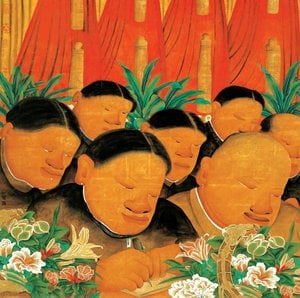
This captivating artwork by Zhu Wei, titled ‘Utopia, No.46’, presents a scene brimming with quiet contemplation and subtle tension. Measuring 120 x 120 cm, the painting immediately draws the eye to its meticulously rendered figures – twelve individuals seated in rows, their heads bowed in what appears to be a deeply reverent gathering. The vibrant palette, dominated by rich reds punctuated by diverse clothing styles and hairstyles, creates an atmosphere both celebratory and subtly unsettling. The artist’s skillful use of color and form speaks volumes about the complexities of Chinese art during this period, reflecting a nation grappling with rapid modernization while clinging to centuries-old traditions.
Artistic Technique and Composition
- Ink Wash Painting (Shui Bai Hua): Zhu Wei masterfully employs the techniques of *shui bai hua*, a cornerstone of Chinese painting. The layering of ink creates depth and texture, particularly evident in the drapery and the subtle gradations of color within the red curtains that frame the scene.
- Row Composition: The deliberate arrangement of figures in rows is a recurring motif in Chinese art, often symbolizing hierarchy, order, or collective devotion. Here, it suggests a formalized ritual, perhaps a religious ceremony or an educational gathering.
- Detailed Rendering: Despite the seemingly simple subject matter, Zhu Wei’s attention to detail – from the individual folds of clothing to the expressions on the figures' faces – elevates this work beyond mere representation. The open book adds another layer of interpretation, hinting at learning and spiritual inquiry.
Historical Context and Symbolism
Created by Zhu Wei in an unknown date, ‘Utopia, No.46’ was produced during a pivotal moment in Chinese history – the post-Tiananmen era. The artist's background as a former military artist, trained within the People’s Liberation Army Art Academy, informs his work with a nuanced understanding of state-sanctioned art and its role in shaping public perception. The scene itself can be interpreted through multiple lenses: it could represent traditional religious practices, an attempt to instill discipline and obedience, or perhaps a critique of societal conformity. The red curtains, a common element in Chinese theatre and ceremonies, further amplify the painting’s symbolic weight.
Emotional Impact and Interpretation
The overall effect of ‘Utopia, No.46’ is one of poignant stillness. The figures' bowed heads evoke a sense of humility, reverence, or perhaps even melancholy. The vibrant colors contrast with the subdued expressions, creating a visual tension that invites contemplation. Zhu Wei skillfully captures a moment suspended in time, prompting viewers to consider themes of faith, community, and the enduring power of tradition in a rapidly changing world. This piece is not simply a depiction; it’s an invitation to engage with profound questions about humanity's place within its own history.
Questions & Answers
Where can I see a preview of "Utopia, No.46"?
A preview of "Utopia, No.46" by Zhu Wei is available on the artwork's Preview page.
Can I see an X-ray view of "Utopia, No.46" by Zhu Wei?
"Utopia, No.46" can be examined layer by layer on the artwork's X-Ray page, a viewer inspired by a conservator's light bench with eleven optical readings of the image.
Who created "Utopia, No.46" and what style is it in?
Zhu Wei created "Utopia, No.46" within the Contemporary Realism movement.



 Preview
 Buy Hand Made Painting
 Send
Send Share
Share
 Details
 Guide
Guide

 Download
 Similars
 X-Ray
X-Ray Diaporama
 Q&A
Q&A Stats
Stats


 Read More






































 Glass option is only available in size under 110 CM