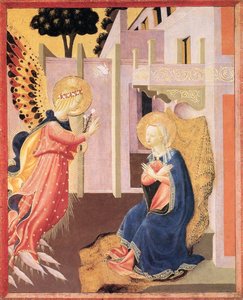
Tempera On PanelEarly Renaissance
 1448Renaissance
 63.0 x 47.0 cm
 Convent of San Marco
Museum-quality giclée or canvas print with fast production and flexible finish options. ( Buy Hand Made Painting Switch to Digital Image)





























Pick from our preset sizes that match the artwork's original proportions.

Type the width and the height you need, to fit your frame or your wall. A print can only be cut, never made bigger than the picture, so a size with a different shape loses a part of the image. We send you a digital mockup to approve before we print anything. The picture shown on this page does not show the real cut — only the mockup does.
Worldwide Delivery () in 2 weeks instead of standard 4/5 weeks. (14 October)
St Agnes
Reproduction Size
The tempera panel painting, “St Agnes,” attributed to Zanobi Strozzi and completed in 1448, is more than simply a depiction of a saint; it's a meticulously crafted window into the artistic sensibilities of early Renaissance Florence. Measuring just 63 x 47 cm, this work housed within the Museo di San Marco possesses an intimate quality that draws the viewer into its serene and profoundly devotional world. Strozzi, a pupil of the celebrated Fra Angelico, established himself as a master of detail and color, creating works imbued with a quiet spirituality that resonated deeply during his time.
The visual impact of “St Agnes” stems largely from Strozzi's bold use of color and his extraordinary attention to decorative detail. Predominantly employing shades of blue, red, and gold – colors deeply associated with piety and royalty in the late medieval period – he constructs a complex tapestry of patterns that frame the central figure. Swirls, floral motifs, and other decorative elements aren’t merely ornamental; they serve as a visual language, amplifying the saint's solemnity and invoking a sense of heavenly grace. The background isn’t a simple backdrop but an active participant in the narrative, contributing to the overall atmosphere of reverence.
Created during a period of immense artistic innovation in Florence – a time when artists were rediscovering classical ideals while simultaneously developing their own unique styles – “St Agnes” reflects the evolving aesthetic sensibilities of the era. Strozzi’s close association with Fra Angelico undoubtedly influenced his approach, sharing a commitment to clarity, emotional intensity, and a profound sense of spirituality. The painting's style aligns perfectly with the artistic trends of the Florentine Renaissance, showcasing a sophisticated understanding of perspective and proportion, albeit within the constraints of the tempera medium.
Beyond its technical brilliance, “St Agnes” is rich in symbolism. The red cloak, traditionally associated with sacrifice and martyrdom, underscores the saint’s tragic fate. The serene expression on her face conveys a sense of acceptance and unwavering faith. The overall effect is one of profound contemplation – an invitation to reflect on themes of devotion, courage, and ultimately, redemption. This painting continues to resonate with viewers today, offering a tangible connection to the artistic and spiritual values of Renaissance Florence.
The recorded mood of "St Agnes" by Zanobi Strozzi is serene, and its emotional tone is reflective.
"St Agnes" is recorded as recognized among the Early Renaissance works in the catalog.
The original "St Agnes" by Zanobi Strozzi is held at the Convent of San Marco, Florence, Italy. A reproduction allows the work to be displayed at home.

In the golden era of the Florentine Renaissance, where light and shadow began to dance with newfound humanistic depth, the name Zanobi Strozzi emerged as a vital thread in the city's artistic tapestry. Born in 1412 into the illustrious Strozzi family, Zanobi’s early life was shaped by the profound political shifts of Florence. Though his lineage connected him to nobility, the untimely death of his father when Zanobi was only fifteen years old thrust him toward a different kind of destiny. This period of personal loss led him into the transformative embrace of an apprenticeship under Battista di Biagio Sanguigni, a mentorship that would eventually refine his hand and instill in him the technical precision required to master the delicate art of manuscript illumination and panel painting.
Strozzi’s artistic evolution was deeply intertwined with the spiritual and aesthetic currents of his time. His most significant connection, however, was his association with the revered Fra Angelico. As a pupil within this influential circle, Strozzi did not merely mimic the master; he absorbed a profound sense of devotion and a luminous approach to color that would become hallmarks of his own style. This relationship allowed for a beautiful stylistic convergence, where the ethereal, divine light characteristic of Fra Angelico met Strozzi’s meticulous attention to detail. His work often bridged the gap between the intimate, miniature worlds of illuminated manuscripts and the grand, emotive presence of religious altarpieces.
The breadth of Strozzi’s talent is most evident in his ability to navigate diverse mediums with equal grace. He was a master of tempera on panel, a medium that demanded immense patience and a steady hand to achieve the vibrant, jewel-like tones seen in his religious works. His repertoire included several significant altarpieces and poignant depictions of the Virgin and Child, pieces designed to evoke deep spiritual reflection in the viewer. In these works, Strozzi utilized the Florentine Early Renaissance style to weave narratives of faith, using soft transitions and intricate patterns to breathe life into sacred figures.
Beyond the larger panels, Strozzi achieved legendary status through his contributions to manuscript illumination. His ability to command small spaces allowed him to create miniature worlds of breathtaking complexity. Some of his most notable artistic achievements include:
The historical significance of Zanobi Strozzi lies in his role as a bridge between the medieval tradition of decorative illumination and the burgeoning Renaissance focus on human emotion and naturalism. While much of his work was destined for private devotion within the grand residences of Florence, his influence rippled through the workshops of the city. He helped disseminate a specific brand of Florentine beauty—one that was both intellectually rigorous and emotionally accessible. Through his hands, the sacred stories of the saints and the Virgin were rendered with a clarity and vibrancy that captured the very essence of the Quattrocento spirit.
Though he passed away in 1468, leaving behind a legacy etched in gold leaf and tempera, Strozzi remains a symbol of the artist's ability to find profound meaning within the minute. His life, marked by the transition from a noble orphan to a celebrated master, mirrors the very transformation of Florence itself: a journey from the structured traditions of the past toward the luminous, human-centered brilliance of the Renaissance.

1412 - 1468 , Italy

Elevate your design projects with WahooArt's premium canvas prints and hand-painted reproductions. From Giclée excellence to bespoke oil commissions, we provide professional decorators with museum-quality, affordable art solutions delivered worldwide with a 100% satisfaction guarantee.

Discover the excellence of WahooArt.com premium poster prints. Designed for elite collectors, our museum-quality Giclée reproductions offer unmatched durability and archival precision to elevate your luxury interiors with high-impact, sophisticated art decor.

 Preview
 Send
Send Share
Share
 Details
 Guide
Guide

 Download
 Similars
 X-Ray
X-Ray Diaporama
 Stats
Stats Read More









 Glass option is only available in size under 110 CM