Museum-quality giclée or canvas print with fast production and flexible finish options. ( Buy Hand Made Painting Switch to Digital Image)





























Pick from our preset sizes that match the artwork's original proportions.

You may enter your own dimensions to fit a specific frame or space. If your selected size does not match the original image's proportions, we will either crop the artwork or extend the image with a mirrored or solid-fill edge. A digital mockup will be sent for your approval before production begins.
Please note that the on-screen preview does not reflect the actual cropping or extension. Only the mockup will accurately show the final composition.
While custom sizes are available, we recommend selecting a dimension from the predefined list to preserve the original proportions.
Worldwide Delivery () in 2 weeks instead of standard 4/5 weeks. (9 September)


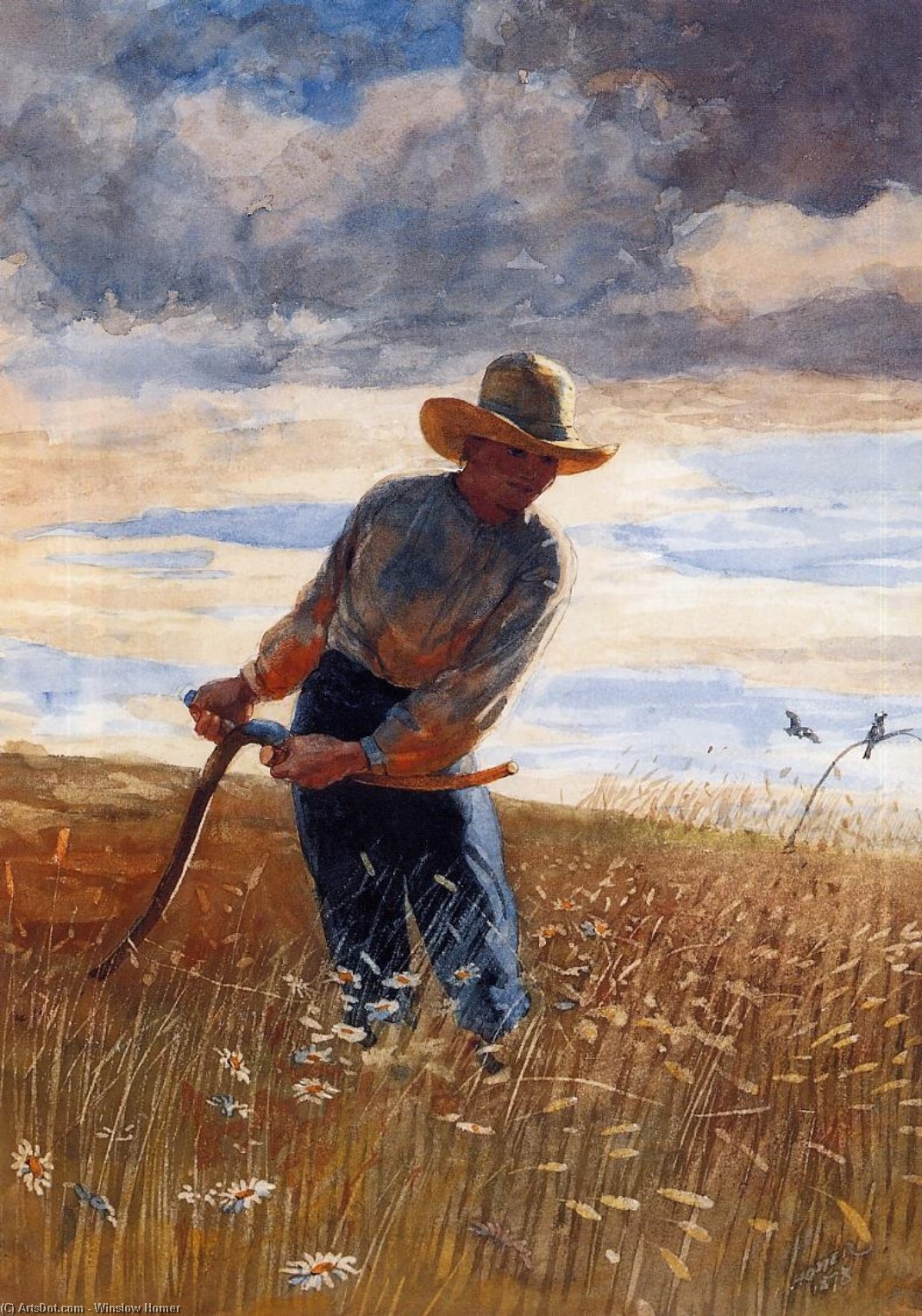
The Reaper
Reproduction Size
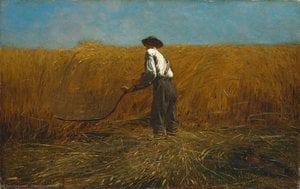
Winslow Homer’s “The Reaper,” painted in 1878, is more than just a depiction of a rural scene; it’s a profound meditation on the dignity of labor, the rhythms of nature, and the burgeoning sense of national identity taking root in America. This watercolor captures a solitary figure – a man in a worn straw hat – engaged in the timeless task of harvesting grain with a scythe. The composition is deceptively simple, yet brimming with quiet intensity, reflecting Homer’s unique approach to artmaking that prioritized direct observation and emotional resonance over academic convention.
Homer’s artistic journey was markedly different from that of many of his European contemporaries. He eschewed formal training at traditional academies, instead apprenticing himself to the demands of illustration for Harper’s Weekly beginning at just twelve years old. This early experience instilled in him a remarkable ability to capture fleeting moments and details with astonishing accuracy – a skill honed by necessity in the fast-paced world of print media. His focus wasn't on recreating idealized landscapes or historical narratives, but on truthfully representing the lives he observed around him: the bustling streets of Boston, the quiet dignity of rural New England, and ultimately, the evolving story of America itself.
“The Reaper” exemplifies Homer’s mastery of watercolor. He employs a loose, expressive brushstroke to convey movement and texture, particularly in the swaying grass and the flowing scythe. The color palette is dominated by earthy tones—greens, browns, and grays—creating a harmonious blend that reflects the natural world. The subtle gradations of light and shadow add depth and realism to the scene, while the careful placement of birds scattered throughout the painting introduces an element of spontaneity and life. Homer’s technique isn't about precise representation; it’s about capturing *feeling* – the quiet strength and resilience of the farmer, the vastness of the landscape, and the enduring connection between humanity and nature.
Beyond its realistic depiction, “The Reaper” carries significant symbolic weight. The solitary figure represents not just agricultural labor but also themes of perseverance, self-reliance, and the cyclical nature of life. The act of harvesting is a metaphor for renewal and hope, while the vastness of the field suggests both opportunity and isolation. Homer’s work resonates with a deep emotional current – a sense of quiet dignity, connection to the land, and an appreciation for the simple beauty of everyday existence. This painting speaks to the enduring spirit of America, rooted in its hardworking people and its boundless landscapes.


1836 - 1910 , United States of America

Master the nuances of Giclée printing with our expert guide. Discover how pigment-based inks and museum-grade substrates create fade-resistant, high-fidelity art reproductions designed for discerning collectors seeking unparalleled quality and longevity.

Discover the ethereal beauty of watercolor through an art-historical lens. Master the delicate balance of light, fluidity, and pigment to capture the luminous essence of nature, inspired by the legendary techniques of the Old Masters and Impressionist greats.

Discover the excellence of WahooArt.com premium poster prints. Designed for elite collectors, our museum-quality Giclée reproductions offer unmatched durability and archival precision to elevate your luxury interiors with high-impact, sophisticated art decor.

 Preview
 Send
Send Share
Share
 Details

 Download
 Similars
 X-Ray
X-Ray Diaporama
 Stats
Stats

 Read More







 Glass option is only available in size under 110 CM