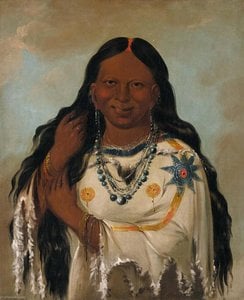
Acrylic On CanvasWallArtRomanticism
 1870
1870 13.0 x 10.0 cm
 National Portrait Gallery
Hand-painted oil on canvas in your size and frame, made to order by our artists. ( Switch to Print Switch to Digital Image)





























Pick from our preset sizes that match the artwork's original proportions.

You may enter your own dimensions to fit a specific frame or space. If your selected size does not match the original image's proportions, we will either crop the artwork or extend the painting with additional hand-painted elements. A digital mockup will be sent for your approval before production begins.
Please note that the on-screen preview does not reflect the actual cropping or extension. Only the mockup will accurately show the final composition.
While custom sizes are available, we recommend selecting a dimension from the predefined list to preserve the original proportions.
Worldwide Delivery () in 3/4 weeks instead of standard 5 weeks. (13 September). No compromise on quality.


Kicking Bird
Reproduction Size

William Stinson Soule, also known as Will Soule, was born on August 26, 1836, in Turner, Maine, the son of John Soule and Mary (née True). His early life took a dramatic turn with the outbreak of the American Civil War. He enlisted with the 13th Massachusetts Volunteer Infantry, serving the Union Army. Soule was wounded at the Battle of Antietam on September 17, 1862, and subsequently served out the remainder of the war with the Veteran Reserve Corps.
Following his military service, Soule embarked on a career in photography. In 1865, he opened a studio and gallery in Chambersburg, Pennsylvania. However, this venture was short-lived; a fire destroyed his business in early 1867. Undeterred, Soule moved west to Fort Dodge, Kansas, where he worked as a clerk in the sutler's store.
A pivotal moment arrived in 1869 when Soule became the post photographer at Fort Sill, Indian Territory (present-day Oklahoma). For six years, he held this position, capturing high-quality portraits and photographs of Native American individuals and groups. This period represents the most significant contribution to his photographic legacy.
Soule’s work is characterized by its technical proficiency and attention to detail – hallmarks of late 19th-century photography. His portraits, particularly those of Native Americans, are notable for their dignity and respect. He wasn't simply documenting; he was creating lasting visual records of a changing era.
In 1875, Soule left Fort Sill and returned east. He married Ella Augusta Blackman that year and resided in Philadelphia before moving to Vermont and finally settling in Boston in 1882. There, he took over his older brother's business, the Soule Art Company, until his retirement in 1900.
William Stinson Soule passed away on August 12, 1908. While not a household name today, his photographs remain invaluable historical resources, offering insights into the American West and its diverse inhabitants during a crucial period of transformation.
Soule’s contributions lie in his meticulous documentation of Native American life and culture at a time when these communities were undergoing profound changes. His photographs provide a visual record that complements written accounts, offering a more nuanced understanding of the era. His work continues to be studied by historians and art enthusiasts alike, ensuring his place as an important figure in the history of Western photography.

1836 - 1908 , United States of America

Explore the profound emotional depth of documentary photography art. Discover how collectors curate powerful historical narratives through museum-quality black and white prints and fine art reproductions that preserve humanity's most resilient moments.

Explore the profound artistry of black and white photography. From historical mastery to the interplay of light and shadow, discover how monochrome captures timeless emotion and form through a sophisticated lens of art history.

 Preview
 Send
Send Share
Share
 Details

 Download
 Similars
 X-Ray
X-Ray Diaporama
 Stats
Stats Read More







 Glass option is only available in size under 110 CM