


Hand-painted oil on canvas in your size and frame, made to order by our artists. ( Buy Print Buy Image)





























Pick from our preset sizes that match the artwork's original proportions.

You may enter your own dimensions to fit a specific frame or space. If your selected size does not match the original image's proportions, we will either crop the artwork or extend the painting with additional hand-painted elements. A digital mockup will be sent for your approval before production begins.
Please note that the on-screen preview does not reflect the actual cropping or extension. Only the mockup will accurately show the final composition.
While custom sizes are available, we recommend selecting a dimension from the predefined list to preserve the original proportions.
Worldwide Delivery () in 3/4 weeks instead of standard 5 weeks. (7 September). No compromise on quality.


Lame theater
Reproduction Size
William Hogarth’s “Lame Theater,” completed around 1730, stands as a cornerstone of English Rococo satire and a remarkably astute observation of the social landscape of Georgian London. More than just a depiction of an evening performance—though it vividly captures one—the print operates on multiple levels, delivering a biting critique of morality, ambition, and the pervasive hypocrisy that characterized the era.
Hogarth’s etching technique is paramount to conveying the artwork's impact. The artist employs an extensive network of fine lines to delineate facial features, clothing folds, and architectural details with remarkable accuracy. Simultaneously, thicker lines define structural elements like doorways and walls, establishing depth and creating a sense of spatial realism. This meticulous linework isn’t merely decorative; it actively contributes to the textural qualities of the print—densely hatched areas represent shadows and darker tones, while sparser regions depict illuminated surfaces.
"Lame Theater" transcends its immediate subject matter to resonate with viewers on a deeper emotional level. Hogarth’s unflinching gaze captures the moral decay of his time—a theme that continues to fascinate audiences today. Considered by many critics as one of Hogarth's finest achievements, it exemplifies the artist's commitment to portraying human nature with honesty and wit—a legacy that cemented his place as a pioneer of English satire and profoundly influenced subsequent generations of artists.
The artwork’s creation involved several crucial steps. Initially, Hogarth created a copper plate using etching tools, meticulously transferring the image onto its surface. Subsequently, ink was applied to the plate, followed by printing onto paper—a process that ensured the reproduction of the original print's tonal qualities and textural nuances.


1697 - 1764 , United Kingdom

Explore the satirical world of William Hogarth, pioneering British painter & engraver. Discover his iconic works like *A Rake's Progress* and insightful social commentary on 18th-century London life.
Journey through art history with our Top 10 Legendary Engravings! Explore masterpieces by Dürer, Rembrandt & Goya. Discover the stories behind these iconic prints and find museum-quality reproductions for your home at WahooArt.com.
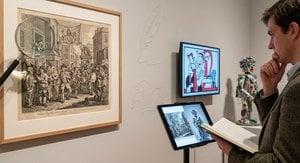
Explore the history of satire in art! From Hogarth's London to contemporary critique, discover how artists use wit & visual power to reflect and challenge society. Expert insights at WahooArt.

Explore the rich history of engraving with WahooArt. Discover techniques, iconic artists like Dürer & Callot, collecting tips, and expert guidance for preserving your art investment. Learn about intaglio printing & more!

Explore the opulent world of Baroque interior design! Discover key elements, modern applications & how to bring dramatic elegance into your home with 's authentic reproductions.

 Preview
 Send
Send Share
Share
 Details

 Download
 Similars
 X-Ray
X-Ray Diaporama
 Read More







 Glass option is only available in size under 110 CM


