


 Acrylic On CanvasWallArtBaroque Satire
 61.0 x 45.0 cm
Museum-quality giclée or canvas print with fast production and flexible finish options. ( Buy Hand Made Painting Buy Image)





























Pick from our preset sizes that match the artwork's original proportions.

You may enter your own dimensions to fit a specific frame or space. If your selected size does not match the original image's proportions, we will either crop the artwork or extend the image with a mirrored or solid-fill edge. A digital mockup will be sent for your approval before production begins.
Please note that the on-screen preview does not reflect the actual cropping or extension. Only the mockup will accurately show the final composition.
While custom sizes are available, we recommend selecting a dimension from the predefined list to preserve the original proportions.
Worldwide Delivery () in 2 weeks instead of standard 4/5 weeks. (7 September)


A Rake’s Progress, Plate III
Reproduction Size
William Hogarth's “A Rake’s Progress, Plate III,” created in 1732-33, stands as a cornerstone of British satirical art and a chilling depiction of societal hypocrisy during the Enlightenment. More than just a visual record of a tavern scene—as documented by scholars at Sir John Soane’s Museum—it's a meticulously crafted commentary on virtue versus vice, ambition versus moral responsibility, presented with an unflinching gaze that continues to resonate centuries later.
The historical context is crucial to understanding “A Rake’s Progress.” Hogarth lived during a period marked by rapid social change—the rise of mercantilism, the expansion of colonial ambitions, and an increasing preoccupation with moral philosophy. He deliberately confronted these trends head-on, exposing the decadent lifestyles of the aristocracy and questioning their justifications for indulging in immoral behavior.
“A Rake’s Progress, Plate III” remains an enduring masterpiece not only for its technical brilliance but also for its profound engagement with the anxieties of its time. Its meticulous detail and unsettling portrayal of human behavior continue to inspire artists and captivate audiences today—a testament to Hogarth's unparalleled ability to transform observation into searing social critique.


1697 - 1764 , United Kingdom

Explore the satirical world of William Hogarth, pioneering British painter & engraver. Discover his iconic works like *A Rake's Progress* and insightful social commentary on 18th-century London life.

Journey through 18th century art! Explore 10 iconic paintings – from Rococo elegance to Neoclassical grandeur. Discover Fragonard, David & more. Find museum-quality reproductions and elevate your home decor on WahooArt.com.

Explore the life & work of Thomas Hudson, a leading 18th-century British portraitist. Discover his mastery of the 'Grand Manner,' influential style, and lasting impact on British art. Learn about his notable portraits like Judge William Noel & Alexander Van Aken.
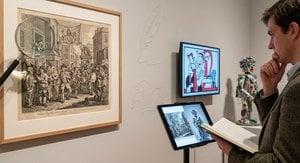
Explore the history of satire in art! From Hogarth's London to contemporary critique, discover how artists use wit & visual power to reflect and challenge society. Expert insights at WahooArt.

Explore the world of 18th-century portraiture with WahooArt. Discover symbolism, artistic innovation & societal values reflected in masterpieces by Reynolds, Hogarth & more. Expert insights for collectors.

 Preview
 Send
Send Share
Share
 Details

 Download
 Similars
 X-Ray
X-Ray Diaporama
 Read More







 Glass option is only available in size under 110 CM


