


Museum-quality giclée or canvas print with fast production and flexible finish options. ( Buy Hand Made Painting Buy Image)





























Pick from our preset sizes that match the artwork's original proportions.

You may enter your own dimensions to fit a specific frame or space. If your selected size does not match the original image's proportions, we will either crop the artwork or extend the image with a mirrored or solid-fill edge. A digital mockup will be sent for your approval before production begins.
Please note that the on-screen preview does not reflect the actual cropping or extension. Only the mockup will accurately show the final composition.
While custom sizes are available, we recommend selecting a dimension from the predefined list to preserve the original proportions.
Worldwide Delivery () in 2 weeks instead of standard 4/5 weeks. (6 September)


Still Life Bouquet
Reproduction Size
In the quiet intimacy of Still Life Bouquet, created in 1938, we encounter a moment of profound vibrance captured by the masterful hand of William H. Johnson. This exquisite composition transcends the traditional boundaries of the still life genre, offering far more than a mere arrangement of flora. At first glance, the eye is drawn to the exuberant dance of colors—deep reds, sun-drenched yellows, and serene blues that pulse against the canvas with an almost rhythmic energy. The flowers, nestled within their vase upon a simple table, are not merely objects of study but characters in a silent, beautiful drama. Each petal and leaf seems to breathe, rendered with a texture that invites the viewer to reach out and feel the tactile richness of the artist's vision.
The technique employed here is a masterful blend of modernist abstraction and the soulful simplicity of folk traditions. Johnson, a pivotal figure of the Harlem Renaissance, possessed a unique ability to distill complex emotions into bold, graphic forms. In this piece, his brushwork avoids unnecessary clutter, focusing instead on the essential geometry of the bouquet. The interplay of light and shadow is not used for mere realism but to sculpt the shapes, giving the arrangement a weight and presence that commands the room. For the discerning collector or interior designer, this painting offers a sophisticated balance; its vibrant hues provide a striking focal point, while its structured composition ensures it integrates seamlessly into a variety of modern and classic decor styles.
Beyond the visual splendor lies a deeper, more resonant layer of meaning. To understand Still Life Bouquet, one must consider the historical context of Johnson’s life and his connection to the spiritual and cultural currents of his time. While many still lifes serve as studies in mortality, Johnson’s work often radiates a sense of resilience and spiritual vitality. The choice of a bouquet—a collection of individual lives gathered into a single, harmonious whole—can be seen as a metaphor for the community and the enduring strength found in unity. There is an inherent optimism in the way the colors collide, suggesting a celebration of life that persists despite the complexities of the era in which it was painted.
For those seeking to bring a piece of American art history into their personal sanctuary, this reproduction serves as more than just decoration; it is an emotional anchor. The painting evokes a sense of peace and vitality, making it an ideal selection for spaces designed for reflection or creative inspiration. Whether placed in a sunlit breakfast nook or as a centerpiece in a formal gallery setting, the Still Life Bouquet continues to perform its original magic: capturing the fleeting beauty of nature and transforming it into an eternal, luminous presence that speaks to the heart of every observer.

The story of William Henry Johnson is one of profound transformation, a journey that began in the humble landscapes of Florence, South Carolina, and ascended to the heights of the international modernist stage. Born in 1901 into a poor African American family during the era of Jim Crow, Johnson’s early life was shaped by the rhythms of the American South—the spiritual echoes of gospel music, the richness of oral storytelling, and the deep-seated traditions of his heritage. This foundational connection to Black culture would later serve as the heartbeat of his most enduring works, providing a wellspring of imagery that transcended mere representation to reach the realm of the universal.
His path toward artistic mastery was paved with immense personal determination. Moving to New York at the age of seventeen, Johnson worked tirelessly to fund his education at the prestigious National Academy of Design. In the halls of the academy, he mastered the rigorous, classical standards of European tradition, yet his spirit remained tethered to the vibrant textures of his roots. This tension between formal academic training and a yearning for cultural authenticity would become the defining characteristic of his evolving style.
The late 1920s marked a pivotal departure in Johnson’s career as he traveled to Europe, immersing himself in the avant-garde movements of France. It was during this period of wandering and discovery that his brushwork began to shed its classical constraints, embracing the emotional intensity of Expressionism. His time in Scandinavia, particularly his marriage to the Danish artist Holcha Krake, introduced him to the aesthetics of primitivism and folk art. These influences acted as a catalyst, prompting him to simplify forms and utilize bold, unadorned colors to convey deeper psychological truths.
Upon returning to the United States in 1938, Johnson emerged as a vital voice of the Harlem Renaissance. He did not merely observe African American life; he celebrated it through a unique visual language that blended modernist abstraction with a soulful, folk-inspired aesthetic. His canvases became windows into the dignity of the Black experience, utilizing techniques such as impasto to create palpable textures that mirrored the grit and grace of his subjects. Whether depicting the rhythmic energy of dancers in works like Jitterbugs (III) or the serene stillness of a seated figure, Johnson’s work possessed an unmistakable emotional clarity.
The significance of William H. Johnson lies in his ability to weave together disparate worlds—the spiritual and the secular, the local and the global, the classical and the primitive. His oeuvre is a monumental archive of African American identity, featuring subjects that range from historical icons like Harriet Tubman to the everyday beauty of rural landscapes and social gatherings. Notable masterpieces such as The Black Christ demonstrate his profound use of Yoruba symbolism, bridging the gap between ancestral spirituality and contemporary struggle.
Though he faced periods of being overlooked by the mainstream art establishment during his lifetime, Johnson’s legacy has undergone a powerful reclamation. Today, he is recognized not just as a painter of his era, but as a visionary who transformed the language of modernism to honor the resilience of his people. His life remains a testament to the power of art to preserve history, celebrate identity, and find beauty within the most complex human experiences.

1901 - 1970 , United States of America

Discover the profound beauty of folk art through a cultural lens. Explore how naive masterpieces and vibrant global traditions preserve heritage, offering timeless inspiration for collectors and art enthusiasts seeking authenticity and soul in every brushstroke.

Explore the profound beauty of folk art through its rich history and storytelling traditions. Discover how Naive Art and cultural heritage preserve ancestral narratives through vibrant color and symbolism for the modern collector.

Embark on a sophisticated journey through the world of folk art. Our expert guide offers connoisseurs deep insights into discovering, identifying, and collecting meaningful cultural masterpieces that preserve the soul of global traditions.
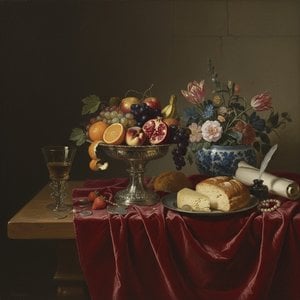
Embark on a sophisticated journey through the history of still life art. From Dutch Golden Age masterpieces to Baroque opulence, explore the profound symbolism and timeless beauty of the world's most exquisite table compositions.

Embark on a sophisticated journey through art history with our exploration of still life masterpieces. Discover the profound symbolism behind classical paintings of drinks and fruit, curated for the true connoisseur seeking timeless elegance and academic depth.

 Preview
 Send
Send Share
Share
 Details

 Download
 Similars
 X-Ray
X-Ray Diaporama


 Read More







 Glass option is only available in size under 110 CM


