x


Hand-painted oil on canvas in your size and frame, made to order by our artists. ( Buy Print Buy Image)
Pick from our preset sizes that match the artwork's original proportions.

You may enter your own dimensions to fit a specific frame or space. If your selected size does not match the original image's proportions, we will either crop the artwork or extend the painting with additional hand-painted elements. A digital mockup will be sent for your approval before production begins.
Please note that the on-screen preview does not reflect the actual cropping or extension. Only the mockup will accurately show the final composition.
While custom sizes are available, we recommend selecting a dimension from the predefined list to preserve the original proportions.
Worldwide Delivery () in 3/4 weeks instead of standard 5 weeks. (28 August). No compromise on quality.


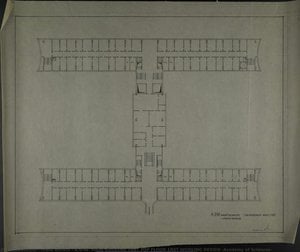
Plan of the Tower Mint
Reproduction Size

William Allingham (1824–1889) remains a captivating figure in the tapestry of nineteenth-century literature, a man whose pen captured the ethereal boundary between the mundane and the mythic. Born in the small town of Ballyshannon, in the rugged beauty of County Donegal, Allingham’s early years were steeped in the atmospheric landscapes of Ireland. This formative connection to the natural world—the windswept coasts and verdant valleys—would later become the heartbeat of his poetic output. Though he spent much of his professional life navigating the structured world of the customs service, his spirit remained anchored in the folklore and legends of his homeland, creating a body of work that feels both deeply personal and universally enchanting.
His literary journey was not merely a solitary pursuit but part of a vibrant, interconnected creative life. Allingham’s marriage to the celebrated watercolorist Helen Allingham formed one of the most harmonious artistic partnerships of the Victorian era. Together, they shared a devotion to capturing the charm of rural life and the delicate nuances of nature. This domestic and professional synergy allowed his words to find visual resonance, as his poetry often mirrored the soft, luminous qualities found in his wife's illustrations. His life was a bridge between the rugged traditions of Ulster and the sophisticated intellectual circles of London, where he eventually served as sub-editor of Fraser's Magazine.
The zenith of Allingham’s poetic achievement is undoubtedly found in his 1865 collection, “The Faeries.” In this masterful work, he moved beyond simple pastoral verse to explore a psychological landscape populated by Celtic spirits and supernatural beings. These poems do not merely describe the fantastical; they use the lens of mythology to examine the complexities of human emotion, longing, and wonder. Through his lyrical mastery, Allingham breathed life into the shadows of the Irish countryside, making the unseen world feel palpably present. This ability to blend observation with profound imagination earned him a place in the hearts of readers and ensured his work was widely anthologized during his lifetime.
Beyond the realm of myth, Allingham’s contributions to the literary landscape were marked by a remarkable versatility. He was a scholar and an editor who shaped the very canon he inhabited, contributing to The Ballad Book for the Golden Treasury series. His work often intersected with the giants of his age; his diaries provide an invaluable, intimate window into the lives of luminaries such as Alfred, Lord Tennyson and Thomas Carlyle. Through these personal records, we see Allingham not just as a poet of the landscape, but as a vital witness to the intellectual pulse of the Victorian era, capturing the lively encounters and shared creative energies that defined an epoch.
The historical significance of William Allingham lies in his unique ability to synthesize the local with the universal. While his roots were firmly planted in the soil of Ireland, his themes of nostalgia, nature, and the supernatural resonated far beyond the borders of his native country. His work serves as a vital link in the evolution of late nineteenth-century poetry, bridging the gap between traditional romanticism and the more introspective, psychologically complex movements that followed.
To reflect on Allingham’s life is to encounter a legacy defined by:
Ultimately, Allingham’s voice endures because it captures the eternal human yearning for connection—to the land, to the past, and to the magic that resides just beneath the surface of the everyday.

1824 - 1889 , Republic of Ireland

Journey through 18th century art! Explore 10 iconic paintings – from Rococo elegance to Neoclassical grandeur. Discover Fragonard, David & more. Find museum-quality reproductions and elevate your home decor on WahooArt.com.

Elevate your interiors with breathtaking topographical art. From vintage cartography to textured 3D reliefs, discover how hand-painted maps and historical landscapes can transform any room into a sophisticated sanctuary of discovery and timeless beauty.

Explore the captivating world of Penry Williams (1802-1885), a Welsh artist renowned for his evocative Impressionistic landscapes and scenes of Italy. Discover his life, style & legacy with WahooArt.

Explore the satirical world of William Hogarth, pioneering British painter & engraver. Discover his iconic works like *A Rake's Progress* and insightful social commentary on 18th-century London life.

Explore the groundbreaking work of Christopher Williams, a pivotal figure in contemporary art. This analysis delves into his deconstruction of representation, materiality, and institutional critique – essential reading for serious collectors.


Stay updated with the latest art news, exclusive offers, and decoration ideas.
Tell us about your project and our art experts will provide you with 3 personalized art suggestions.
Let Us Curate 3 Options Just for You - Free!

 Preview
 Send
Send Share
Share
 Details

 Download
 Similars
 X-Ray
X-Ray Diaporama


 Read More




































 Glass option is only available in size under 110 CM