
x


 Oil On CanvasWallArtBaroque Still Life
 1671Renaissance
 49.0 x 41.0 cm
 Academy of Fine Arts Vienna
Hand-painted oil on canvas in your size and frame, made to order by our artists. ( Buy Print Buy Image)





























Pick from our preset sizes that match the artwork's original proportions.

You may enter your own dimensions to fit a specific frame or space. If your selected size does not match the original image's proportions, we will either crop the artwork or extend the painting with additional hand-painted elements. A digital mockup will be sent for your approval before production begins.
Please note that the on-screen preview does not reflect the actual cropping or extension. Only the mockup will accurately show the final composition.
While custom sizes are available, we recommend selecting a dimension from the predefined list to preserve the original proportions.
Worldwide Delivery () in 3/4 weeks instead of standard 5 weeks. (27 August). No compromise on quality.


Breakfast Piece
Reproduction Size
Willem van Aelst's *Breakfast Piece*, painted in 1671, is more than just a still life; it’s a meticulously crafted snapshot of 17th-century Dutch life, brimming with the quiet luxury and observant detail that defined the Golden Age. Measuring a modest 49 x 41 cm, this oil on canvas work, currently housed in the Academy of Fine Arts Vienna, offers a captivating glimpse into a world where even the most commonplace objects – a bowl of fruit, a loaf of bread, onions, and a glass vase – were elevated to subjects of profound artistic consideration. Van Aelst’s mastery lies not merely in his technical skill but in his ability to imbue these everyday items with a sense of palpable presence, inviting the viewer into an intimate moment of domestic tranquility.
The painting's impact is immediately drawn from Van Aelst’s masterful use of chiaroscuro – the dramatic interplay of light and shadow. This technique isn’t simply decorative; it’s fundamental to creating a convincing illusion of three-dimensionality, allowing each object to appear almost tangible. The artist meticulously renders textures with astonishing accuracy: the rough skin of the onions contrasts sharply with the smooth surface of the glass vase, while the glistening fish reflects light in a way that suggests freshness and vitality. The dark tablecloth, acting as a stage backdrop, further emphasizes the luminous quality of the food items, drawing the eye towards their intricate details.
*Breakfast Piece* provides a valuable window into the social and cultural values of 17th-century Holland. The abundance of food—a symbol of prosperity and good fortune—reflects the economic strength of the Dutch Republic at the time. The composition, with its triangular arrangement, echoes classical principles of harmony and balance, reflecting the influence of Renaissance art on the Dutch Golden Age. While seemingly a simple still life, it subtly engages with the *vanitas* theme – a reminder of mortality and the fleeting nature of earthly pleasures – a common motif in Dutch Baroque painting. The artist’s meticulous attention to detail speaks to the importance placed on material possessions and the appreciation for beauty within the domestic sphere.
Willem van Aelst was a true innovator in the field of still life painting. Born in Delft in 1626, he dedicated his career to capturing the nuances of everyday objects with unparalleled precision and artistry. His work exemplifies the meticulous realism that characterized the Dutch Golden Age, showcasing a deep understanding of light, texture, and composition. Van Aelst’s legacy rests on his ability to transform ordinary subjects into extraordinary works of art, solidifying his place as one of the most important still life painters of his era. This piece is a testament to his dedication to detail and his profound appreciation for the beauty found in the simplest of things.


1626 - 1683 , Netherlands

Journey into the Dutch Golden Age! Explore 10 iconic paintings by Rembrandt, Vermeer & Hals. Discover the stories behind these Baroque masterpieces and find museum-quality art reproductions to elevate your home decor on .

Explore the captivating world of Dutch Golden Age still life with Abraham van Beyeren. Discover his innovative techniques, symbolic banquet scenes & lasting influence on art history. Learn about collecting these masterpieces.
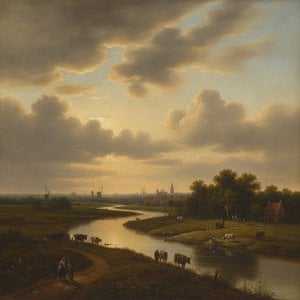
Discover the breathtaking beauty of Dutch Golden Age landscapes. Explore the mastery of light, chiaroscuro, and 17th-century realism through an expert art history lens, celebrating the enduring legacy of the Dutch Masters for discerning collectors and art lovers.

Discover the captivating maritime paintings of Willem van de Velde the Elder, a master chronicler of the Dutch Golden Age. Explore his unparalleled realism and lasting influence on naval art history.

Journey through Rembrandt van Rijn's 25 most iconic paintings & etchings. Explore Dutch Golden Age masterpieces, dramatic chiaroscuro, and timeless portraits. Find museum-quality art reproductions to elevate your home decor on WahooArt.com.


Stay updated with the latest art news, exclusive offers, and decoration ideas.
Tell us about your project and our art experts will provide you with 3 personalized art suggestions.
Let Us Curate 3 Options Just for You - Free!

 Preview
 Send
Send Share
Share
 Details

 Download
 Similars
 X-Ray
X-Ray Diaporama
 Read More







 Glass option is only available in size under 110 CM


