FREE ART CONSULTATION

x
Buy Painting Buy PaintingBuy Image Buy Image SendSend
DetailsDetails Add to favorites Add to favorites DownloadDownload SimilarsSimilars X-RayX-Ray DiaporamaDiaporama

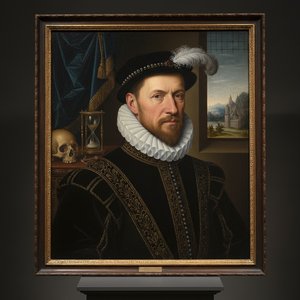
Inkstand

Explore the intricate goldsmithing & prints of Wenzel Jamnitzer (1507-1585). Northern Mannerist master known for Renaissance style, scientific studies & imperial commissions.

Giclée / Art Print

Museum-quality giclée or canvas print with fast production and flexible finish options.

P118B $10
P118H $10
P118W $10
P438Z $10
P508JH $12
P508YH $12
P805H $10
P805Z $10
P919BZ $10
P919G $10
P919XJ $10
P959ZH $10
P968JZ $12
W106C $8
W218G $10
W218JH $8
W218Y $10
W307PJ $10
W316G $10
W316PJ $8
W316Y $10
W398PJ $8
W4111J $10
W500HY $15
W500JH $15
W692G $12
W849H $8
W940BG $15
W953PJ $8

Standard
custom
CM
INCH

Pick from our preset sizes that match the artwork's original proportions.

width
height

You may enter your own dimensions to fit a specific frame or space. If your selected size does not match the original image's proportions, we will either crop the artwork or extend the image with a mirrored or solid-fill edge. A digital mockup will be sent for your approval before production begins.
Please note that the on-screen preview does not reflect the actual cropping or extension. Only the mockup will accurately show the final composition.
While custom sizes are available, we recommend selecting a dimension from the predefined list to preserve the original proportions.

Worldwide Delivery () in 2 weeks instead of standard 4/5 weeks. (4 July)

why_choose_icon
Free Worldwide Express Shipping
why_choose_icon
High-Quality Linen Canvas
why_choose_icon
Full Shipping Insurance
why_choose_icon
Customs Tax Refund Guarantee
why_choose_icon
True Color Matching Guarantee
why_choose_icon
60-Day Return Policy (Defects Only)
why_choose_icon
100% Money-Back Guarantee
why_choose_icon
Bulk Discount Offer

Total Price

-

reproduction

Inkstand

Giclée / Art Print

Reproduction Size

-

Total Price

-

Quick Facts

  • Subject or theme: Decorative Art
  • Artist: Wenzel Jamnitzer
  • Title: Inkstand
  • Medium: Silver
  • Influences: Italian Renaissance
  • Location: Private Collection
  • Movement: Northern Mannerism

Art Quiz

There is only one correct answer for each question.

Question 1:
What artistic movement is Wenzel Jamnitzer’s Inkstand primarily associated with?
Question 2:
The image description highlights the meticulous detail of the silver figures adorning the inkstand. What is a characteristic feature of Renaissance craftsmanship that contributes to this level of intricacy?
Question 3:
According to the research provided, Jamnitzer’s family legacy involved a tradition of excellence in goldsmithing. What is significant about this familial heritage?
Question 4:
The image description mentions decorative motifs like foliage, flowers, and marine life. Why were these elements commonly incorporated into Renaissance art?
Question 5:
The image description states that the photograph avoids additional context or embellishments. Why is this stylistic choice important for appreciating the artwork?

Collectible Description

A Testament to Renaissance Craftsmanship: Examining Wenzel Jamnitzer’s Inkstand

The silver inkstand attributed to Wenzel Jamnitzer (circa 1507 – December 19, 1585) stands as a remarkable exemplar of Northern Mannerist artistry—a style characterized by refined elegance and meticulous attention to detail that flourished during the mid-16th century. More than just an instrument for calligraphy, this diminutive sculpture embodies the intellectual fervor and artistic innovation prevalent in Nuremberg’s burgeoning cultural landscape at the time, reflecting the broader fascination with scientific observation alongside a deep appreciation for classical ideals. Its creation coincided with a pivotal moment in European art history: the establishment of Padua as a rival center to Florence for humanist scholarship and artistic patronage—a dynamic that fueled experimentation and propelled artists like Jamnitzer toward groundbreaking achievements.

The Sculpture's Form and Technique

Crafted from sterling silver, the inkstand’s rectangular form is elevated by four delicately curved legs, providing it with a subtle visual lift and demonstrating masterful manipulation of metalworking techniques. The surface is adorned with an astonishing array of ornamentation—a dense tapestry of vegetal motifs, stylized floral blossoms, and what appears to be representations of marine life, including fish and seashells. These intricate designs are executed with exceptional precision using granulation – a technique involving embedding tiny metallic particles onto the surface of the silver – creating a shimmering texture that captures the light beautifully. This meticulous process speaks volumes about Jamnitzer’s dedication to achieving visual splendor and conveying an impression of opulent sophistication.

Symbolism Embedded in Detail

The most striking element of the inkstand is undoubtedly its tabletop, populated by miniature figures—likely animals or mythological creatures—each rendered with remarkable realism. These sculptures are not merely decorative additions; they carry symbolic weight, reflecting Renaissance humanist concerns about understanding the natural world and engaging with classical mythology. The poses adopted by these figures – one rearing up in defiance, another gazing serenely downwards – invite contemplation on themes of strength, humility, and divine inspiration. Such symbolism underscores Jamnitzer’s ambition to elevate his craft beyond mere functionality, transforming it into a vehicle for conveying profound intellectual and spiritual ideas.

Historical Context: Nuremberg's Artistic Renaissance

Wenzel Jamnitzer’s inkstand resides within the context of Nuremberg’s flourishing artistic renaissance—a period marked by unprecedented prosperity and cultural dynamism. The city benefited enormously from trade with Italy, fostering connections with humanist scholars and artists who championed innovation and stylistic refinement. Furthermore, Jamnitzer's work aligns with a broader trend toward scientific study alongside artistic expression – mirroring the burgeoning interest in anatomical observation and geometric principles that characterized the era. Commissions from imperial patrons like Maximilian I further solidified Nuremberg’s position as a center for artistic excellence, encouraging artists to push boundaries and explore new visual languages.

Emotional Resonance: Beauty and Contemplation

Ultimately, Wenzel Jamnitzer's inkstand transcends its utilitarian purpose, captivating viewers with its exquisite beauty and prompting reflection on fundamental human concerns. The meticulous craftsmanship—the flawless execution of granulation, the graceful curves of the legs, the expressive poses of the miniature sculptures—demonstrates a profound respect for material excellence and artistic skill. More importantly, it invites contemplation on themes of faith, intellect, and the harmonious relationship between humanity and nature – qualities that continue to resonate with audiences today. Its enduring appeal testifies to Jamnitzer’s ability to transform a simple object into a powerful emblem of Renaissance artistry and humanist thought.

Artist Biography

Early Life & Family Legacy

Wenzel Jamnitzer (circa 1507 – December 19, 1585) emerged from a distinguished Moravian German family known for its artistic endeavors under various spellings—Jamnitzer, Jemniczer, Gemniczer, and Jamitzer. This lineage spanned over 160 years, producing remarkable artworks characterized by refined craftsmanship and stylistic innovation. Born in Vienna, Italy, Wenzel was the son of Hans Jamnitzer the Elder, a goldsmith who established a tradition of excellence that would continue through subsequent generations. His brother, Albrecht Jamnitzer, further solidified this family’s artistic reputation, shaping Wenzel's formative years within an environment steeped in artistic heritage.

Training & Artistic Foundations

Wenzel’s artistic education commenced under the tutelage of his father and brother. This rigorous training instilled in him a profound understanding of goldsmithing techniques—a craft that demanded precision, artistry, and meticulous attention to detail. Notably, he studied alongside Euclid's Elements and Plato’s Timaeus, texts considered foundational for geometric reasoning and philosophical contemplation – influences that would profoundly shape his later artistic pursuits.

Career as Court Goldsmith & Scientific Pursuits

Jamnitzer swiftly ascended to prominence in Nuremberg, securing positions as court goldsmith to several Holy Roman Emperors—Charles V, Ferdinand I, Maximilian II, and Rudolf II. This role afforded him unparalleled access to imperial patronage and enabled him to contribute significantly to the artistic landscape of his time. Beyond royal commissions, Jamnitzer demonstrated a remarkable commitment to advancing the guild’s knowledge base. His publication of “Perspectiva Corporum Regularium” in 1568 stands as a testament to this dedication—a groundbreaking treatise that meticulously documented the construction and properties of polyhedra using geometric principles.

Notable Achievements & Artistic Style

Jamnitzer’s artistic style embodied the Northern Mannerist movement, characterized by its elegance, restraint, and intellectual depth. He skillfully blended Renaissance influences with innovative techniques—incorporating hardstones, shells, corals, and small birds' eggs into his sculptures and jewelry boxes. His magnum opus, arguably, was the Nautilus Cup (1550), a breathtaking golden sculpture depicting a rooster in exquisite detail, reflecting the grandeur of the Renaissance aesthetic. Furthermore, he served as coin die-cutter for Nuremberg and later as master of the city mint.

Legacy & Recognition

Wenzel Jamnitzer’s influence extended beyond his own lifetime. He collaborated with Johann Gregor van der Schardt on sculptural projects, leaving an indelible mark on Nuremberg's artistic milieu. His tomb in St. John’s Cemetery is adorned with a bronze sculpture by Jost Amman, commemorating his life and achievements—a poignant reminder of a master craftsman whose legacy continues to inspire admiration for centuries.
Wenzel Jamnitzer

Wenzel Jamnitzer

1507 - 1585 , Italy

Quick Facts

  • Artistic Movement Or Style: Northern Mannerism
  • Artists Or Movements Influenced By This Artist: ['Renaissance Art']
  • Artists Who Influenced This Artist: ['Plato']
  • Date Of Birth: ca. 1507, Wien
  • Date Of Death: 1585, Nürnberg
  • Full Name: Wenzel Jamnitzer
  • Nationality: German
  • Notable Artworks:
    • Nautilus Cup in the Form of a Chicken
    • Mother Earth (or Merkel) table decoration
    • Inkstand
  • Place Of Birth: Vienna, Italy
Explore artworks organized by themes, styles, and characteristics.