


x


Hand-painted oil on canvas in your size and frame, made to order by our artists.
Pick from our preset sizes that match the artwork's original proportions.

You may enter your own dimensions to fit a specific frame or space. If your selected size does not match the original image's proportions, we will either crop the artwork or extend the painting with additional hand-painted elements. A digital mockup will be sent for your approval before production begins.
Please note that the on-screen preview does not reflect the actual cropping or extension. Only the mockup will accurately show the final composition.
While custom sizes are available, we recommend selecting a dimension from the predefined list to preserve the original proportions.
Worldwide Delivery () in 3/4 weeks instead of standard 5 weeks. (1 July). No compromise on quality.


Antwerp Cathedral
Reproduction Size


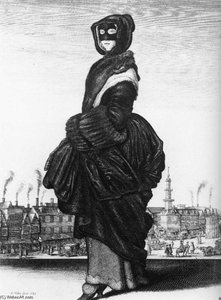


Jean-Antoine Watteau, a name synonymous with the Rococo era in French art, remains one of the most enigmatic and profoundly influential figures of the 18th century. Born in Valenciennes in 1684 into a modest family – his father a roofer – Watteau’s life was tragically short, ending prematurely at just 36 years old. Yet, within those fifteen brief years, he managed to revolutionize painting, shifting its focus from the weighty formality of the Baroque towards a lighter, more sensual, and ultimately dreamlike aesthetic. His legacy lies not in grand historical narratives or religious commissions, but in his invention of *fêtes galantes*, scenes that captured the fleeting pleasures and romantic ideals of Parisian society – a world of masked balls, leisurely picnics, and imagined encounters bathed in an ethereal glow.
Watteau’s early life was marked by instability and hardship. His father's volatile nature and his own sensitive disposition created a challenging environment. Despite this, he displayed an early passion for art, likely beginning his training as a young boy under the guidance of local painters in Valenciennes. Moving to Paris around 1702, he initially found himself working in a workshop producing copies of devotional images – a far cry from the artistic aspirations that burned within him. This period of relative obscurity, however, proved invaluable, providing him with a foundation in technique and allowing him to meticulously study the nuances of observation and composition. Crucially, it was during this time he encountered Claude Gillot, a master of theatrical fantasy who profoundly shaped Watteau’s artistic vision, introducing him to the world of *commedia dell'arte* and inspiring his fascination with stagecraft and illusion.
Watteau’s breakthrough came through his association with Pierre Crozat, a wealthy art collector and influential figure in Parisian society. Crozat recognized Watteau’s unique talent and provided him with patronage, allowing him to develop his distinctive style. It was under Crozat's protection that Watteau began to explore the *fêtes galantes*, a genre he essentially invented. These paintings depict idyllic scenes of aristocratic gatherings – masked balls, leisurely picnics in lush landscapes, and romantic encounters – often imbued with an air of wistful melancholy. Unlike traditional history painting or portraiture, *fêtes galantes* avoided explicit narrative; instead, they focused on capturing the atmosphere, mood, and fleeting emotions of the moment. The figures are typically dressed in elaborate costumes, suggestive of the opéra ballet, and their poses are graceful and languid, reflecting the elegance and sophistication of Parisian high society.
Watteau’s approach to composition was equally innovative. He frequently employed a technique known as *sfumato*, blurring outlines and softening edges to create an atmospheric haze that enveloped his scenes. His use of color was particularly remarkable – he eschewed the harsh contrasts of the Baroque in favor of delicate pastel shades, creating a luminous and ethereal effect. The backgrounds are often fantastical landscapes, painted with meticulous detail but rendered in a dreamlike manner, further enhancing the sense of illusion and escape.
Watteau’s artistic development was profoundly influenced by several key figures. His early exposure to Jacques Callot's prints sparked his interest in theatricality and the depiction of human emotion. The works of Correggio and Rubens, particularly their mastery of color and movement, served as models for his own compositions. He deeply admired the Venetian painters, whose use of light and atmosphere he sought to emulate. Crucially, Watteau’s artistic vision was shaped by the prevailing trends in interior design – the rise of *chinoiserie* and the popularity of arabesque patterns inspired him to create paintings that were both decorative and emotionally evocative.
Despite his growing fame, Watteau faced significant challenges. He never received the opportunity to study in Italy, a traditional pathway for aspiring artists, and he was initially rejected by the Royal Academy of Painting and Sculpture. However, his talent eventually earned him acceptance into the academy in 1712, where he presented his reception piece, *Pilgrimage to Cythera*, which solidified his reputation as a leading figure in French art.
Watteau’s impact on the development of Rococo art is undeniable. He shifted the focus of painting away from grand historical narratives towards a more intimate and sensual style, capturing the fleeting pleasures and romantic ideals of Parisian society. His invention of *fêtes galantes* established a new genre that was eagerly embraced by artists throughout Europe. Watteau’s influence extended beyond his own paintings; he inspired generations of artists to explore themes of beauty, illusion, and the ephemeral nature of human experience.
Despite his tragically short life, Watteau left behind a remarkable body of work – approximately 300 paintings, drawings, and prints. His art continues to captivate audiences today with its delicate beauty, ethereal atmosphere, and profound sense of melancholy. Watteau’s legacy is not simply as a painter; he was a poet of light and illusion, a master of capturing the fleeting moments of beauty and romance that define the human experience.

1684 - 1756 , Czech Republic
Explore the dramatic world of Baroque Realism! Discover iconic artists like Caravaggio & Rubens, their techniques, and the movement's lasting impact on art history. Expert insights for collectors & enthusiasts.
Explore the transformative art of the 14th century! Discover Gothic masterpieces, International Style innovations, and the precursors to the Renaissance. Expert insights & historical context at WahooArt.

Explore the dramatic world of Baroque art! Discover iconic artists like Caravaggio & Rubens, defining techniques, and its lasting impact on art history. Expert insights for collectors & enthusiasts at WahooArt.
Journey through 17th century art with masterpieces by Rembrandt, Vermeer & Caravaggio. Explore Baroque paintings, Dutch Golden Age techniques & timeless beauty. Find museum-quality reproductions and elevate your home decor on WahooArt.com.

Explore the spiritual intensity & architectural innovation of Gothic art! Discover the symbolism behind cathedrals, stained glass & master artists like Giotto and Monet. A deep dive into medieval history & artistic expression.


Stay updated with the latest art news, exclusive offers, and decoration ideas.
Tell us about your project and our art experts will provide you with 3 personalized art suggestions.
Let Us Curate 3 Options Just for You - Free!
 Buy print
 Send
Send Share
Share
 Details

 Download
 Similars
 X-Ray
X-Ray Diaporama






































 Read more
 Glass option is only available in size under 110 CM


