Preview AR preview Buy Hand Made Painting Switch to Digital Image Send
Details Guide Add to favorites Download Similars X-Ray Diaporama Stats

Dr. John King

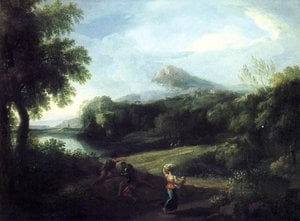
Washington Allston's "Dr. John King" (1814) captures an intellectual portrait with refined details and atmospheric lighting, reflecting Romanticism’s influence.

Explore the Romantic landscapes of Washington Allston (1779-1843), a pioneer of American landscape painting. Known for dramatic light, atmospheric color & literary themes. Discover his influence on Emerson & more!

Giclée / Art Print

Museum-quality giclée or canvas print with fast production and flexible finish options. ( Buy Hand Made Painting Switch to Digital Image)

Corner sample of the P118B picture frame: moulded polystyrene, 5 cm wide and 3 cm thick
P118B $10
Corner sample of the P118H picture frame: moulded polystyrene, 5 cm wide and 3 cm thick
P118H $10
Corner sample of the P118W picture frame: moulded polystyrene, 5 cm wide and 3 cm thick
P118W $10
Corner sample of the P438Z picture frame: moulded polystyrene, 5.5 cm wide and 3.5 cm thick
P438Z $10
Corner sample of the P508JH picture frame: moulded polystyrene, 7 cm wide and 3.5 cm thick
P508JH $12
Corner sample of the P508YH picture frame: moulded polystyrene, 7 cm wide and 3.5 cm thick
P508YH $12
Corner sample of the P805H picture frame: moulded polystyrene, 5 cm wide and 3.5 cm thick
P805H $10
Corner sample of the P805Z picture frame: moulded polystyrene, 5 cm wide and 3.5 cm thick
P805Z $10
Corner sample of the P919BZ picture frame: moulded polystyrene, 7 cm wide and 3.5 cm thick
P919BZ $10
Corner sample of the P919G picture frame: moulded polystyrene, 7 cm wide and 3.5 cm thick
P919G $10
Corner sample of the P919XJ picture frame: moulded polystyrene, 7 cm wide and 3.5 cm thick
P919XJ $10
Corner sample of the P959ZH picture frame: moulded polystyrene, 5 cm wide and 3 cm thick
P959ZH $10
Corner sample of the P968JZ picture frame: moulded polystyrene, 6 cm wide and 4 cm thick
P968JZ $12
Corner sample of the W106C picture frame: solid wood, 5 cm wide and 3 cm thick
W106C $8
Corner sample of the W218G picture frame: solid wood, 5 cm wide and 3 cm thick
W218G $10
Corner sample of the W218JH picture frame: solid wood, 5 cm wide and 3 cm thick
W218JH $8
Corner sample of the W218Y picture frame: solid wood, 5 cm wide and 3 cm thick
W218Y $10
Corner sample of the W307PJ picture frame: solid wood, 6 cm wide and 3 cm thick
W307PJ $10
Corner sample of the W316G picture frame: solid wood, 6 cm wide and 3 cm thick
W316G $10
Corner sample of the W316PJ picture frame: solid wood, 6 cm wide and 3 cm thick
W316PJ $8
Corner sample of the W316Y picture frame: solid wood, 6 cm wide and 3 cm thick
W316Y $10
Corner sample of the W398PJ picture frame: solid wood, 5 cm wide and 3 cm thick
W398PJ $8
Corner sample of the W4111J picture frame: solid wood, 6.5 cm wide and 3.5 cm thick
W4111J $10
Corner sample of the W500HY picture frame: solid wood, 7 cm wide and 5 cm thick
W500HY $15
Corner sample of the W500JH picture frame: solid wood, 7 cm wide and 5 cm thick
W500JH $15
Corner sample of the W692G picture frame: solid wood, 8 cm wide and 4 cm thick
W692G $12
Corner sample of the W849H picture frame: solid wood, 5 cm wide and 3 cm thick
W849H $8
Corner sample of the W940BG picture frame: solid wood, 7.5 cm wide and 4.5 cm thick
W940BG $15
Corner sample of the W953PJ picture frame: solid wood, 6 cm wide and 3.5 cm thick
W953PJ $8

Standard
custom
CM
INCH

Pick from our preset sizes that match the artwork's original proportions.

width
height

Type the width and the height you need, to fit your frame or your wall. A print can only be cut, never made bigger than the picture, so a size with a different shape loses a part of the image. We send you a digital mockup to approve before we print anything. The picture shown on this page does not show the real cut — only the mockup does.

Worldwide Delivery () in 2 weeks instead of standard 4/5 weeks. (24 October)

Free Worldwide Express Shipping
High-Quality Linen Canvas
Full Shipping Insurance
Customs Tax Refund Guarantee
True Color Matching Guarantee
100-Day Return Policy (Defects Only)
100% Money-Back Guarantee
Bulk Discount Offer

Total Price

$ 69

Dr. John King

Giclée / Art Print

Reproduction Size

-

Total Price

$ 69

Quick Facts

  • Influences:
    • Allston
    • European art
  • Location: Fine Arts Museums, SF
  • Subject or theme: Portraiture, intellect
  • Artistic style: American Romanticism
  • Movement: Romanticism
  • Artist: Washington Allston

Art Quiz

There is only one correct answer for each question.

Question 1:
What is the primary subject depicted in Washington Allston’s ‘Dr. John King’?
Question 2:
In what year was ‘Dr. John King’ painted?
Question 3:
Which artistic movement is Washington Allston most closely associated with?
Question 4:
The image description mentions a couch located behind the man. What does this suggest about the setting?
Question 5:
Washington Allston was known for his use of light and color. What is a key characteristic of his style?

A Portrait of Intellectualism: Dr. John King by Washington Allston

Washington Allston’s “Dr. John King,” painted in 1814, is more than a simple portrait; it's a meticulously crafted tableau of Enlightenment ideals and the burgeoning Romantic sensibility taking hold in early 19th-century America. The painting captures a moment of quiet contemplation, centered around a distinguished gentleman seated in an opulent study – a space brimming with subtle symbolism that speaks volumes about the era’s fascination with knowledge, refinement, and the pursuit of inner understanding.

The subject himself, Dr. John King (a figure distinct from the later Martin Luther King Jr., though bearing a similar name), is presented with an almost unnerving stillness. His posture is impeccable, his hands folded deliberately over a book – a volume likely representing classical literature or philosophical treatises, judging by the setting and the man’s demeanor. The lighting, masterfully rendered by Allston, is crucial to the painting's effect; it’s diffused and warm, casting long shadows that emphasize the depth of the room and creating an atmosphere of intimacy despite the formal arrangement. The muted palette – dominated by browns, creams, and deep greens – contributes to this sense of quiet solemnity, evoking a feeling of scholarly seclusion.

Washington Allston: Bridging Neoclassicism and Romanticism

To fully appreciate “Dr. John King,” it’s essential to understand Washington Allston's unique position within the American art world. Born in Georgetown, Maryland, in 1779, Allston was initially trained in London under Sir Benjamin West, a prominent Neoclassical painter. However, his experiences abroad profoundly shaped his artistic vision, exposing him to the dramatic landscapes and emotional intensity of European Romanticism. Allston skillfully blended these influences, creating works that are both formally rigorous and deeply expressive – a hallmark of his style.

His paintings often feature atmospheric landscapes imbued with an almost hallucinatory quality, combined with meticulously rendered figures engaged in intellectual pursuits or moments of profound emotion. “Dr. John King” exemplifies this approach; the carefully constructed interior contrasts sharply with the evocative light and shadow that permeates the scene, suggesting a world both tangible and dreamlike. Allston’s use of color was particularly innovative for his time, employing subtle gradations and atmospheric effects to create a sense of depth and mood.

Symbolism Within the Study

The setting itself is laden with symbolic meaning. The richly upholstered couch behind Dr. King speaks to wealth and status, while the smaller couch further back hints at a layered social hierarchy. The book he holds – though not explicitly identified – represents knowledge, wisdom, and the pursuit of enlightenment—core tenets of the Enlightenment era. The arrangement of objects within the room—the writing desk, the globe, the various artifacts—suggests a man immersed in learning and contemplation, a figure dedicated to intellectual pursuits.

Furthermore, Allston’s penchant for incorporating elements of the supernatural into his paintings is evident here. The light seems to emanate from an unseen source, creating a sense of mystery and suggesting that Dr. King's inner world is as complex and layered as the room itself. The painting subtly hints at the Romantic fascination with the sublime—the experience of awe and terror in the face of nature’s power.

A Legacy of Romantic Vision

“Dr. John King” stands as a testament to Washington Allston's artistic genius and his pivotal role in shaping American art. It is a captivating portrait that transcends mere representation, offering a glimpse into the intellectual and emotional landscape of early 19th-century America. Reproductions of this work capture the subtle nuances of light, color, and composition, allowing viewers to appreciate Allston’s masterful technique and his profound understanding of human psychology. It remains a powerful example of Romanticism's ability to blend realism with imagination, creating images that are both beautiful and thought-provoking.

Questions & Answers

Where is the portrait format of "Dr. John King" recommended to be displayed?

The portrait format of "Dr. John King" by Washington Allston is recommended for a living room. Format and space together guide the placement of a reproduction.

Where can I see the original "Dr. John King" by Washington Allston?

The original "Dr. John King" by Washington Allston is held at the Fine Arts Museums of San Francisco, San Francisco, United States of America. A reproduction allows the work to be displayed at home.

Where does "Dr. John King" sit within Washington Allston's body of work?

"Dr. John King" belongs to Washington Allston's Romanticism work, whose recorded themes include european romanticism, intellectualism, classical, american, portraiture, social commentary, religious themes, moral reflection.


Artist Biography

A Pioneer of American Romanticism

Washington Allston, a name perhaps less immediately recognizable than some of his contemporaries, occupies a pivotal position in the development of American art. Born November 5, 1779, on a South Carolina rice plantation – a landscape that would subtly inform his later artistic sensibilities – Allston’s life was one of intellectual pursuit and aesthetic experimentation. His early years were marked by both privilege and complexity; the shadow of familial loss hung over him following his father's death during the Revolutionary War, and the realities of plantation life undoubtedly shaped his worldview. A solid education at Harvard College provided a foundation for his burgeoning artistic ambitions, but it was a journey to Europe in 1801 that truly ignited his creative spirit.

European Influences and Artistic Formation

London became Allston’s crucible, where he entered the Royal Academy Schools under the tutelage of Sir Benjamin West, a prominent figure in British art and a key link between European traditions and American aspirations. This period was transformative. He immersed himself in the Old Masters, particularly the Venetian Renaissance artists whose mastery of light, color, and atmospheric perspective would profoundly influence his own style. Travel throughout Europe – Paris and Italy especially – exposed him to a wealth of artistic heritage and fostered intellectual connections with luminaries like Washington Irving and Samuel Taylor Coleridge. These friendships were not merely social; they represented a confluence of Romantic thought that permeated Allston’s work, imbuing it with literary and philosophical depth. He wasn't simply replicating what he saw; he was absorbing the spirit of an era defined by emotion, imagination, and a fascination with the sublime.

A Distinctly American Voice

Upon his return to America in 1818, Allston settled in Cambridge, Massachusetts, and began to forge a distinctly American Romantic aesthetic. His paintings moved beyond mere representation, aiming instead to evoke emotional and spiritual responses in the viewer. He was often lauded as the “American Titian,” a testament to his stylistic kinship with the Venetian master, but this comparison doesn’t fully capture the originality of his vision. Works like "Storm Rising at Sea" and "Moonlit Landscape," both housed at the Museum of Fine Arts, Boston, exemplify his dramatic use of light and shadow, his ability to convey the power and mystery of nature, and his exploration of literary themes – particularly those drawn from biblical stories. He wasn’t simply painting landscapes; he was creating visual poems, imbued with a sense of awe and wonder. His unfinished masterpiece, “Belshazzar's Feast,” though never completed in his lifetime, stands as a testament to his ambition and his willingness to grapple with complex narratives and profound emotional states.

Legacy and Enduring Influence

Washington Allston’s impact on American art extends far beyond his own body of work. He paved the way for future generations of landscape painters, influencing figures like Samuel F.B. Morse and inspiring the transcendentalist philosopher Ralph Waldo Emerson. His emphasis on emotional expression and dramatic composition helped shape a distinctly American Romantic aesthetic, one that celebrated the beauty and power of the natural world while also exploring the depths of human experience. The establishment of the Allston Club in Boston by William Morris Hunt further solidified his legacy, ensuring that his techniques and artistic vision were passed down to subsequent generations. Even today, the West Boston neighborhood of Allston stands as a lasting tribute to this pioneering artist, a reminder of his enduring contribution to American culture. He was more than just a painter; he was a visionary who helped define what it meant to be an American artist in the 19th century.
Washington Allston

Washington Allston

1779 - 1843 , United States of America

Quick Facts

  • Full Name: Washington Allston
  • Nationality: American
  • Date Of Birth: 1779
  • Date Of Death: 1843
  • Place Of Birth: Georgetown, United States of America
  • Notable Artworks:
    • Storm Rising at Sea
    • Moonlit Landscape
    • Belshazzar's Feast
  • Artistic Movement Or Style: Romanticism
  • Artists Who Influenced This Artist:
    • Old Masters
    • Benjamin West
  • Artists Or Movements Influenced By This Artist:
    • Samuel F.B. Morse
    • Ralph Waldo Emerson
Explore artworks organized by themes, styles, and characteristics.