

Purchase a high-resolution, enhanced digital image, far superior to the online preview.
Each file is meticulously prepared by our in-house specialists using advanced tools and expert manual retouching. We ensure every image has exceptional clarity, precise color accuracy, and fine detail.
The final file is delivered via email within 72 hours, optimized for immediate use in professional, editorial, and print environments. This is the same quality trusted by top-tier design studios, publishers, and galleries.
Download a high-resolution file for personal display, printing, and creative projects. ( Switch to Print Buy Hand Made Painting)
When you choose WahooArt.com, you're not just getting an image - you're receiving a professionally enhanced digital artwork, crafted with precision and backed by a satisfaction guarantee. Here's everything that comes with your order, automatically:

Your high-resolution digital image file will be emailed to you within 72 hours of ordering - ready for immediate use.

Your artwork is professionally optimized using advanced AI tools and manual editing, ensuring maximum detail, clarity, and color accuracy.

Accidentally deleted or lost your file? No worries - we'll resend it to you anytime, free of charge.

Enjoy your artwork instantly with zero customs, duties, or delivery fees - digital downloads are always tax-free.

We ensure your digital image reflects the original colors as closely as possible using professional tools and color management.

If you're not satisfied with your digital image, we'll revise it or refund 100% within 100 days - no questions asked.

Not satisfied? Get a full refund within 100 days of receiving your digital file - no questions asked.

Buy 3 images, save 10% - Buy 5, save 15% - Buy 10+, save 20%. Great for creative projects, galleries, and agencies.
Walter Launt Palmer's "Dwarf Sunflower," painted in 1881, offers a poignant glimpse into the tonalist movement and the burgeoning interest in psychological portraiture within American art. This evocative work, depicting a young woman lost in thought, immediately draws the viewer into her quiet introspection. The red background, far from being merely decorative, acts as a dramatic counterpoint to the pale tones of the subject’s clothing and skin, intensifying the sense of melancholy and drawing attention to her expressive face. Palmer's masterful use of light and shadow – a hallmark of his style influenced by Frederic E. Church – creates a palpable atmosphere, suggesting both a physical space and an emotional one.
Palmer’s technique is firmly rooted in the principles of tonalism, a movement that prioritized atmospheric effects and subtle gradations of color over precise detail. He achieves this through meticulous layering of thin washes of paint, building up rich textures and luminous surfaces. The brushwork is loose yet controlled, contributing to the painting's dreamlike quality. The influence of Frederic E. Church, particularly his emphasis on capturing the essence of a scene rather than a photographic representation, is readily apparent. Notice how Palmer doesn’t attempt to render every detail of the woman’s clothing or the surrounding flowers; instead, he focuses on conveying mood and emotion through color and light. The scattered wildflowers – dwarf sunflowers specifically – are not merely decorative elements but subtly reinforce the theme of natural beauty and perhaps a yearning for connection with the outside world.
"Dwarf Sunflower" was created during a pivotal moment in Palmer’s career, solidifying his reputation as “the painter of the American winter.” Born in Albany, New York, into a family deeply involved in the arts – his father, Erastus Dow Palmer, was a celebrated sculptor – Palmer benefited from an early exposure to artistic ideals. His training under Charles Loring Elliott and, crucially, Frederic E. Church, shaped his approach to landscape painting. The Hudson River School’s emphasis on romantic landscapes and dramatic light effects resonated with Palmer, influencing his ability to capture the sublime beauty of the American wilderness. This work reflects a broader shift in American art towards more introspective subjects and a greater focus on individual experience.
The young woman’s pensive expression invites interpretation. Her gaze directed into the distance suggests a moment of quiet contemplation, perhaps a reflection on life's complexities or a yearning for something beyond her immediate surroundings. The red background, often associated with passion and intensity, adds another layer to this emotional reading. The inclusion of flowers – particularly dwarf sunflowers, known for their resilience – could symbolize hope, beauty, and the enduring power of nature. Ultimately, “Dwarf Sunflower” is not simply a portrait; it’s an exploration of human emotion and the profound connection between individuals and the natural world. It evokes a sense of quiet melancholy and invites viewers to share in the woman's moment of introspection.

Walter Launt Palmer (1854-1932) remains a captivating figure in American art, often described as “the painter of the American winter.” His evocative landscapes, particularly his series of snow scenes and Venetian views, capture a unique blend of Romanticism, Impressionism, and tonalist sensibilities. Born into an artistic milieu in Albany, New York – his father, Erastus Dow Palmer, was a renowned sculptor whose residence hosted gatherings of prominent artists like Frederic E. Church – Palmer’s early life was steeped in the visual arts, providing him with both inspiration and access to influential mentors.
Palmer's formal artistic training began under Charles Loring Elliott, but it was his time spent studying with Frederic E. Church that truly shaped his style. Church, a leading figure of the Hudson River School, instilled in Palmer a deep appreciation for landscape painting and a meticulous approach to capturing light and atmosphere. Crucially, Church also introduced Palmer to the burgeoning world of Impressionism during their shared studio years in New York City between 1878 and 1881. This exposure proved transformative, influencing Palmer’s use of broken color, loose brushwork, and an emphasis on fleeting moments of light.
Palmer's artistic journey extended beyond the United States, with significant trips to Europe in 1873 and again later in the decade. These excursions provided him with invaluable experience studying the techniques of masters like Charles Carolus Duran in Paris and witnessing the vibrant colors and atmospheric effects of Venetian light firsthand. He returned from these travels with a renewed sense of artistic purpose, incorporating elements of both European and American styles into his own distinctive oeuvre.
Palmer’s most celebrated works are undoubtedly his winter landscapes. These paintings aren't merely depictions of snow; they are explorations of light, shadow, and the subtle nuances of color within a frozen world. He masterfully employed a limited palette – primarily blues, whites, grays, and browns – to create a sense of depth and atmosphere. His technique involved layering thin washes of paint, allowing the colors to blend optically on the canvas, rather than applying them in distinct brushstrokes. This approach resulted in a luminous quality that captured the ethereal beauty of winter light.
Influenced by Pre-Raphaelite painters like Ruskin, Palmer was particularly interested in capturing the subtle variations in color reflected on snow – the shifting hues of blue and gray as sunlight filtered through the trees or danced across frozen streams. His paintings often feature a sense of quiet solitude, inviting the viewer to contemplate the stillness and majesty of the winter landscape. Works such as “Silent Dawn” exemplify this approach, showcasing his ability to convey both the beauty and the melancholy of a snow-covered scene.
While Palmer is best known for his American winter landscapes, he also produced a significant body of work depicting Venetian scenes. These paintings, created during his European travels, demonstrate his keen eye for color and composition. Unlike the stark beauty of the American winter, Venice offered a more vibrant and sensual palette – rich reds, golds, and blues reflecting off the canals and buildings. Palmer’s Venetian works are characterized by their atmospheric perspective and a sense of romanticism, capturing the city's unique charm and allure.
His approach to Venetian painting was markedly different from that of his contemporaries. Rather than striving for photographic realism, Palmer focused on conveying the *feeling* of Venice – its light, color, and atmosphere. He skillfully used brushwork and color to create a sense of movement and depth, capturing the bustling activity of the canals and the shimmering reflections in the water.
Walter Launt Palmer’s work enjoyed considerable recognition during his lifetime, including exhibitions at prestigious venues such as the National Academy of Design and the Corcoran Gallery of Art. His paintings are now held in numerous museums and private collections around the world, testament to their enduring appeal. The Albany Institute of History & Art holds a significant collection of his works, offering a comprehensive overview of his artistic development.
Palmer’s legacy extends beyond his individual achievements. He played a crucial role in bridging the gap between the Hudson River School and Impressionism, influencing subsequent generations of American landscape painters. His evocative winter landscapes continue to captivate viewers with their beauty, serenity, and profound sense of atmosphere – solidifying his place as one of America's most beloved Impressionist painters.
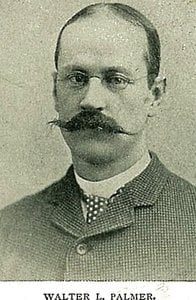
1854 - 1932 , United States of America

 Preview
 Send
Send Share
Share
 Details

 Download
 Similars
 X-Ray
X-Ray Diaporama
 Stats
Stats


 Read More


