Vidya Shankar Sthapathy: A Pioneer of the Madras Metaphor
Born in Karur, Tamil Nadu, in 1938, Vidya Shankar Sthapathy represents a singular thread in Indian modern sculpture – the last craftsman to wholeheartedly embrace contemporary forms while deeply rooted in centuries-old artistic traditions. His journey is one of profound lineage, innovative technique, and a quiet revolution within the art world. He currently resides in Kumbakonam, a town steeped in artistic heritage within the Thanjavur district, carrying forward a legacy that stretches back perhaps as far as the magnificent temples of his region.
Sthapathy’s artistic path began with formal training at the Government College of Arts and Crafts in Madras (now Chennai) in 1962. However, it was his subsequent engagement with the ‘Madras Metaphor,’ a pivotal movement in Indian art during the 1960s and 70s, that truly defined his contribution. This group of artists sought to bridge the gap between traditional folk art and contemporary sculpture, drawing inspiration from local customs, mythology, and the rich tapestry of Tamil Nadu’s cultural heritage. Sthapathy wasn't merely a participant; he became one of its key architects, pushing boundaries with his unique approach.
A Lineage Forged in Tradition
Sthapathy’s artistic lineage is exceptionally deep and significant. He hails from a family intimately connected to the sculptural traditions of Thanjavur, a region renowned for its ancient temples – particularly Brihadisvara Temple, a UNESCO World Heritage site. This connection isn't simply familial; it represents a direct continuation of centuries-old practices. His ancestors were involved in the creation and maintenance of these monumental structures, absorbing the techniques, philosophies, and symbolism inherent within their design and execution.
He received rigorous training in all classical sculptural forms and iconometry – the precise measurement and representation of deities – a cornerstone of traditional Tamil Nadu sculpture. Yet, rather than adhering rigidly to established norms, Sthapathy embarked on his own distinct creative journey. He skillfully blended this inherited knowledge with an experimental spirit, ultimately forging a style uniquely his own.
The ‘Swing’ and Beyond: Defining His Style
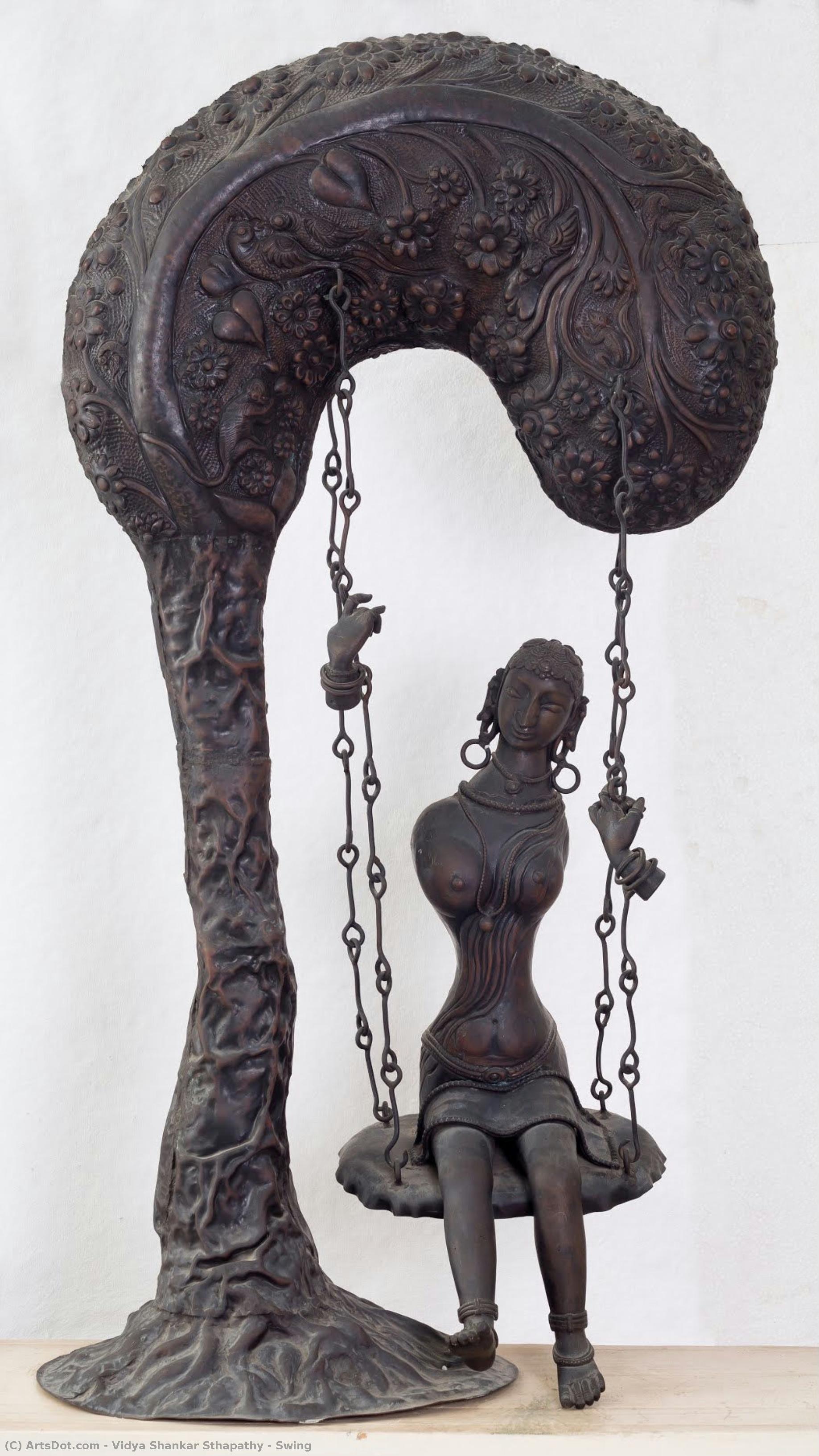
Sthapathy's most iconic work, “Swing,” exemplifies the core of his artistic vision. Created in 2008, this captivating sculpture utilizes sheet metal to evoke a sense of movement, grace, and narrative. The piece captures a woman suspended mid-air, seemingly lost in thought or perhaps engaged in a timeless dance – a potent symbol of Tamil identity and feminine strength. It’s a departure from the static representations common in traditional sculpture, embracing dynamism and abstraction.
His artistic repertoire extends beyond “Swing,” encompassing a diverse range of subjects and materials. He masterfully employed sheet metal, lime plaster, bronze, wire, and stone, demonstrating remarkable versatility. He frequently explored themes rooted in Hindu mythology – Nataraja (the Lord of Dance), Ravana, Vinayaka (Ganesha) – but always filtered them through his own contemporary lens. His depictions are characterized by a stylized elegance, imbued with both reverence for tradition and a modern sensibility.
The Madras Metaphor: A Collective Vision
Sthapathy’s work is inextricably linked to the ‘Madras Metaphor.’ This collective of sculptors – including S Dhanapal, P V Janakiram, and C Dakshinamoorthy – sought to revitalize Indian art by drawing inspiration from local folk traditions. They rejected Western artistic conventions, instead grounding their creations in Tamil Nadu's rich cultural landscape. Sthapathy’s contribution was particularly crucial; he was the only sculptor who fully embraced contemporary sculpture within this movement, establishing a precedent for future generations.
In 1991, these artists staged an exhibition in Mumbai, solidifying their collective identity and showcasing their innovative approach to art. Sthapathy’s work, alongside that of his fellow members, challenged conventional notions of sculpture and demonstrated the potential for a vibrant, contemporary Indian artistic voice.
Legacy and Influence
Vidya Shankar Sthapathy's impact on Indian sculpture is profound and enduring. He stands as a testament to the power of tradition combined with innovation, a pioneer who not only shaped his own unique style but also helped to redefine the landscape of contemporary art in Tamil Nadu. His work continues to be exhibited and studied, ensuring that his legacy will endure for generations to come.



 Preview
 Buy Hand Made Painting
 Send
Send Share
Share
 Details

 Download
 Similars
 X-Ray
X-Ray Diaporama

 Read More






































 Glass option is only available in size under 110 CM





