


x


Hand-painted oil on canvas in your size and frame, made to order by our artists.





























Pick from our preset sizes that match the artwork's original proportions.

You may enter your own dimensions to fit a specific frame or space. If your selected size does not match the original image's proportions, we will either crop the artwork or extend the painting with additional hand-painted elements. A digital mockup will be sent for your approval before production begins.
Please note that the on-screen preview does not reflect the actual cropping or extension. Only the mockup will accurately show the final composition.
While custom sizes are available, we recommend selecting a dimension from the predefined list to preserve the original proportions.
Worldwide Delivery () in 3/4 weeks instead of standard 5 weeks. (1 July). No compromise on quality.


Self Portrait
Reproduction Size


1446 - 1523
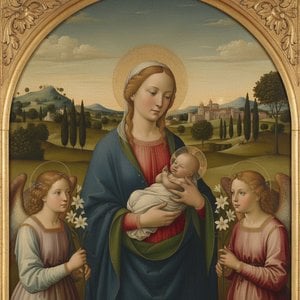
Explore the serene beauty & spiritual depth of Pietro Perugino's Renaissance masterpieces. Discover his influence on Raphael, key works like 'Baptism of Christ,' and legacy as a leading Umbrian painter.

Explore the life & art of Pietro Perugino, a pivotal Renaissance master and Raphael’s influential teacher. Discover his serene compositions, Sistine Chapel frescoes, and lasting legacy with WahooArt.
Explore the captivating history of vulnerability in art! Discover Renaissance self-portraits, medieval emotional expression & symbolic allegory. Expert analysis at WahooArt.

Explore the Italian Renaissance! Discover humanist ideals, iconic masterpieces by Leonardo, Michelangelo & Raphael, and lasting artistic innovations. A comprehensive guide for art enthusiasts.

Explore the captivating history of reflection in art! Discover symbolism, technique & psychological depth in masterpieces from Renaissance self-portraits to modern works. Expert insights for discerning collectors.


Stay updated with the latest art news, exclusive offers, and decoration ideas.
Tell us about your project and our art experts will provide you with 3 personalized art suggestions.
Let Us Curate 3 Options Just for You - Free!
 Buy print
 Send
Send Share
Share
 Details

 Download
 Similars
 X-Ray
X-Ray Diaporama








 Read more
 Glass option is only available in size under 110 CM


![The Madonna between St. John the Baptist and St. Sebastian [detail]](/media/artworks/images/thumbnails/ad/ad/adadce3c43174b99bc91b80d8fcb158f.jpg)


