FREE ART CONSULTATION

x
Buy Painting Buy PaintingBuy Image Buy Image SendSend
DetailsDetails Add to favorites Add to favorites DownloadDownload SimilarsSimilars X-RayX-Ray DiaporamaDiaporama

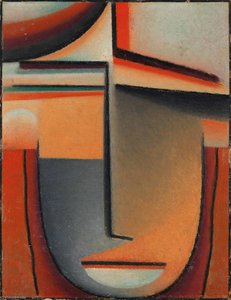
Head

Valentin Khrushch (1943-2005): Ukrainian artist & Odesa Nonconformism leader. Explore expressionist paintings, 'fence exhibitions,' defying Soviet art norms. Works at UNESCO!

Giclée / Art Print

Museum-quality giclée or canvas print with fast production and flexible finish options.

Standard
custom
CM
INCH

Pick from our preset sizes that match the artwork's original proportions.

width
height

You may enter your own dimensions to fit a specific frame or space. If your selected size does not match the original image's proportions, we will either crop the artwork or extend the image with a mirrored or solid-fill edge. A digital mockup will be sent for your approval before production begins.
Please note that the on-screen preview does not reflect the actual cropping or extension. Only the mockup will accurately show the final composition.
While custom sizes are available, we recommend selecting a dimension from the predefined list to preserve the original proportions.

Worldwide Delivery () in 2 weeks instead of standard 4/5 weeks. (5 July)

why_choose_icon
Free Worldwide Express Shipping
why_choose_icon
High-Quality Linen Canvas
why_choose_icon
Full Shipping Insurance
why_choose_icon
Customs Tax Refund Guarantee
why_choose_icon
True Color Matching Guarantee
why_choose_icon
60-Day Return Policy (Defects Only)
why_choose_icon
100% Money-Back Guarantee
why_choose_icon
Bulk Discount Offer

Total Price

-

reproduction

Head

Giclée / Art Print

Reproduction Size

-

Total Price

-


Artist Biography

Valentin Khrushch: A Pioneer of Ukrainian Nonconformism

Early Life and Education

Valentin Khrushch was born on January 24, 1943, in occupied Odesa, Ukraine. His early life was shaped by the tumultuous environment of wartime and its aftermath. In the 1950s, he pursued formal artistic training at the Odesa Art School, where he studied under notable instructors including Zaitsev, Yegorov, Pavlyuk, and Fraerman. This foundational education provided him with technical skills but also exposed him to traditional artistic approaches that he would later challenge.

The Rise of Nonconformism

During the 1960s and 70s, Khrushch emerged as a key figure in the burgeoning non-conformist and underground art scene in both Odesa and Moscow. This movement represented a rejection of the officially sanctioned Socialist Realism prevalent in the Soviet Union. Artists sought alternative modes of expression, often exploring abstract forms, subjective experiences, and critical social commentary. Khrushch became instrumental in organizing unconventional exhibitions that bypassed state control.

The ‘Fence Exhibition’ and Apartment Shows

Perhaps Khrushch's most iconic contribution was the organization of “open-air” exhibitions – displaying artwork directly on fences along city streets. The 1967 exhibition, "Sychik + Hrushchik," co-organized with Stanislav Sychev on the Odesa Opera Theater fence, is widely considered the starting point for ‘Odesa Nonconformism.’ Though lasting only three hours, it was a bold act of artistic defiance. He also pioneered “apartment exhibitions,” intimate shows held in private homes, providing a safe haven for unofficial artists to showcase their work and connect with audiences.

Artistic Style and Themes

Khrushch’s own artwork is characterized by an expressionist style, often featuring bold colors, dynamic compositions, and emotionally charged subject matter. His paintings frequently explored themes of alienation, social critique, and the human condition. While his work evolved over time, it consistently reflected a commitment to artistic freedom and individual expression.

International Recognition and Later Years

From the late 1970s onward, Khrushch’s name – along with those of other Odesa Nonconformists like Alexander Anufriev, Vladimir Strelnikov, Lyudmila Yastreb, Victor Marinyuk, Stanislav Sychov, and Valeriy Basanets – began to appear in international art catalogs and exhibitions. He participated in the unofficial exhibition “Contemporary Art from Ukraine” (Munich-London-Paris-New York) in 1979 and exhibited his work at UNESCO in Paris. In 1982, he relocated from Odesa to Moscow. His final years were spent in Kimry, Tver region, where he tragically passed away from cancer on January 24, 2005, and was buried near the St. Nicholas Church fence.

Legacy and Historical Significance

Valentin Khrushch’s legacy extends beyond his own artistic output. He played a pivotal role in fostering a vibrant underground art community in Ukraine and challenging the constraints of Soviet censorship. His innovative exhibition practices – the ‘fence exhibitions’ and ‘apartment shows’ – provided crucial platforms for artists to connect with audiences and assert their creative independence. His work is now held in prestigious collections, including UNESCO in Paris, the National Museum of Vienna, and various Ukrainian museums, solidifying his place as a significant figure in 20th-century art history.

Collections

  • UNESCO, Paris
  • National Museum of Vienna, Austria
  • National Art Museum of Ukraine
  • Odesa Fine Arts Museum
  • Museum of Odesa Modern Art
  • Zimmerli Art Museum (New Jersey, USA)
Valentin Khrushch

Valentin Khrushch

1943 - 2005 , Ukraine

Quick Facts

  • Birth Date: January 24, 1943
  • Birth Place: Odesa, Ukraine
  • Death Date: January 24, 2005
  • Influenced: Alexander Anufriev, Vladimir Strelnikov, Lyudmila Yastreb, Victor Marinyuk, Stanislav Sychov, Valeriy Basanets
  • Influenced By: Zaitsev, Yegorov, Pavlyuk, Fraerman
  • Movement: Odesa Nonconformism, Soviet Underground Art
  • Name: Valentin Khrushch
  • Nationality: Ukrainian
  • Notable Works: Fence Exhibitions, Apartment Exhibitions
Explore artworks organized by themes, styles, and characteristics.