


Museum-quality giclée or canvas print with fast production and flexible finish options. ( Buy Hand Made Painting Switch to Digital Image)





























Pick from our preset sizes that match the artwork's original proportions.

Type the width and the height you need, to fit your frame or your wall. A print can only be cut, never made bigger than the picture, so a size with a different shape loses a part of the image. We send you a digital mockup to approve before we print anything. The picture shown on this page does not show the real cut — only the mockup does.
Worldwide Delivery () in 2 weeks instead of standard 4/5 weeks. (15 November)
Two Boys before an Easel
Reproduction Size
The composition presents two young boys positioned before an easel, captured in a medium close-up. In the foreground, one boy is seen in profile, his face illuminated by a concentrated light source that defines the contours of his features. He wears a garment with a sleeve made of saturated purple satin, which reflects light with a distinct sheen. Behind him, a second boy is partially visible, his presence more obscured by the shadows. The background remains dark and indistinct, lacking specific architectural or environmental details. This use of chiaroscuro creates a sharp contrast between the illuminated skin tones and the deep blacks and browns that dominate the surrounding space. The brushwork is precise, particularly where light hits the folds of the purple fabric and the soft curls of the hair.
The color palette relies on muted golds and heavy, dark tones to establish a somber atmosphere. The texture of the clothing, specifically the silk-like quality of the sleeve, is rendered with careful attention to how light interacts with different surfaces. Lines are used to define the edges of the figures against the darkness, though they remain soft in areas of transition. The focus remains fixed on the interaction between the subjects and the object of their attention: a sketch or painting resting upon the easel.
This work is characteristic of the 17th-century Utrecht Caravaggism style, a movement that integrated Italian Baroque principles into Northern European painting. The technique emphasizes realism through the dramatic application of light and shadow to sculpt forms out of darkness. Such methods were common among artists who had studied in Rome and brought back an interest in intense, realistic representation and the use of sudden, directional light. The subject matter—an artist or student observing a work on an easel—suggests themes of observation and the process of learning.
The painting reflects a period of artistic experimentation where painters moved between intense, dark compositions and more classical, lighter styles. In this specific piece, the heavy shadows and the focus on a single, brightly lit subject point to the influence of Caravaggio's approach to composition. The way the light catches the edge of the boy's profile and the texture of his clothing demonstrates a commitment to capturing the physical reality of light hitting varied materials, from skin to satin.
The copyright status of "Two Boys before an Easel" - in the public domain - its copyright has expired - follows from the artist's death in 1671.
"Two Boys before an Easel" is associated with a reflective feeling. The emotional tone describes the impression the work gives.
In terms of perceived brightness, "Two Boys before an Easel" by Jacob van Oost is deep_shadow.


Step into the elegance of the Baroque era with our curated guide to Sir Anthony van Dyck's top 25 masterpieces. Explore royal portraits and Flemish brilliance through museum-quality art reproductions and timeless decor inspiration. Discover all masterpieces on WahooArt.com.

Immerse yourself in the profound emotion of Rogier van der Weyden. Explore 25 iconic Early Netherlandish masterpieces, from intricate textures to divine pathos. Find inspiration for museum-quality art reproductions and decor. Discover all masterpieces on WahooArt.com.
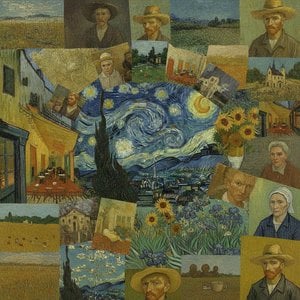
Explore 25 iconic Van Gogh masterpieces and their stories. Discover museum-quality art at WahooArt.com.

Explore 25 iconic Van Gogh and modern masterpieces from the Kröller-Müller Museum. Discover the full collection online at WahooArt.com.
 Preview
 Send
Send Share
Share
 Details
 Guide
Guide

 Download
 Similars
 X-Ray
X-Ray Diaporama
 Q&A
Q&A
 Stats
Stats


 Read More









 Glass option is only available in size under 110 CM


