

 Acrylic On CanvasWallArtVenetian Renaissance
 1560
1560 177.0 x 177.0 cm
 Biblioteca Marciana
Museum-quality giclée or canvas print with fast production and flexible finish options. ( Buy Hand Made Painting Switch to Digital Image)





























Pick from our preset sizes that match the artwork's original proportions.

Type the width and the height you need, to fit your frame or your wall. A print can only be cut, never made bigger than the picture, so a size with a different shape loses a part of the image. We send you a digital mockup to approve before we print anything. The picture shown on this page does not show the real cut — only the mockup does.
Worldwide Delivery () in 2 weeks instead of standard 4/5 weeks. (25 October)
Wisdom
Reproduction Size
Titian’s “Wisdom,” painted in 1560, is not merely a portrait; it's an invitation into the contemplative heart of Renaissance Venice. The painting immediately captivates with its serene subject – a woman seated amidst a cloudscape, her gaze fixed upon a book held gently in her hands. This isn’t a scene of active engagement, but one of profound absorption, suggesting a quiet communion with knowledge and experience. The composition is remarkably balanced, the clouds acting as both backdrop and symbolic support for the figure, creating an atmosphere of ethereal tranquility rarely achieved in portraiture of this era.
Technically, Titian’s mastery shines through every brushstroke. He employs his signature *sfumato* technique – a subtle blurring of lines and colors – to create a sense of atmospheric depth and softness. The clouds aren't sharply defined; instead, they dissolve into hazy blues and greys, lending the scene an almost dreamlike quality. Notice particularly how Titian uses light to illuminate the woman’s face and hands, drawing our attention to her expression of serene contemplation. The rich, layered application of paint – a hallmark of Venetian painting – imbues the work with a luminous vibrancy that seems to emanate from within.
Adding layers of intrigue are the two figures glimpsed in the periphery of the composition. Situated near the bottom left corner and at the top right, they remain partially obscured, their activities undefined yet suggestive. These secondary figures aren’t distractions; rather, they subtly reinforce the theme of wisdom by hinting at a broader world beyond the immediate subject. Some art historians speculate that these figures represent the challenges and complexities encountered on the path to understanding – perhaps representing doubt, temptation, or the pursuit of knowledge itself. Titian's deliberate ambiguity invites viewers to project their own interpretations onto this enigmatic tableau.
“Wisdom” is deeply rooted in the intellectual currents of the 16th century. The book held by the woman is a potent symbol, representing not just literacy but also access to accumulated knowledge, philosophical inquiry, and spiritual understanding – core tenets of Renaissance humanism. The clouds themselves carry symbolic weight, often associated with divine grace, contemplation, or even the afterlife in Venetian art. Titian’s choice to depict her seated amongst them elevates the subject beyond a simple portrait, transforming her into an emblem of intellectual and spiritual elevation.
Titian's “Wisdom” stands as a testament to his revolutionary approach to color and composition. He moved away from the more rigid conventions of earlier Renaissance painters, embracing a looser, more expressive style that prioritized emotional impact and atmospheric effects. His use of warm, saturated hues – particularly in the woman’s clothing and the clouds – creates a visually arresting image that continues to resonate with viewers today. As one of the most influential artists of his time, Titian's innovations profoundly shaped the course of Western painting, paving the way for generations of artists who followed in his footsteps. The reproduction offered by WahooArt.com allows you to experience the full beauty and depth of this remarkable masterpiece, bringing a touch of Venetian elegance and timeless wisdom into your home or studio.
"Wisdom" by Titian is recommended for a living room. This suggestion is based on the work's subject, colors and mood.
The original "Wisdom" by Titian measures 177 x 177 cm.
"Wisdom" is suggested for statement, and the recommended space is a living room.

Tiziano Vecellio, known to the world as Titian, stands as a monumental figure of the Italian Renaissance—perhaps its most celebrated colorist and a master who redefined the possibilities of oil painting. Born around 1490 in Pieve di Cadore, nestled amidst the dramatic landscapes of the Venetian Alps, his journey from humble beginnings to international acclaim is a testament to prodigious talent and an unwavering dedication to artistic innovation. The details surrounding Titian’s early life remain somewhat shrouded in mystery, but we know he was one of several children born to Gregorio Vecellio, a military man, and Lucia. Recognizing their sons' potential, the family arranged for young Tiziano and his brother Francesco to apprentice with an artist in Venice—a decision that would irrevocably alter the course of art history.
Venice at the turn of the 16th century was a vibrant hub of commerce, culture, and artistic ferment. Titian’s initial training took place within the workshop of Sebastiano Zuccato, a mosaicist, followed by brief periods under the tutelage of Gentile Bellini and, crucially, his brother Giovanni. However, it was his association with Giorgione—a fellow Venetian painter whose work possessed an ethereal poetic quality—that proved most formative. The two artists collaborated on several projects, including the exterior frescoes for the Fondaco dei Tedeschi, a bustling trading post for German merchants. Even in these early works, Titian’s exceptional skill was evident, earning him recognition among his contemporaries and foreshadowing the brilliance that would soon blossom.
Titian’s artistic development can be characterized by a remarkable versatility and an ongoing exploration of painterly techniques. His early works, heavily influenced by Giorgione, exhibit a delicate lyricism and a masterful use of color to create atmospheric effects. Paintings like *A Man with a Quilted Sleeve* (circa 1509) demonstrate his emerging talent for portraiture, capturing not only the physical likeness of his subjects but also their inner character. As he matured, Titian began to move away from Giorgione’s subtle tonalities and embrace a bolder, more dramatic approach to color. *The Visitation of Mary and Elizabeth* (now in the Accademia, Venice) exemplifies this shift, showcasing his growing confidence in handling complex compositions and vibrant hues.
Throughout his long career, Titian consistently pushed the boundaries of artistic expression. He experimented with different brushstrokes—from smooth, blended surfaces to loose, expressive marks—and developed a unique technique for layering colors to create luminous effects. His portraits became renowned for their psychological depth and realistic portrayal of textures and fabrics. Simultaneously, he excelled in mythological and religious subjects, imbuing them with a sensuality and dramatic intensity that captivated audiences. A prime example is *Venus of Urbino*, a masterpiece that redefined the depiction of the female nude and established Titian as a leading figure in Venetian painting.
Titian’s talent attracted the attention of powerful patrons from across Europe. He served as court painter to Emperor Charles V, King Philip II of Spain, and Pope Paul III, among others. This patronage not only provided him with financial security but also allowed him to create monumental works that showcased his artistic prowess on a grand scale. His ability to adapt his style to the tastes of different courts while maintaining his own distinctive voice is a testament to his exceptional skill and diplomatic finesse.
The impact of Titian’s work extended far beyond his lifetime. His innovative use of color, his loose brushwork, and his emphasis on capturing the emotional essence of his subjects profoundly influenced generations of artists. From Peter Paul Rubens and Rembrandt to Eugène Delacroix and Édouard Manet, countless painters drew inspiration from his masterpieces. He is considered a pivotal figure in the transition from the High Renaissance to the Baroque period, paving the way for new artistic styles and approaches.
Titian passed away in Venice in 1576, leaving behind an extraordinary body of work that continues to inspire awe and admiration. His paintings can be found in museums around the world, including the Galleria Palatina in Florence, the Prado Museum in Madrid, and the National Gallery in London. To experience a Titian is to encounter a master craftsman at the peak of his powers—a painter who possessed an unparalleled ability to capture the beauty, drama, and complexity of the human condition.

1490 - 1576 , Italy
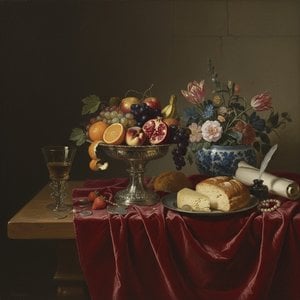
Embark on a sophisticated journey through the history of still life art. From Dutch Golden Age masterpieces to Baroque opulence, explore the profound symbolism and timeless beauty of the world's most exquisite table compositions.

Explore the profound beauty of fruit arrangement masterpieces. From Dutch Golden Age opulence to Baroque chiaroscuro, discover the art history, symbolism, and timeless elegance of classical still life paintings for the discerning collector.

Explore the luminous mastery of Titian. Discover how the Venetian master revolutionized color and light through breathtaking Renaissance techniques, from Venus Anadyomene to profound allegories, and learn to bring this timeless brilliance into your private collection.

Embark on a sophisticated journey through art history with our exploration of still life masterpieces. Discover the profound symbolism behind classical paintings of drinks and fruit, curated for the true connoisseur seeking timeless elegance and academic depth.
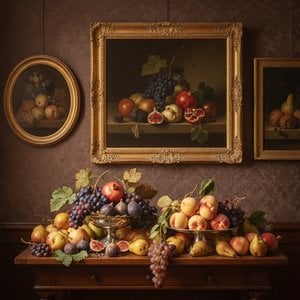
Discover the profound beauty of fruit still life paintings. Explore the rich symbolism, Baroque mastery, and timeless allure of nature's bounty through an art-historical lens, perfect for collectors and enthusiasts of classical fine art.

 Preview
 Send
Send Share
Share
 Details
 Guide
Guide

 Download
 Similars
 X-Ray
X-Ray Diaporama
 Stats
Stats Read More









 Glass option is only available in size under 110 CM


