Museum-quality giclée or canvas print with fast production and flexible finish options. ( Buy Hand Made Painting Switch to Digital Image)





























Pick from our preset sizes that match the artwork's original proportions.

Type the width and the height you need, to fit your frame or your wall. A print can only be cut, never made bigger than the picture, so a size with a different shape loses a part of the image. We send you a digital mockup to approve before we print anything. The picture shown on this page does not show the real cut — only the mockup does.
Worldwide Delivery () in 2 weeks instead of standard 4/5 weeks. (10 November)
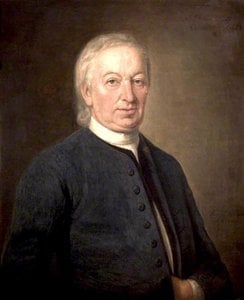
Captain Peter Marriette, Ship's Captain
Reproduction Size
In the quiet dignity of Tilly Kettle’s 1769 masterpiece, Captain Peter Marriette, Ship's Captain, we encounter more than just a likeness; we step into the very heart of Enlightenment-era Britain. This striking oil painting serves as a profound window into an age defined by maritime expansion and the burgeoning influence of the East India Company. Through Kettle’s masterful hand, the subject is not merely recorded but elevated, embodying the steadfastness and social ambition that characterized the era. As the viewer engages with the portrait, there is an immediate sense of meeting a man of consequence—a figure whose very presence commands respect through a composed, thoughtful stillness.
The composition is a triumph of Neoclassical restraint. Eschewing the flamboyant distractions of the preceding Rococo period, Kettle employs a focused, one-point perspective that directs all attention toward Marriette’s countenance. Seated in profile against a muted, unobtrusive backdrop, the Captain becomes the singular protagonist of his own story. The artist utilizes the vertical space of the canvas to emphasize the subject's stature, ensuring that the viewer's gaze is drawn upward to the subtle nuances of his expression. It is a deliberate arrangement designed to foster a sense of solemn contemplation, inviting us to wonder about the many voyages and heavy responsibilities etched into the lines of his face.
Technically, the painting is a testament to the precision of 18th-century oil portraiture. Kettle’s brushwork is remarkably smooth, creating a polished surface that allows light to dance across the textures of the subject's attire. There is a palpable sense of volume in the rendering of Marriette’s clothing; the heavy fabric of his coat feels substantial, almost tactile, thanks to the meticulous application of shadow and highlight. This realism extends to the delicate textures of his hair and the fine details of his skin, where the artist captures the grace of aging with profound sensitivity.
The color palette is deeply symbolic, woven with a narrative of status and duty. The dominance of deep blues evokes the vastness of the oceans Marriette navigated, suggesting maritime authority, reliability, and a steadfast spirit. These cool tones are balanced by crisp whites, which lend an air of nobility and purity to the composition. To complete this visual language of prestige, Kettle incorporates subtle accents of gold trim along the Captain's coat. This glint of precious metal serves as a quiet but powerful reminder of his elevated social standing and the wealth brought by the era's global trade. For the discerning collector or interior designer, these colors offer a sophisticated palette that brings a sense of historical weight and classical elegance to any curated space.
Beyond its historical significance, Captain Peter Marriette possesses an emotional resonance that transcends the centuries. It is a piece that speaks of legacy, duty, and the quiet strength found in leadership. The soft, diffused lighting creates an atmosphere of intimacy, making the encounter with the subject feel personal rather than distant. This artwork does not merely decorate a room; it anchors it, providing a focal point of intellectual and aesthetic depth.
For those seeking to incorporate a piece of British art history into their homes or galleries, a high-quality reproduction of this work offers an unparalleled opportunity. It brings the spirit of the 1760s—an era of discovery and refined order—into a contemporary setting. Whether placed in a study, a formal dining room, or a sophisticated lounge, Kettle’s portrait serves as a timeless conversation piece, inspiring admiration for the craftsmanship of the past and the enduring allure of the Neoclassical tradition.
Works similar to "Captain Peter Marriette, Ship's Captain" are listed on the artwork's Similars page.
"Captain Peter Marriette, Ship's Captain" by Tilly Kettle has a soft shadow luminance. Luminance describes how much light the colors appear to reflect.
Hand-painted copies of "Captain Peter Marriette, Ship's Captain" by Tilly Kettle are sold on this website: a hand-painted oil reproduction on linen canvas, ordered from its Hand-Painted Reproduction page.

Tilly Kettle (1735–1786) stands as a singular figure in British art history—the first prominent English portrait painter to establish himself successfully within the vibrant cultural landscape of India during the zenith of the East India Company’s dominion. Born in London, the son of a coach painter from a family steeped in brewing tradition for five decades, Kettle's artistic journey began with foundational training under William Shipley at the Strand. This early apprenticeship placed him within a burgeoning artistic milieu eager to explore new horizons beyond the traditional confines of the English countryside.
His professional foray into portraiture commenced in the 1750s, swiftly gaining recognition for his ability to capture likenesses with remarkable accuracy and sensitivity. Kettle’s early canvases—primarily self-portraits from 1760—immediately signaled his ambition and established him as a rising talent within the Society of Artists, founded in 1761. This initial exhibition solidified his position amongst fellow artists striving for acclaim and propelled him toward greater commissions. His early career was marked by a refined ability to document the dignity and status of his subjects, notably through his work with the members of the Dartmouth family.
Beyond the borders of England, Kettle’s legacy is defined by his extraordinary expedition in 1768. Traveling alongside the East India Company, he landed at Madras, an experience that would profoundly transform his artistic vision and subject matter. This period allowed him to bridge two worlds, blending European neoclassical techniques with the exoticism and grandeur of the Indian subcontinent. His work from this era serves as a vital historical record, capturing the complex intersections of British colonial presence and local Indian life.
Kettle’s technique was characterized by a remarkable realism and an ability to render both the textures of opulent fabrics and the subtle nuances of human emotion. His repertoire spans a diverse range of subjects, from the aristocratic elegance of Georgian England to the commanding figures of the East India Company's influence in India. Some of his most significant contributions to the art world include:
Through these works, Kettle did more than merely record faces; he captured the very essence of an era defined by expansion, trade, and the meeting of disparate cultures. His ability to adapt his style to suit both the formal requirements of British portraiture and the vibrant, often overwhelming, sensory landscape of India ensures his enduring place in the annals of art history.

1735 - 1786 , United Kingdom

Explore the refined world of Neoclassical portraiture. Discover the mastery of line, light, and order through an expert exploration of academic art history, from Jacques-Louis David to Jean-Antoine Houdon. Immerse yourself in the timeless elegance of classical realism.

Explore the profound elegance of Neoclassical art. Discover the principles of order, symmetry, and virtue through the works of masters like David and Mengs. Immerse yourself in a journey of classical grace and timeless aesthetic perfection.
 Preview
 Send
Send Share
Share
 Details
 Guide
Guide

 Download
 Similars
 X-Ray
X-Ray Diaporama
 Q&A
Q&A
 Stats
Stats


 Read More









 Glass option is only available in size under 110 CM