


Museum-quality giclée or canvas print with fast production and flexible finish options. ( Buy Hand Made Painting Switch to Digital Image)





























Pick from our preset sizes that match the artwork's original proportions.

Type the width and the height you need, to fit your frame or your wall. A print can only be cut, never made bigger than the picture, so a size with a different shape loses a part of the image. We send you a digital mockup to approve before we print anything. The picture shown on this page does not show the real cut — only the mockup does.
Worldwide Delivery () in 2 weeks instead of standard 4/5 weeks. (21 November)
The Student
Reproduction Size
Thomas Sully's "The Student," painted in 1839, is more than just a likeness; it’s a carefully constructed tableau of introspection and nascent artistic promise. This captivating portrait, rendered in rich oil on canvas, offers a glimpse into the mind of a young artist grappling with observation, creativity, and perhaps a touch of melancholy – emotions subtly conveyed through masterful technique and evocative symbolism. The painting immediately draws the viewer in with its dramatic lighting, casting deep shadows that emphasize the subject’s face and clothing while simultaneously creating an atmosphere of quiet contemplation. Sully's skill lies not merely in replicating appearance but in capturing the *essence* of his sitter, a young woman poised on the cusp of her artistic journey.
The neoclassical style evident in “The Student” is deeply rooted in the traditions of portraiture prevalent during Sully’s career. He skillfully employs lines to define the contours of the subject's face, hair, and clothing – a precision that speaks to his meticulous attention to detail. The shapes are predominantly organic: the flowing lines of her hair, the rounded forms of her face, and the rectangular structure of her hat and sketchbook all contribute to a sense of naturalism balanced with formal elegance. The visible brushstrokes, layered textures, and the deliberate use of dark browns, reds, and greens – a palette that evokes both seriousness and sophistication – further enhance the painting’s tactile quality and imbue it with a palpable sense of history.
Beyond its technical brilliance, “The Student” is laden with symbolic elements. The most obvious is, of course, the sketchbook and pencil in her hand – potent emblems of artistic creation and the act of observation. These tools represent not just a means of recording visual information but also the process of translating that information into art. The hat itself can be interpreted as a symbol of identity, perhaps even protection from the outside world, suggesting a desire for solitude and focused creative work. Sully’s choice of attire – modest yet refined – hints at the young woman's aspirations and her position within the social hierarchy of the time.
The composition itself is carefully orchestrated to draw attention to the subject’s inner world. The shallow perspective, typical of portraiture, emphasizes her presence within the frame, creating a sense of intimacy and immediacy. Subtle variations in tone and shadow subtly create depth, preventing the image from feeling flat or static. Sully masterfully uses light and dark not just for aesthetic effect but to shape our understanding of the sitter’s mood – a quiet intensity that suggests both vulnerability and determination.
Understanding “The Student” requires acknowledging the broader context of Thomas Sully’s life and career. Born in Horncastle, Lincolnshire, England, in 1783, Sully’s journey was one of remarkable transatlantic passage – a testament to his adaptability and artistic ambition. His early exposure to theatrical performance, where he initially pursued a career as a tumbler, undoubtedly shaped his ability to capture fleeting expressions and embody character, skills that would prove invaluable in his portraiture work. His apprenticeship with an insurance broker honed his observational abilities and attention to detail, while his subsequent studies under Benjamin West in London solidified his technical training and introduced him to the conventions of neoclassical portraiture.
Sully’s arrival in America marked a pivotal moment in his career. He quickly established himself as one of the leading portrait painters of his time, capturing the likenesses of prominent figures – presidents, generals, and social elites alike. His work reflected both American ideals of civic virtue and European artistic traditions. “The Student,” therefore, can be seen as a microcosm of Sully’s broader artistic vision: a celebration of individual character, rendered with technical skill and imbued with symbolic meaning. It stands as a poignant reminder of the quiet dedication required to pursue a life devoted to art.
WahooArt is proud to offer meticulously crafted hand-painted reproductions of Thomas Sully’s “The Student.” Each reproduction captures the painting's original textures, colors, and emotional depth with unparalleled accuracy. Whether you are an art collector, interior designer seeking a sophisticated statement piece, or simply someone captivated by this evocative portrait, our reproductions provide a beautiful and authentic way to experience the artistry of Thomas Sully. Explore our range of sizes and canvas options to find the perfect addition to your home or office – a timeless work of art that speaks volumes about observation, creativity, and the enduring power of human expression.
"The Student" was created in 1839 using the oil on canvas technique. Material and date describe how and when the original was made.
With its earthy palette, "The Student" by Thomas Sully is recommended for a living room. The colors are part of the reason for this suggestion.
The X-Ray view of "The Student" by Thomas Sully is on the artwork's X-Ray page: an interactive examination of the image through eleven optical layers.


1783 - 1872 , United Kingdom
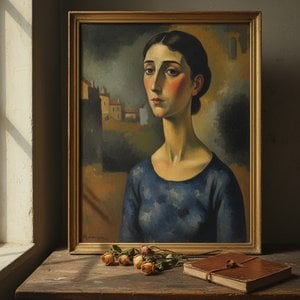
Delve into the haunting beauty of Amedeo Modigliani's portraits. Explore the intersection of Expressionism and Modernism through an expert analysis of his iconic elongated forms, melancholic gazes, and profound influence on art history.

Explore 25 iconic Modigliani masterpieces and their soulful stories. Discover the full collection online at WahooArt.com.

Master the art of decoding hidden symbols and visual allegories in historical masterpieces. Elevate your collection with expert insights.

Decode the profound symbolism of hands in masterworks from Van Gogh to Hindu mudras. Explore the silent language of art with our expert guide.

Elevate your collection with WahooArt’s hand-painted oil reproductions. Discover why museum-quality textures and academic brushwork far surpass digital prints for discerning collectors seeking timeless, bespoke masterpieces for their luxury interiors.
 Preview
 Send
Send Share
Share
 Details
 Guide
Guide

 Download
 Similars
 X-Ray
X-Ray Diaporama
 Q&A
Q&A
 Stats
Stats


 Read More









 Glass option is only available in size under 110 CM


