

Museum-quality giclée or canvas print with fast production and flexible finish options. ( Buy Hand Made Painting Switch to Digital Image)





























Pick from our preset sizes that match the artwork's original proportions.

Type the width and the height you need, to fit your frame or your wall. A print can only be cut, never made bigger than the picture, so a size with a different shape loses a part of the image. We send you a digital mockup to approve before we print anything. The picture shown on this page does not show the real cut — only the mockup does.
Worldwide Delivery () in 2 weeks instead of standard 4/5 weeks. (17 November)
Trees
Reproduction Size
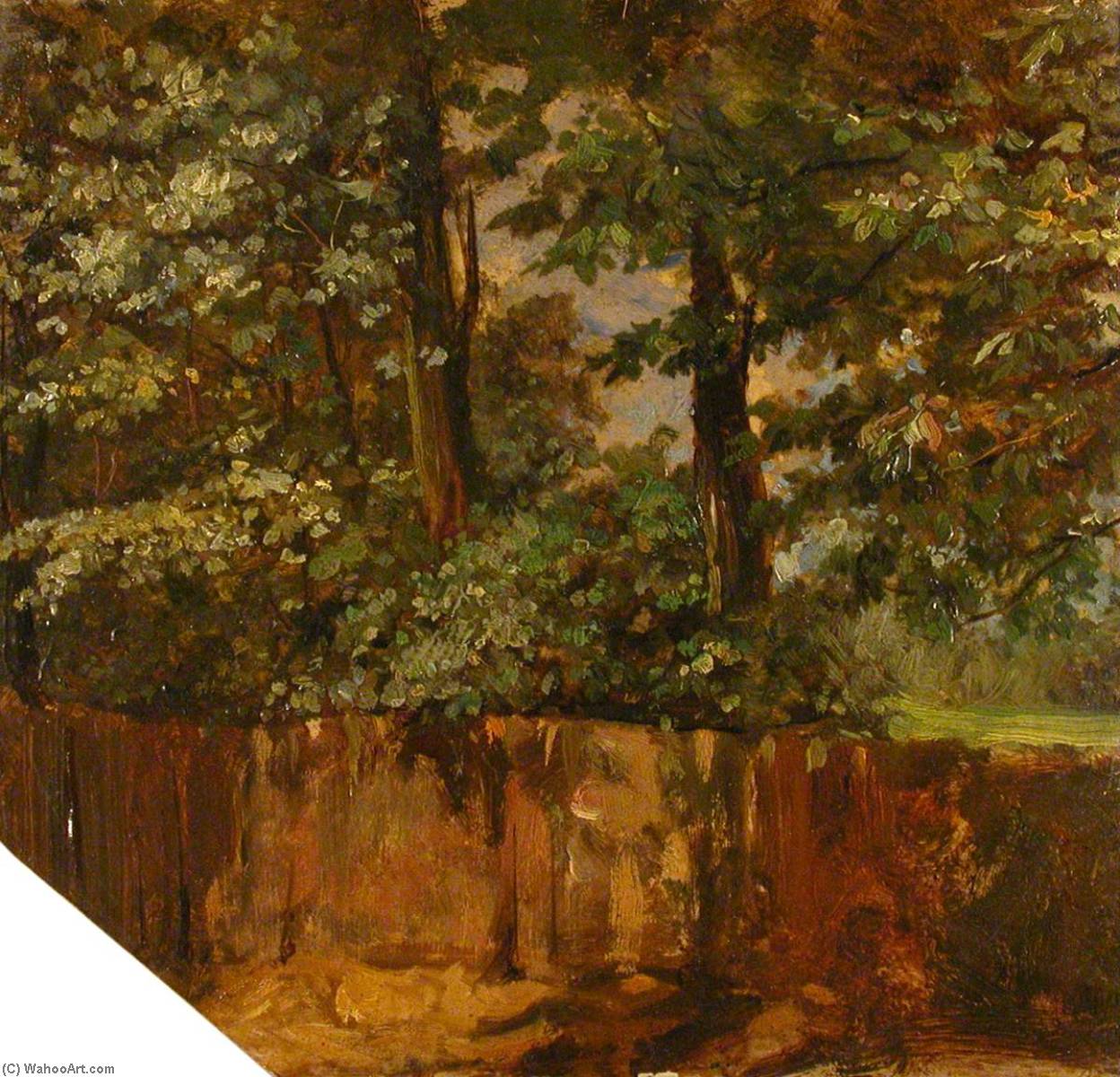
To gaze upon Thomas Stuart Smith’s "Trees" is to step through an unseen portal into a moment of profound natural tranquility. This painting is far more than a mere depiction of foliage; it is a carefully composed meditation on the enduring relationship between humanity and the wild, untamed beauty of nature. The scene unfolds within a lush woodland setting, where every leaf seems imbued with the deep, saturated green of life itself. Smith masterfully captures the layered depth of a forest—the immediate intimacy of foreground branches contrasts beautifully with the hazy mystery of trees receding into the background.
What elevates this piece beyond simple landscape painting is the subtle inclusion of human presence. Scattered within the verdant tapestry are two figures, positioned thoughtfully to guide the viewer's eye through the composition. They do not dominate the scene; rather, they inhabit it. Their quiet contemplation amidst the towering woods suggests a moment paused—a breath taken by wanderers who have found solace in nature’s embrace. This juxtaposition speaks volumes about the Romantic ideal: man finding his place, and perhaps even his soul, within the grandeur of the natural world. It invites us to consider our own moments of respite.
Smith's technique here reveals a painter deeply attuned to both scientific observation and emotional resonance. While the structure is rooted in detailed landscape rendering—the varied textures of bark, the overlapping planes of leaves—there is an undeniable sweep of Romantic idealism guiding the brushwork. The atmosphere itself feels palpable; one can almost hear the rustle of unseen creatures or feel the cool dampness rising from the forest floor. For those who appreciate art that balances meticulous detail with emotional scope, this work offers a perfect study in atmospheric perspective and naturalistic color harmony.
Throughout art history, the woods have served as potent symbols—a place of mystery, rebirth, and introspection. In "Trees," the dense foliage acts as both a shelter and a veil, suggesting secrets held just out of sight. The journey into this painted forest mirrors an internal journey; the figures appear to be on a path toward understanding or peace. It is a visual poem about finding clarity away from the clamor of industrialized life, echoing the intellectual currents that shaped Victorian sensibilities while retaining a timeless, pastoral yearning.
For collectors and designers seeking an artwork that whispers serenity into a modern space, this reproduction offers unparalleled depth. The dimensions of 38 x 27 cm allow it to function beautifully as a focal point—whether placed above a console table or nestled within a gallery grouping. Owning "Trees" is not just acquiring art; it is curating an atmosphere of enduring calm, allowing the viewer to reconnect with that primal, restorative feeling found only deep within the heart of nature.
"Trees" carries a tranquil emotional tone within the Romanticism movement.
The light-dark contrast of "Trees" is recorded as gentle. Contrast describes how strongly light and dark areas differ.
The original "Trees" by Thomas Stuart Smith is held at The Stirling Smith Art Gallery - Museum, Stirling, United Kingdom. A reproduction allows the work to be displayed at home.

Thomas Stuart Smith (1815–1869) remains a singular and evocative figure in the tapestry of Scottish art history, a painter who possessed the rare ability to bridge the sweeping emotional heights of Romanticism with the tender, grounded intimacy of everyday observation. Born into a life shaped by unconventional circumstances—as the illegitimate nephew of Alexander Smith, whose estate at Glassing all near Dunblane provided a backdrop of intellectual and landed prestige—Smith’s early years were marked by a cosmopolitan breadth. His formative travels through France and his subsequent return to England allowed him to absorb the shifting currents of European aesthetics, fostering a perspective that was as much about scientific inquiry as it was about artistic passion.
His life and work were deeply embedded in the transformative atmosphere of the Victorian era. While many of his contemporaries sought to capture the monumental shifts of industrialization through heroic narratives, Smith turned his gaze inward and toward the hearth. He found profound meaning in the subtle nuances of domesticity, capturing Welsh interiors bathed in a soft, diffused light and kitchens brimming with the vibrant textures of fresh produce. His canvases served as windows into the human experience, where the psychological depth of a portrait was just as significant as the atmospheric weight of a landscape.
The brilliance of Smith’s technique lies in his masterful synthesis of seemingly opposing movements. He was deeply moved by the Pre-Raphaelite Brotherhood, drawing inspiration from the meticulous botanical accuracy and atmospheric precision championed by masters such as John Everett Millais and William Holman Hunt. This influence is visible in his commitment to truthful observation; he approached the natural world with a keen eye for detail that honored the integrity of every leaf, shadow, and fabric fold.
Yet, beneath this layer of meticulous realism lay a heart steeped in Romanticism. Smith did not merely document reality; he sought to evoke mood. Through innovative experimentation with light and perspective, he infused his scenes with a sense of longing and sublime emotion. His work often oscillates between the following elements:
Beyond his contributions to the canvas, Thomas Stuart Smith left an indelible mark on the cultural landscape of Scotland through his commitment to education and the preservation of art. His legacy is perhaps most tangibly felt through his role as the founder of the Stirling Smith Art Gallery and Museum. This act of philanthropy ensured that the beauty he sought to capture would remain accessible to future generations, cementing his name not just as a creator of images, but as a guardian of heritage.
In the history of nineteenth-century art, Smith stands as a bridge between eras. He navigated the transition from the grand, idealized visions of the early century to the more grounded, socially conscious realism that would define much of the later Victorian period. His ability to find the extraordinary within the ordinary continues to resonate, reminding us that the most profound truths are often found in the quietest corners of our existence.

1815 - 1869 , United Kingdom
Embark on a visual journey through the serene beauty of gardens and parks in fine art. Discover how master artists capture nature's tranquility through impressionistic blooms and classical landscapes to bring timeless elegance into your home collection.

Master the science of biophilic design with our expert guide to stress-reducing art. Elevate your hospitality space today.

Explore the sublime through a curated journey of art history's greatest landscapes. Discover how museum-quality oil reproductions and bespoke commissions bring the awe and eternal beauty of the Old Masters into your most prestigious interior spaces.
 Preview
 Send
Send Share
Share
 Details
 Guide
Guide

 Download
 Similars
 X-Ray
X-Ray Diaporama
 Q&A
Q&A
 Stats
Stats


 Read More









 Glass option is only available in size under 110 CM


