Artist Biography
Sir Joshua Reynolds: The Grand Manner and the Dawn of British Portraiture
Sir Joshua Reynolds (16 July 1723 – 23 February 1792) stands as a monumental figure in the history of British art, not merely for his prolific output but for fundamentally reshaping the landscape of portrait painting. Born into a cultured family—his father was a headmaster and fellow of Balliol College, Oxford—Reynolds’s artistic journey began with an apprenticeship under Thomas Hudson, a respected London painter. However, it was his sojourn in Italy between 1749 and 1752 that proved transformative, exposing him to the glories of classical antiquity and the Renaissance masters – Rembrandt, Rubens, and Van Dyck, among others. This immersion ignited within him a profound desire to emulate their techniques and elevate British art beyond its then-prevailing limitations. He returned with a clear vision: to establish what he termed the “Grand Manner,” a style characterized by idealized beauty, carefully constructed compositions, and an emphasis on capturing not just likeness but also character and psychological depth. This approach represented a deliberate departure from the more naturalistic tendencies of earlier portraitists, firmly establishing Reynolds as a pivotal figure in the development of British painting.
Early Career and Royal Patronage
Reynolds’s talent quickly garnered recognition, and he swiftly ascended to prominence within London's artistic circles. His early works demonstrated a remarkable ability to capture the elegance and sophistication of the aristocratic clientele who commissioned him. He was elected as the first president of the Royal Academy in 1768, a testament to his influence and standing within the art world. This appointment marked not only a significant personal achievement but also a crucial moment for British art – the Academy provided a dedicated space for artists to exhibit their work and receive public support. His connections with influential figures like Frederick Howard, 5th Earl of Carlisle, further solidified his position, providing him with access to wealthy patrons who fueled his prolific output. The Earl commissioned many portraits from Reynolds, including *Fancy Picture*, a celebrated example of the Grand Manner style.
The Grand Manner and Key Works
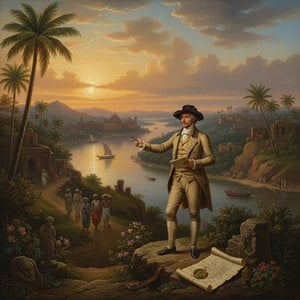
Reynolds’s “Grand Manner” wasn't simply about technical skill; it was a philosophical approach to painting. He believed that artists should strive for an idealization of reality, drawing inspiration from classical models and employing careful composition, lighting, and color to create works of enduring beauty and significance. His portraits were meticulously planned, often featuring multiple sittings to capture the subject’s personality with precision. Perhaps his most iconic work, *Portrait of Omai* (1783-84), exemplifies this style perfectly. The painting, depicting a young woman from Tobago, is renowned for its dramatic lighting, dynamic composition, and Reynolds's masterful portrayal of her character—a captivating blend of exotic beauty and dignified composure. Similarly, *The Marlborough Family* (1785) showcases his ability to capture the grandeur and social standing of a prominent aristocratic family. Other notable works include *Portrait of Philip Gell*, *Portrait of the Earl of Carlisle*, and *Sarah Siddons as the Tragic Muse*, each demonstrating Reynolds’s exceptional skill and artistic vision.
Beyond Portraits: Landscape and Influence
While primarily celebrated for his portraits, Reynolds was also a dedicated landscape painter. His later works, particularly those created after settling in Redhill, Surrey, reveal a shift towards a more idyllic and pastoral style—a departure from the formal grandeur of his earlier portraits. These landscapes, often depicting scenes of rural beauty, are characterized by their lush colors and serene atmosphere. His influence extended far beyond his own paintings; he was a passionate advocate for art education and a mentor to numerous young artists. He championed the study of classical antiquity and Renaissance masters, shaping the artistic sensibilities of an entire generation. John Russell famously described him as “one of the major European painters of the 18th century.” Furthermore, Reynolds’s commitment to establishing the Royal Academy helped to foster a thriving artistic community in London, contributing significantly to the development of British art throughout the 19th century and beyond.
Legacy and Historical Significance
Sir Joshua Reynolds's legacy is profound and enduring. He fundamentally altered the course of British portraiture, establishing a new standard for elegance, sophistication, and psychological depth. His emphasis on the “Grand Manner” influenced countless artists who followed him, shaping the development of painting in Britain for decades to come. His work continues to be studied and admired today, not only for its artistic merit but also for its historical significance as a symbol of the Enlightenment’s embrace of classical ideals and its ambition to elevate British art to the level of European masterpieces. The recent sale of *Portrait of Omai* for £50 million in 2023 underscored Reynolds's enduring value, cementing his place as one of the most important artists in British history.



 Preview
 Buy Hand Made Painting
 Send
Send Share
Share
 Details

 Download
 Similars
 X-Ray
X-Ray Diaporama
 Read More






































 Glass option is only available in size under 110 CM