Thomas Heeremans: A Dutch Winter Visionary
The world of 17th-century Dutch painting is often associated with opulent portraits and dramatic genre scenes, yet within this celebrated landscape lies a quieter, more contemplative voice – that of Thomas Heeremans (1641–1694). Born in Haarlem, a city renowned for its artistic heritage, Heeremans carved out a distinctive niche as a master of winter landscapes, capturing the stark beauty and subtle drama of frozen waterways, snow-dusted villages, and the ethereal glow of twilight. His work offers a poignant glimpse into daily life during a period of significant social and economic change in the Netherlands, revealing both the resilience of its people and the enduring power of nature.
Heeremans’s artistic journey began amidst a rich cultural landscape. Haarlem, at this time, was a thriving center for art production, benefiting from the patronage of wealthy merchants and the city's strong guild system. While his precise training remains somewhat elusive – often referred to as influenced by Klaes Molenaer, a slightly older painter also hailing from Haarlem – Heeremans developed a unique style characterized by a remarkable sensitivity to light and atmosphere. Unlike some of his contemporaries who focused on grand, idealized landscapes, Heeremans preferred to depict scenes of everyday life, imbuing them with a quiet realism and emotional depth.
A Palette of Winter
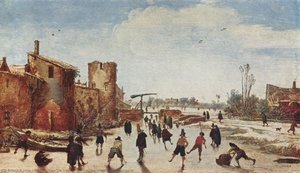
Heeremans’s most celebrated works are undoubtedly his winter scenes. These aren't simply depictions of snow-covered ground; they are meticulously crafted narratives that capture the essence of a season – the stillness, the solitude, and the subtle shifts in light. He frequently returned to painting the beach at Scheveningen and the village, beach and ruins of Egmond, creating a series of evocative images that seem to hold within them the memory of countless winter days. His use of color is particularly noteworthy; he eschewed bright, vibrant hues in favor of muted tones – grays, blues, whites, and browns – which perfectly evoke the cold, crisp air and the reflective surfaces of ice and snow.
A key element of Heeremans’s style is his ability to convey a sense of movement within these static scenes. Figures are often depicted engaged in various activities – skating on frozen ponds, sledging down snowy hills, fishing along icy banks, or simply gathering around fires for warmth. These figures aren't idealized heroes; they are ordinary people going about their daily lives, adding a layer of humanity and realism to the landscapes.
Collaborations and Artistic Influences
It’s important to note that Heeremans often worked in collaboration with other artists, particularly when depicting figures within his landscapes. Abraham Storck, for example, frequently contributed these human elements, ensuring they were integrated seamlessly into the overall composition. This collaborative approach highlights the interconnectedness of the artistic community and demonstrates Heeremans' willingness to draw upon the talents of others to achieve his vision.
While influenced by Molenaer’s evocative winter scenes, Heeremans developed a distinct style characterized by a brighter palette and more lively movement than his predecessor. His work stands apart from the often melancholic depictions of winter found in other Dutch landscapes, offering instead a sense of quiet beauty and understated drama.
Legacy and Recognition
Thomas Heeremans’s paintings are now housed primarily at the Musée Thomas-Henry in France, testament to their enduring appeal. His work offers a valuable window into 17th-century Dutch life, capturing not only the beauty of the natural world but also the resilience and spirit of its people. While he may not be as widely celebrated as some of his contemporaries, Heeremans’s contribution to the development of Dutch landscape painting is significant, and his evocative winter scenes continue to captivate viewers with their quiet power and timeless appeal.
His name, sometimes mistakenly linked to Frederik Hendrik Mans due to a stylistic convention of signing his works, remains a testament to a skilled artist who quietly documented a crucial period in Dutch history through the lens of winter’s beauty.



 Preview
 Buy Print
 Send
Send Share
Share
 Details

 Download
 Similars
 X-Ray
X-Ray Diaporama
 Read More