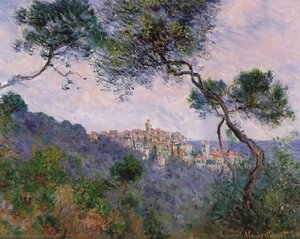
Thomas Hartley Cromek: A Painter of Ruined Beauty
The world of 19th-century British art is rich with landscapes, portraits, and historical scenes, yet a particular niche—the depiction of ruined abbeys and crumbling castles—holds a unique fascination. Within this realm stands Thomas Hartley Cromek (1809-1873), an artist whose serene and meticulously rendered images offer a poignant meditation on time, decay, and the enduring beauty found within forgotten spaces. More than simply documenting ruins, Cromek imbued his paintings with a quiet melancholy, capturing not just their physical form but also the sense of history and loss they embodied—a sensibility that firmly positioned him as a key figure bridging the Neoclassical and Romantic movements.
Born in Wakefield, Yorkshire, to Robert Hartley Cromek, an engraver and illustrator, Thomas’s artistic journey began with informal instruction from James Hunter, a local portrait painter. However, it was his relocation to Leeds and subsequent studies under Joseph Rhodes, a respected landscape artist, that truly shaped his style. Rhodes instilled in him a rigorous approach to observation and technique, while Cromek's own self-directed anatomical studies ensured a deep understanding of form and structure—essential elements for rendering the complex textures and architectural details he would later master.
A pivotal moment in Cromek’s career arrived in 1830 when he embarked on a prolonged journey to Italy. This extended sojourn, lasting nearly two decades, proved transformative. He immersed himself in the art of the Renaissance masters, meticulously studying their techniques and absorbing the atmosphere of ancient ruins scattered throughout the country. Rome became his primary base, where he established connections with other British artists like Clarkson Stanfield and Henry Cheney, fostering a vibrant artistic community. His Italian travels weren’t merely vacations; they were dedicated studies—he sought to capture not just the visual appearance of these sites but also the emotional resonance they evoked. This is evident in his later works, where he skillfully blends realistic detail with an almost palpable sense of nostalgia and quiet contemplation.
The Art of Ruin: Subject Matter and Technique
Cromek’s artistic focus on ruined abbeys and castles wasn't a random choice. It reflected a broader cultural trend in the 19th century—a fascination with antiquity, fueled by archaeological discoveries and a growing interest in historical narratives. However, Cromek elevated this subject matter beyond mere documentation. He approached these decaying structures not as symbols of past glory but as repositories of memory, imbued with a sense of timelessness and melancholy. His paintings are characterized by a remarkable attention to detail—from the weathered stonework and crumbling arches to the overgrown vegetation reclaiming the ruins. He employed a muted palette, dominated by greys, browns, and ochres, which further enhanced the atmosphere of decay and age.
Technically, Cromek’s work demonstrates a mastery of watercolor painting—a medium particularly well-suited for capturing the subtle nuances of light and shadow. He utilized delicate washes to create atmospheric effects, layering colors to build up depth and texture. His compositions are often carefully balanced, drawing the viewer's eye through the scene while simultaneously conveying a sense of spaciousness and tranquility. Crucially, he avoided dramatic lighting or overly theatrical poses—instead opting for a restrained and understated approach that allowed the ruins themselves to speak volumes.
Influences and Connections
Cromek’s artistic development was undoubtedly influenced by both Neoclassical and Romantic ideals. The rigorous training he received from Rhodes instilled in him a classical understanding of form and composition, while his Italian travels exposed him to the works of Renaissance masters like Leonardo da Vinci and Raphael—artists who valued anatomical accuracy and realistic representation. However, Cromek’s work also reveals a strong connection to the burgeoning Romantic movement, which emphasized emotion, imagination, and the sublime beauty of nature. His paintings of ruined abbeys evoke a sense of awe and wonder, inviting viewers to contemplate the passage of time and the fragility of human existence.
Notably, Cromek’s work intersected with another significant artistic endeavor: the engraving of Chaucer's *Canterbury Tales*. His association with Robert Cromek (his father) in this project—particularly his initial concept for representing the pilgrimage route—led to a complex and ultimately contentious relationship with Thomas Stothard, who produced a more commercially successful version. This episode highlights the competitive dynamics within the British art world of the 19th century and underscores the importance of patronage and reputation.
Legacy and Historical Significance
Despite not achieving widespread fame during his lifetime, Thomas Hartley Cromek’s work has gained increasing recognition in recent decades. His paintings are now held in prestigious collections—both public and private—and are admired for their technical skill, atmospheric quality, and evocative power. Cromek's contribution to the depiction of ruins is particularly significant, as he helped to establish a distinct visual language that continues to influence artists today. He demonstrated how to transform a seemingly bleak subject matter into something profoundly beautiful and emotionally resonant—a testament to his artistic vision and enduring legacy.
His meticulous documentation of these forgotten spaces serves as a poignant reminder of the ephemeral nature of human endeavor, while simultaneously celebrating the beauty that can be found in decay and abandonment. Thomas Hartley Cromek’s paintings are not simply images of ruins; they are meditations on time, memory, and the enduring power of art.



 Preview
 Buy Print
 Send
Send Share
Share
 Details

 Download
 Similars
 X-Ray
X-Ray Diaporama
 Read More