Preview AR preview Buy Hand Made Painting Switch to Digital Image Send
Details Guide Add to favorites Download Similars X-Ray Diaporama Stats

Cornfields above Lamorna

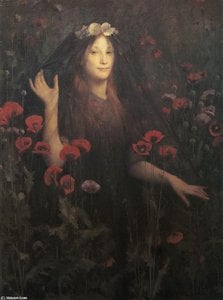
Thomas Cooper Gotch’s "Cornfields above Lamorna" – a vibrant watercolor capturing Cornish landscapes & Pre-Raphaelite charm. Explore romantic genre scenes by this Newlyn artist.

Thomas Cooper Gotch (1854-1931) was an English Pre-Raphaelite painter known for romantic, allegorical genre scenes & vibrant depictions of young girls. A key figure in the Newlyn art colony, his works are held in collections worldwide.

Giclée / Art Print

Museum-quality giclée or canvas print with fast production and flexible finish options. ( Buy Hand Made Painting Switch to Digital Image)

Corner sample of the P118B picture frame: moulded polystyrene, 5 cm wide and 3 cm thick
P118B $10
Corner sample of the P118H picture frame: moulded polystyrene, 5 cm wide and 3 cm thick
P118H $10
Corner sample of the P118W picture frame: moulded polystyrene, 5 cm wide and 3 cm thick
P118W $10
Corner sample of the P438Z picture frame: moulded polystyrene, 5.5 cm wide and 3.5 cm thick
P438Z $10
Corner sample of the P508JH picture frame: moulded polystyrene, 7 cm wide and 3.5 cm thick
P508JH $12
Corner sample of the P508YH picture frame: moulded polystyrene, 7 cm wide and 3.5 cm thick
P508YH $12
Corner sample of the P805H picture frame: moulded polystyrene, 5 cm wide and 3.5 cm thick
P805H $10
Corner sample of the P805Z picture frame: moulded polystyrene, 5 cm wide and 3.5 cm thick
P805Z $10
Corner sample of the P919BZ picture frame: moulded polystyrene, 7 cm wide and 3.5 cm thick
P919BZ $10
Corner sample of the P919G picture frame: moulded polystyrene, 7 cm wide and 3.5 cm thick
P919G $10
Corner sample of the P919XJ picture frame: moulded polystyrene, 7 cm wide and 3.5 cm thick
P919XJ $10
Corner sample of the P959ZH picture frame: moulded polystyrene, 5 cm wide and 3 cm thick
P959ZH $10
Corner sample of the P968JZ picture frame: moulded polystyrene, 6 cm wide and 4 cm thick
P968JZ $12
Corner sample of the W106C picture frame: solid wood, 5 cm wide and 3 cm thick
W106C $8
Corner sample of the W218G picture frame: solid wood, 5 cm wide and 3 cm thick
W218G $10
Corner sample of the W218JH picture frame: solid wood, 5 cm wide and 3 cm thick
W218JH $8
Corner sample of the W218Y picture frame: solid wood, 5 cm wide and 3 cm thick
W218Y $10
Corner sample of the W307PJ picture frame: solid wood, 6 cm wide and 3 cm thick
W307PJ $10
Corner sample of the W316G picture frame: solid wood, 6 cm wide and 3 cm thick
W316G $10
Corner sample of the W316PJ picture frame: solid wood, 6 cm wide and 3 cm thick
W316PJ $8
Corner sample of the W316Y picture frame: solid wood, 6 cm wide and 3 cm thick
W316Y $10
Corner sample of the W398PJ picture frame: solid wood, 5 cm wide and 3 cm thick
W398PJ $8
Corner sample of the W4111J picture frame: solid wood, 6.5 cm wide and 3.5 cm thick
W4111J $10
Corner sample of the W500HY picture frame: solid wood, 7 cm wide and 5 cm thick
W500HY $15
Corner sample of the W500JH picture frame: solid wood, 7 cm wide and 5 cm thick
W500JH $15
Corner sample of the W692G picture frame: solid wood, 8 cm wide and 4 cm thick
W692G $12
Corner sample of the W849H picture frame: solid wood, 5 cm wide and 3 cm thick
W849H $8
Corner sample of the W940BG picture frame: solid wood, 7.5 cm wide and 4.5 cm thick
W940BG $15
Corner sample of the W953PJ picture frame: solid wood, 6 cm wide and 3.5 cm thick
W953PJ $8

Standard
custom
CM
INCH

Pick from our preset sizes that match the artwork's original proportions.

width
height

Type the width and the height you need, to fit your frame or your wall. A print can only be cut, never made bigger than the picture, so a size with a different shape loses a part of the image. We send you a digital mockup to approve before we print anything. The picture shown on this page does not show the real cut — only the mockup does.

Worldwide Delivery () in 2 weeks instead of standard 4/5 weeks. (22 October)

Free Worldwide Express Shipping
High-Quality Linen Canvas
Full Shipping Insurance
Customs Tax Refund Guarantee
True Color Matching Guarantee
100-Day Return Policy (Defects Only)
100% Money-Back Guarantee
Bulk Discount Offer

Total Price

$ 69

Cornfields above Lamorna

Giclée / Art Print

Reproduction Size

-

Total Price

$ 69

Quick Facts

  • Influences:
    • Cooper
    • Sidney
  • Artistic style: Romantic genre
  • Location: Tate Britain
  • Title: Cornfields Above Lamorna
  • Notable elements: Haystacks, figures

Art Quiz

There is only one correct answer for each question.

Question 1:
What is the primary subject matter of Thomas Cooper Gotch’s ‘Cornfields above Lamorna’?
Question 2:
The painting ‘Cornfields above Lamorna’ is primarily associated with which artistic movement?
Question 3:
What material appears to be used for the mounds in the foreground of the painting?
Question 4:
Thomas Cooper Gotch was a key figure in which art colony?
Question 5:
Based on the description, what is the overall mood or atmosphere conveyed by the painting?

Cornfields Above Lamorna: A Pre-Raphaelite Vision of Cornish Beauty

Thomas Cooper Gotch’s “Cornfields above Lamorna” isn't merely a watercolor; it’s a shimmering portal into the heart of Cornwall, circa 1880. This evocative painting captures a quintessential moment in the artist’s career – a masterful blend of Pre-Raphaelite romanticism and keen observation of the rugged Cornish landscape. The scene unfolds with an immediacy that draws the viewer directly into the vibrant greens and earthy browns of the field, punctuated by the hazy blues of the sky above.

Gotch, a key figure in the Newlyn art colony, was deeply influenced by the Pre-Raphaelites’ emphasis on beauty, symbolism, and detailed observation. This influence is readily apparent in his use of color – not as mere representation but as a vehicle for emotional expression. The dominant greens are layered with subtle variations, suggesting the shifting light and texture of the grasses and foliage. Notice how he employs broken brushstrokes to create an impressionistic effect, avoiding sharp outlines and instead conveying the feeling of movement and atmosphere. The composition itself is carefully balanced, guiding the eye across the undulating field towards the distant horizon.

A Study in Light and Landscape

Technically, “Cornfields above Lamorna” showcases Gotch’s remarkable skill with watercolor. He masterfully utilizes wet-on-wet techniques to achieve a luminous quality, allowing colors to bleed into one another and creating an ethereal effect. The artist's attention to detail is equally impressive – from the individual blades of grass to the subtle shadows cast by the mounds in the field. The use of atmospheric perspective—the gradual softening of details with distance—further enhances the sense of depth and realism, despite the painting’s romanticized style.

The choice of Lamorna as a setting is significant. This small fishing village on Cornwall's south coast was a haven for artists seeking inspiration in its dramatic landscapes and close-knit community. Gotch frequently depicted scenes from this region, capturing not just the physical beauty but also the spirit of place – a sense of quiet industry, rural life, and connection to nature.

Symbolism and Human Presence

Beyond the purely visual elements, “Cornfields above Lamorna” is rich in symbolic meaning. The mounds within the field, resembling haystacks or perhaps even ancient burial mounds, evoke a sense of history and mystery. They subtly connect the present scene to the land’s past, hinting at forgotten rituals and enduring traditions. The small group of figures standing near the center of the painting adds another layer of complexity. Their presence suggests human interaction with nature – observation, contemplation, perhaps even a shared appreciation for the landscape's beauty.

These figures are deliberately ambiguous; their identities remain unknown, allowing viewers to project their own interpretations onto the scene. Are they farmers, laborers, or simply travelers pausing to enjoy the view? Their anonymity reinforces the painting’s universal appeal, inviting us to contemplate our own relationship with the natural world.

A Timeless Masterpiece – Perfect for Reproduction

“Cornfields above Lamorna” remains a powerfully evocative work of art. Its vibrant colors, masterful technique, and subtle symbolism continue to captivate viewers today. WahooArt offers meticulously crafted hand-painted reproductions that faithfully capture the essence of Gotch’s original watercolor. Whether you're an art collector, interior designer seeking a touch of Pre-Raphaelite charm, or simply someone who appreciates breathtaking beauty, a reproduction of “Cornfields above Lamorna” is sure to bring a sense of tranquility and inspiration to your space.

Explore the full artwork details and high-resolution images on our website: Cornfields above Lamorna

Questions & Answers

Can I examine "Cornfields above Lamorna" in more detail?

"Cornfields above Lamorna" can be examined layer by layer on the artwork's X-Ray page, a viewer inspired by a conservator's light bench with eleven optical readings of the image.

How many people view "Cornfields above Lamorna"?

The Stats page of "Cornfields above Lamorna" by Thomas Cooper Gotch presents public visit statistics: monthly visits of this artwork, a comparison with the artist's most viewed works, and where its visitors come from.

What medium is "Cornfields above Lamorna" by Thomas Cooper Gotch executed in?

"Cornfields above Lamorna" is executed in watercolor.


Artist Biography

Early Life and Education

Thomas Cooper Gotch was born December 10th, 1854 in Kettering, Northamptonshire – a quiet market town nestled in the heart of England’s Midlands. He descended from a family steeped in tradition; his father, John Henry Gotch, was a shoe maker and possessed considerable entrepreneurial spirit, establishing *J.C. Gotch & Sons*, a bank that would become a cornerstone of the local economy. His elder brother, John Alfred Gotch, followed in his father’s footsteps as an architect, designing buildings across Britain. The family's wealth provided Thomas with opportunities for education beyond the ordinary, fostering his artistic inclinations from a young age. He attended Heatherley’s Art School in London and subsequently studied at Slade School of Fine Art alongside Henry Scott Tuke and Caroline Yates—a formative encounter that would profoundly influence his artistic trajectory. These institutions instilled in him not only technical skills but also an appreciation for the aesthetic ideals of the Pre-Raphaelites, a movement that championed beauty, imagination, and meticulous detail.

The Influence of Pre-Raphaelite Aesthetics

Gotch’s artistic sensibilities were undeniably shaped by the Pre-Raphaelite Brotherhood—a group of artists who rejected academic conventions and sought inspiration in medieval art and literature. Artists like Dante Gabriel Rossetti, William Holman Hunt and John Everett Millais championed a return to artistic sincerity and an idealized depiction of nature, rejecting the artificiality of Neoclassical style. Gotch embraced these principles wholeheartedly, evident in his early landscapes—characterized by muted colours, atmospheric perspective, and painstaking observation of the natural world. He was particularly drawn to the Barbizon School’s emphasis on plein air painting—working outdoors directly from nature—a technique championed by artists like Jean-François Millet. This approach allowed him to capture fleeting moments of beauty and convey a sense of immediacy that resonated with the Pre-Raphaelite ethos. The Japanese prints of Hiroshige and Utagawa Kunichika served as another significant source of inspiration, influencing Gotch’s compositional choices and his use of decorative patterns—a hallmark of the movement's aesthetic.

Newlyn School and Artistic Development

Around 1881, Gotch married Caroline Burland Yates—another aspiring artist who shared his passion for Pre-Raphaelite ideals. Together they established a home in Newlyn, Cornwall—a thriving artistic colony where artists flocked to capture the rugged Cornish coastline and its dramatic sunsets. This relocation marked a pivotal moment in Gotch’s artistic development; he began to immerse himself in the Newlyn School style—characterized by vibrant colours, loose brushwork, and an expressive handling of paint. Influenced by Whistler's techniques for creating compositions and paintings, Gotch moved away from the subdued palette of his earlier landscapes towards a bolder visual language. He skillfully blended Pre-Raphaelite influences with Cornish landscape traditions, producing evocative depictions of Mount’s Bay and its surrounding hills—works that continue to captivate viewers today. Notably, he employed the use of glazing techniques to create luminous surfaces and enhance the depth of colour.

Notable Works and Recognition

Gotch's artistic output spanned a remarkable range of subjects—from portraits of children and women to expansive landscapes and allegorical genre scenes. His daughter Phyllis Marion Gotch frequently served as a model for his paintings, capturing her youthful beauty in canvases imbued with Pre-Raphaelite colour palettes and compositional dynamism. Among his most celebrated works are *The Orchard* (1887), *Ruby* (1892) and *The Exile* (1893)—each demonstrating Gotch’s mastery of technique and his ability to convey profound emotion through visual imagery. His painting *My Crown and Sceptre*, completed in 1892, exemplifies his embrace of Symbolist aesthetics—incorporating decorative Italian textiles and a static order reminiscent of early Renaissance art—a stylistic shift that garnered considerable acclaim from critics like Tate who recognised Gotch’s newfound artistic vision. He was awarded RBA membership in 1885 and RI membership in 1912, cementing his position as one of Britain's leading artists of the era. His paintings are held in collections across Australia, New Zealand, South Africa and the United Kingdom—a testament to their enduring beauty and artistic significance.

Legacy and Influence

Thomas Cooper Gotch died May 1st, 1931 in London during an exhibition of his work—leaving behind a legacy as one of Cornwall’s most accomplished Pre-Raphaelite painters. His dedication to capturing the essence of Cornish landscape and his masterful execution of Pre-Raphaelite principles continue to inspire artists today. He was buried in Sancreed churchyard alongside fellow Newlyn School artists Stanhope Alexander Forbes and Elizabeth Adele Forbes—a poignant reminder of Cornwall’s rich artistic heritage. Gotch's influence extended beyond his own paintings; he established the Newlyn Industrial Classes, fostering artistic education amongst young people, and served on the committee of the Newlyn Art Gallery—actively promoting Cornish art and culture throughout his life. His work remains a cornerstone of British painting history, embodying the ideals of beauty, imagination, and meticulous observation that defined the Pre-Raphaelite movement—a testament to Gotch’s enduring artistic vision.
Thomas Cooper Gotch

Thomas Cooper Gotch

1854 - 1931 , United Kingdom

Quick Facts

  • Full Name: Thomas Cooper Gotch
  • Nationality: British
  • Date Of Birth: 1854
  • Date Of Death: 1931
  • Place Of Birth: Kettering, United Kingdom
  • Notable Artworks:
    • The Child Enthroned
    • My Crown and Sceptre
  • Artistic Movement Or Style: Pre-Raphaelite
  • Artists Who Influenced This Artist:
    • James McNeill Whistler
    • Bastien Lepage
  • Artists Or Movements Influenced By This Artist: ['Newlyn School']
Explore artworks organized by themes, styles, and characteristics.