

The artwork displayed on this page is protected by copyright law, which means we cannot legally create or sell an identical reproduction. This protection is enforced under international agreements such as the Berne Convention and by national laws, including those outlined by the U.S. Copyright Law - Title 17.
This method fully complies with copyright regulations because it does not involve copying or duplicating the protected artwork. Instead, it is a creative reinterpretation - a new painting that is influenced by the original but not identical to it.
Museum-quality giclée or canvas print with fast production and flexible finish options. ( Buy Hand Made Painting Switch to Digital Image)
Pick from our preset sizes that match the artwork's original proportions.

Type the width and the height you need, to fit your frame or your wall. A print can only be cut, never made bigger than the picture, so a size with a different shape loses a part of the image. We send you a digital mockup to approve before we print anything. The picture shown on this page does not show the real cut — only the mockup does.
Worldwide Delivery () in 2 weeks instead of standard 4/5 weeks. (24 October)
Joseph receiving Pharaoh
Reproduction Size
In the heart of London’s Dulwich Outdoor Gallery, a striking visual dialogue unfolds upon a verdant backdrop, inviting passersby into a world where biblical narrative meets contemporary street rebellion. "Joseph receiving Pharaoh" is not merely a mural; it is a pulsating encounter between ancient history and the raw, energetic spirit of modern urban art. Created by the legendary pioneer Thierry Noir, this piece reimagines the monumental moment of Joseph’s ascent to power through a lens that is both playful and profoundly impactful. The scene captures a dense gathering of figures, a collective assembly where individuals are caught in moments of quiet interaction, some clutching everyday objects like knives and spoons, bridging the gap between the epic scale of Pharaoh's court and the intimate, tactile reality of human existence.
The composition is characterized by its rhythmic density. A group of at least twelve figures stands closely together, their proximity creating a sense of shared destiny and communal tension. There is a captivating movement within the stillness; as eyes wander across the green wall, one discovers characters engaged in whispered conversations or subtle gestures that suggest a complex social hierarchy. This layering of human presence transforms the flat surface of the building into a stage where history is perpetually being reenacted. For the collector or designer, this work offers a unique opportunity to introduce a sense of narrative depth and architectural vitality into a space, acting as a conversation piece that defies the boundaries between fine art and public expression.
To understand the soul of this mural, one must look to the hands of Thierry Noir. Born in Lyon and famously shaped by the divided atmosphere of West Berlin, Noir’s technique is rooted in the urgency of the street. His style avoids the polished pretension of academic realism, opting instead for a bold, graphic language that prioritizes emotional resonance and immediate visual impact. The use of vibrant, saturated colors against the deep green of the wall creates a high-contrast environment that demands attention, much like the neon pulses of the counterculture he helped define. His approach to "Joseph receiving Pharaoh" utilizes a flattened perspective and simplified forms, a technique that allows the subject matter to remain accessible yet layered with symbolic weight.
The emotional impact of the piece lies in its ability to humanize the monumental. While the title evokes the grandeur of Egyptian myth, the execution feels grounded, almost domestic, due to the inclusion of mundane objects and the casual postures of the figures. This juxtaposition creates a profound sense of relatability; it suggests that even within the grandest shifts of political or divine fate, the essence of humanity—our interactions, our tools, and our shared presence—remains constant. For those seeking to adorn an interior with a high-quality reproduction, this artwork provides more than just color; it brings a piece of art history’s most daring era into the home, offering a sophisticated blend of historical reverence and avant-garde energy.
The color harmony of "Joseph receiving Pharaoh" is recorded as discordant palette.
"Joseph receiving Pharaoh" connects the Street Art movement with France through its creator's birthplace.
"Joseph receiving Pharaoh" is associated with an energetic feeling. The emotional tone describes the impression the work gives.


1958 - , France

Elevate your hospitality projects with our expert trend forecast on luxury murals. From biophilic botanical jungles to opulent gold leaf geometry, discover how bespoke large-scale wall art and custom frescoes can transform hotel interiors into unforgettable architectural statements.
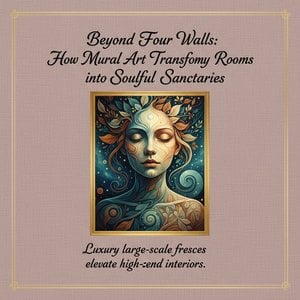
Discover how bespoke mural art transforms empty spaces into soulful sanctuaries. Explore the luxury of large-scale architectural frescoes, geometric abstractions, and custom oil paintings designed to elevate high-end interiors with unparalleled artistry and emotional depth.

 Preview
 Send
Send Share
Share
 Details
 Guide
Guide

 Download
 Similars
 X-Ray
X-Ray Diaporama
 Stats
Stats


 Read More






































 Glass option is only available in size under 110 CM


