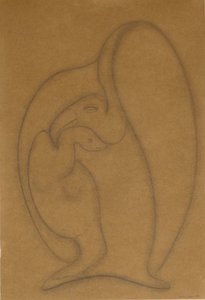
45.0 x 61.0 cm
 High Life Highland Exhibitions Unit
Purchase a high-resolution, enhanced digital image, far superior to the online preview.
Each file is meticulously prepared by our in-house specialists using advanced tools and expert manual retouching. We ensure every image has exceptional clarity, precise color accuracy, and fine detail.
The final file is delivered via email within 72 hours, optimized for immediate use in professional, editorial, and print environments. This is the same quality trusted by top-tier design studios, publishers, and galleries.
Download a high-resolution file for personal display, printing, and creative projects. ( Switch to Print Buy Hand Made Painting)
When you choose WahooArt.com, you're not just getting an image - you're receiving a professionally enhanced digital artwork, crafted with precision and backed by a satisfaction guarantee. Here's everything that comes with your order, automatically:

Your high-resolution digital image file will be emailed to you within 72 hours of ordering - ready for immediate use.

Your artwork is professionally optimized using advanced AI tools and manual editing, ensuring maximum detail, clarity, and color accuracy.

Accidentally deleted or lost your file? No worries - we'll resend it to you anytime, free of charge.

Enjoy your artwork instantly with zero customs, duties, or delivery fees - digital downloads are always tax-free.

We ensure your digital image reflects the original colors as closely as possible using professional tools and color management.

If you're not satisfied with your digital image, we'll revise it or refund 100% within 100 days - no questions asked.

Not satisfied? Get a full refund within 100 days of receiving your digital file - no questions asked.

Buy 3 images, save 10% - Buy 5, save 15% - Buy 10+, save 20%. Great for creative projects, galleries, and agencies.

Talbert McLean (1906-1992) remains a curiously overlooked figure within the broader narrative of 20th-century British art, despite producing a body of work that is both strikingly original and deeply resonant. Born in Dundee, Scotland, into a family steeped in musical tradition – his father was a renowned banjo player – McLean’s artistic journey began with formal training at the Dundee School of Art, followed by a period teaching design before venturing to London. It was there, amidst the vibrant energy of the city, that he forged his distinctive path, moving away from representational art and embracing the nascent world of abstraction.
McLean’s early career saw him working as a scenic artist in theatre, a role which undoubtedly honed his observational skills and understanding of composition. However, it was during wartime service in North Wales – where he developed a close friendship with William Scott, a pivotal figure in the Welsh Abstraction movement – and later in North Africa, engaged in map-making, that the seeds of his unique style began to germinate. The stark landscapes, the precise lines of cartography, and the need for clarity and simplification all contributed to his evolving aesthetic. Returning to Scotland after the war, McLean settled in Arbroath, securing a teaching position at the High School, a role he held until his retirement.
McLean’s mature work is characterized by its deliberate restraint and subtle power. He largely abandoned watercolor, opting instead for acrylic paint – a medium that allowed him to achieve remarkable control over color and texture. His paintings are rarely overtly expressive; rather, they operate through a carefully calibrated interplay of form and tone. McLean was deeply interested in the properties of light and shadow, meticulously building up layers of translucent washes to create an atmosphere of quiet contemplation. He avoided bold brushstrokes or dramatic gestures, preferring instead a process of slow, deliberate accumulation – a technique that lends his paintings a remarkable sense of depth and luminosity.
His compositions often feature still lifes—fruit bowls, solitary objects bathed in diffused light—but these are presented not as straightforward depictions but as explorations of color relationships and spatial ambiguity. McLean’s use of muted palettes—dominated by blues, greens, ochres, and browns—creates a sense of melancholy and introspection. He was particularly adept at capturing the subtle nuances of reflected light, imbuing his paintings with an almost ethereal quality.
While McLean’s work is undeniably original, it's important to acknowledge the influences that shaped his artistic vision. The Welsh Abstraction movement, spearheaded by Scott, provided a crucial context for his development, introducing him to the principles of non-objective art while retaining a strong connection to the landscape. Furthermore, McLean was deeply influenced by the work of European abstract artists such as Paul Klee and Giorgio Morandi, whose emphasis on color and form resonated with his own aesthetic sensibilities. The influence of Japanese painting – particularly its use of subtle gradations of tone and its focus on capturing the essence of objects rather than their literal representation – is also evident in his work.
Despite often being overlooked by mainstream art historical narratives, Talbert McLean’s contribution to British abstract art is significant. His paintings are held in important collections across Scotland and beyond, including the Scottish National Gallery of Modern Art and the Hunterian Museum in Glasgow. More recently, his work has begun to receive renewed attention, with exhibitions showcasing his distinctive style and highlighting his unique place within the history of abstraction. McLean’s legacy lies not in flamboyant displays of virtuosity but in a quiet, persistent exploration of color, form, and light—a testament to the enduring power of understated elegance.

 Preview
 Send
Send Share
Share
 Details

 Download
 Similars
 X-Ray
X-Ray Diaporama
 Stats
Stats Read More