

 Oil On PanelGothic art
 1333
1333 63.0 x 41.0 cm
 Staatliche Museen zu Berlin
Hand-painted oil on canvas in your size and frame, made to order by our artists. ( Switch to Print Switch to Digital Image)





























Pick from our preset sizes that match the artwork's original proportions.

Type the width and the height you need, to fit your frame or your wall. This is hand-painted, so for a size with a different shape the artist can paint a bit more around the picture, or cut a bit — you choose. We send you a digital mockup to approve before the painting starts. The picture shown on this page does not show the real result — only the mockup does.
Worldwide Delivery () in 3/4 weeks instead of standard 5 weeks. (22 October). No compromise on quality.
Triptych (interior)
Reproduction Size
Within the hallowed halls of Berlin’s Staatliche Museen resides a poignant testament to 14th-century Italian piety – Taddeo Gaddi’s “Triptych (interior).” Crafted around 1333, this intimate work offers a window into the fervent religious landscape of Florence during a period of artistic transition. More than just a devotional object, it's a masterful display of Gaddi’s skill as Giotto’s most celebrated pupil, showcasing his ability to blend the innovative naturalism of his mentor with the lingering grace of Gothic tradition. The triptych, measuring 63 x 41 cm for the central panel and smaller dimensions for each wing, is rendered in poplar wood, a common material for Florentine panels of the era, and its preservation allows us to connect directly with the artistic sensibilities of a bygone age.
Upon opening this hinged masterpiece, one is immediately drawn into a world of quiet contemplation. The central panel depicts the Virgin Mary enthroned, cradling the Christ Child amidst a gathering of apostles and prophets. This iconic image, a cornerstone of Christian iconography, radiates serenity and maternal tenderness. Flanking this central scene are two smaller panels that narrate key moments in Mary’s life. The left wing portrays an early Nativity scene, imbued with a gentle warmth and human connection. Above it, we see Saint Nicholas freeing Adeodatus from slavery – a story of divine intervention and compassion. The right wing presents a depiction of the Crucifixion, underscored by another episode featuring Saint Nicholas restoring Adeodatus to his parents. This pairing of events—the sacrifice of Christ alongside acts of selfless kindness—highlights the interconnectedness of faith, suffering, and redemption within the medieval worldview.
Taddeo Gaddi’s style in this triptych is a fascinating blend of influences. While clearly indebted to Giotto’s revolutionary approach to depicting human figures with greater realism and emotional depth, Gaddi retains certain characteristics of the late Gothic period. Observe the elongated proportions of the figures, the elegant drapery folds, and the stylized architectural backgrounds—all hallmarks of the preceding artistic style. However, Gaddi's use of light and shadow is more nuanced than earlier Gothic works, hinting at the emerging Renaissance interest in creating a sense of three-dimensionality. The details are meticulously rendered; from the intricate patterns on Mary’s robes to the expressive faces of the apostles, each element contributes to the overall narrative power of the piece. The use of color, while restrained by medieval conventions, is nonetheless effective in conveying mood and highlighting key figures.
Beyond its aesthetic qualities, the “Triptych (interior)” is rich in symbolic meaning. The triptych format itself—three panels hinged together—was a popular choice for devotional art during this period, allowing viewers to open and close the work as a form of prayer or meditation. The inclusion of Saint Nicholas reinforces themes of charity and divine grace. Mary’s central position underscores her pivotal role in Christian theology. The overall effect is one of profound reverence and spiritual contemplation—a tangible expression of faith intended to inspire devotion in its viewers. This wasn't merely an artistic creation; it was a tool for fostering piety, a visual sermon designed to deepen the connection between the individual and the divine.
"Triptych (interior)" by Taddeo Gaddi shows a bold contrast between its light and dark areas.
"Triptych (interior)" is suggested for accent, and the recommended space is a living room.
"Triptych (interior)" is a work of Gothic art. The movement indicates the artistic tradition the work is part of.

In the vibrant, burgeoning atmosphere of 14th-century Florence, a period defined by the transition from the medieval to the early Renaissance, Taddeo Gaddi emerged as a master of light, narrative, and architectural grandeur. As one of the most distinguished pupils of the legendary Giotto di Bondone, Gaddi did not merely inherit a style; he expanded the visual vocabulary of his era. His work serves as a vital bridge, carrying the monumental weight of Giottesque naturalism into a new realm of decorative complexity and luminous storytelling. To study Gaddi is to witness the evolution of Florentine painting, where the rigid hierarchies of the Byzantine tradition began to soften under the influence of human emotion and spatial depth.
The foundations of Gaddi's artistry were deeply rooted in the workshop of Giotto, where he learned the profound importance of chiaroscuro and the ability to render figures with a sense of physical presence. However, Gaddi possessed an innate inclination toward a more ornamental and detailed approach than his master. While Giotto focused on the raw, sculptural essence of humanity, Gaddi introduced a delicate elegance and a sophisticated use of light that could transform a flat surface into a window of divine radiance. This unique synthesis allowed him to excel in large-scale fresco cycles, where he demonstrated an unparalleled ability to organize complex theological narratives within architectural settings that felt both sacred and tangible.
Gaddi’s most enduring contributions to the history of art are found within his magnificent fresco cycles, most notably in the Baroncelli Chapel in Santa Croce, Florence. In these works, he achieved a breathtaking level of narrative continuity, guiding the viewer through the lives of saints with a rhythmic grace. His technique involved a meticulous layering of color and light, often utilizing gold accents and rich pigments to evoke the celestial atmosphere of the divine. One can observe his mastery in pieces such as the Scene from the Life of St. Francis, where the artist captures moments of profound spiritual intimacy. Through these depictions, Gaddi does not just tell a story; he creates an immersive environment where birds, landscapes, and human figures coexist in a state of holy equilibrium.
Beyond his religious devotion, Gaddi’s work is characterized by several defining artistic elements:
The historical importance of Taddeo Gaddi lies in his role as a custodian and an innovator. He preserved the monumental dignity of the Giottesque tradition while simultaneously infusing it with the decorative richness that would characterize the late Gothic period. His influence stretched far beyond the walls of Florentine chapels, impacting the way subsequent generations of painters approached the concept of space and light. By blending the structural solidity of his training with a new, more lyrical sensibility, Gaddi helped prepare the artistic landscape for the full flowering of the Renaissance.
As we look back upon his oeuvre, we see an artist who was deeply attuned to the spiritual and civic pulse of his time. His ability to render the sacred through the lens of a growing naturalism ensured that his works remained not only objects of veneration but also masterpieces of technical achievement. Taddeo Gaddi remains a cornerstone of Italian art history, a painter whose brushstrokes captured the very moment when the medieval world began to look toward the light of a new, human-centered era.
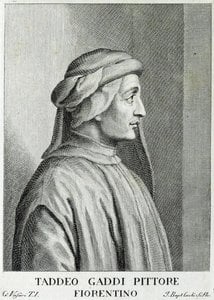
1290 - 1366 , Italy

Embark on a visual journey through Early Medieval art. Explore the profound beauty of illuminated manuscripts, sacred symbols, and golden light through an expert historical lens, celebrating the enduring legacy of medieval craftsmanship and divine artistry.

Embark on a scholarly journey through the sacred beauty of High Medieval art. Discover the profound symbolism, luminous iconography, and spiritual depth of Gothic masterpieces in this expert guide for classical art enthusiasts.
Embark on a journey through the dramatic era of Gothic art. Discover the profound beauty of illuminated manuscripts, sacred gold leaf masterpieces, and the transition to naturalism in this expert-led exploration of medieval artistry and historical grandeur.

Explore the exquisite elegance of Late Gothic art. Discover how masters like Carlo Crivelli and Stefan Lochner blended intricate detail and religious devotion to bridge the Middle Ages and the Renaissance in this expert art history guide for true connoisseurs.

Embark on a scholarly journey through the spiritual grandeur of Late Medieval art. Discover the intricate symbolism, technical mastery, and profound religious narratives that define the Gothic era in this expert-led guide for art enthusiasts and collectors.

 Preview
 Send
Send Share
Share
 Details
 Guide
Guide

 Download
 Similars
 X-Ray
X-Ray Diaporama
 Stats
Stats Read More









 Glass option is only available in size under 110 CM


