
x


Museum-quality giclée or canvas print with fast production and flexible finish options. ( Buy Hand Made Painting Buy Image)





























Pick from our preset sizes that match the artwork's original proportions.

You may enter your own dimensions to fit a specific frame or space. If your selected size does not match the original image's proportions, we will either crop the artwork or extend the image with a mirrored or solid-fill edge. A digital mockup will be sent for your approval before production begins.
Please note that the on-screen preview does not reflect the actual cropping or extension. Only the mockup will accurately show the final composition.
While custom sizes are available, we recommend selecting a dimension from the predefined list to preserve the original proportions.
Worldwide Delivery () in 2 weeks instead of standard 4/5 weeks. (6 September)


Foot Smells
Reproduction Size
In the vibrant tapestry of mid-century modernism, few works capture the eye with such immediate, rhythmic energy as Foot Smells. Created in 1966 by the evocative Suellen Krupp, this masterpiece serves as a profound exploration of organic geometry and chromatic intensity. At first glance, the viewer is swept into a sun-drenched world, dominated by a radiant yellow background that pulses with warmth. Yet, beneath this luminous surface lies a complex, intricate design that suggests the silhouette of a human form, reimagined through a lens of abstraction. The painting does not merely depict a subject; it orchestrates a visual symphony where blue accents dance against golden hues, creating a sense of movement that feels both spontaneous and meticulously structured.
The technique employed in this piece reflects a masterful command over pattern and layering. Krupp utilizes a dense arrangement of colors and motifs to build a central figure that appears almost sculptural in its complexity. This larger, central design is populated by smaller, enigmatic figures that drift across the canvas like celestial bodies or microscopic organisms. These secondary elements create a layered depth, inviting the eye to wander through a labyrinth of shapes. The interplay between the bold, primary-adjacent colors and the delicate, intricate linework creates a tension that is quintessential to the era's experimental spirit, making every viewing a new discovery for the discerning observer.
Beyond its striking aesthetic, Foot Smells invites deep contemplation regarding identity and the interconnectedness of life. The way the central body-like form is composed of fragmented patterns suggests that the individual is not a singular entity, but a mosaic of experiences, environments, and histories. By scattering smaller figures throughout the composition, Krupp subtly touches upon themes of community and the collective human condition. There is a sense of an ecosystem at work—a biological or social web where every small part contributes to the vitality of the whole. This symbolic depth transforms the painting from a mere decorative object into a profound meditation on existence.
For the collector or interior designer, this artwork offers a unique opportunity to introduce a focal point of immense character and intellectual weight. The emotional impact of the piece is one of uplift and curiosity; it possesses the rare ability to energize a room while simultaneously providing a quiet space for introspection. Whether placed in a contemporary gallery setting or as a bold statement piece in a sophisticated residential lounge, Foot Smells commands attention through its unapologetic joy and structural complexity. It remains a timeless testament to the power of abstraction to communicate the most intimate aspects of our shared reality.


1943 - 2020 , United States of America

Immerse yourself in the captivating world of slate blue! Explore 10 iconic paintings by Monet, Van Gogh & Renoir. Discover their stories, techniques & find museum-quality art reproductions for your home at .
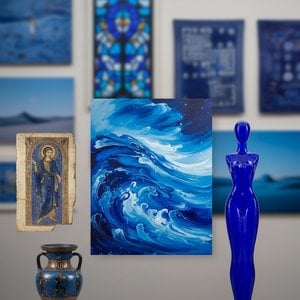
Explore the rich history of blue in art! Discover its symbolism, from ancient pigments to modern masterpieces by Kandinsky & Seurat. Uncover the psychological impact and cultural meanings behind this captivating hue.

Immerse yourself in golden light! Explore 10 famous paintings dominated by 'Chrome Yellow', from Van Gogh’s Sunflowers to Monet's Haystacks. Discover the stories behind these iconic Impressionist & Post-Impressionist masterpieces and find museum-quality art reproductions at WahooArt.com.
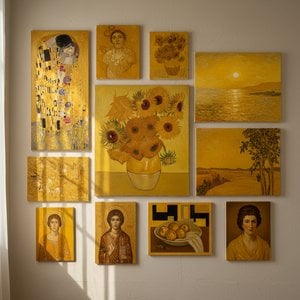
Explore 10 iconic paintings bathed in golden yellow ochre! From Van Gogh's sunflowers to Monet’s haystacks, discover the stories behind these masterpieces. Find museum-quality art reproductions & elevate your home decor on .

Explore the rich symbolism & emotional power of yellow in art history! From Van Gogh to Kandinsky, discover how artists used this vibrant hue. Expert analysis & high-quality reproductions at WahooArt.


Stay updated with the latest art news, exclusive offers, and decoration ideas.
Tell us about your project and our art experts will provide you with 3 personalized art suggestions.
Let Us Curate 3 Options Just for You - Free!

 Preview
 Send
Send Share
Share
 Details

 Download
 Similars
 X-Ray
X-Ray Diaporama


 Read More







 Glass option is only available in size under 110 CM


