
Preview AR preview Buy Hand Made Painting Switch to Digital Image Send
Details Guide Add to favorites Download Similars X-Ray Diaporama Stats

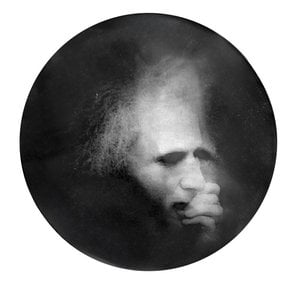
Po-Mo-Madra e figlio.CRUX ANSATA.#3

Vibrant mosaic artwork by Stephen Wickham featuring dynamic color squares—a captivating exploration of form and emotion reflecting the artist’s intense style. Discover this unique piece and bring art home.

Explore the captivating world of Stephen Wickham – an Australian photographer & painter known for his evocative imagery, symbolic themes, & experimental techniques.

Giclée / Art Print

Museum-quality giclée or canvas print with fast production and flexible finish options. ( Buy Hand Made Painting Switch to Digital Image)

P118B $10
P118H $10
P118W $10
P438Z $10
P508JH $12
P508YH $12
P805H $10
P805Z $10
P919BZ $10
P919G $10
P919XJ $10
P959ZH $10
P968JZ $12
W106C $8
W218G $10
W218JH $8
W218Y $10
W307PJ $10
W316G $10
W316PJ $8
W316Y $10
W398PJ $8
W4111J $10
W500HY $15
W500JH $15
W692G $12
W849H $8
W940BG $15
W953PJ $8

Standard
custom
CM
INCH

Pick from our preset sizes that match the artwork's original proportions.

width
height

You may enter your own dimensions to fit a specific frame or space. If your selected size does not match the original image's proportions, we will either crop the artwork or extend the image with a mirrored or solid-fill edge. A digital mockup will be sent for your approval before production begins.
Please note that the on-screen preview does not reflect the actual cropping or extension. Only the mockup will accurately show the final composition.
While custom sizes are available, we recommend selecting a dimension from the predefined list to preserve the original proportions.

Worldwide Delivery () in 2 weeks instead of standard 4/5 weeks. (24 September)

why_choose_icon
Free Worldwide Express Shipping
why_choose_icon
High-Quality Linen Canvas
why_choose_icon
Full Shipping Insurance
why_choose_icon
Customs Tax Refund Guarantee
why_choose_icon
True Color Matching Guarantee
why_choose_icon
100-Day Return Policy (Defects Only)
why_choose_icon
100% Money-Back Guarantee
why_choose_icon
Bulk Discount Offer

Total Price

$ 69

reproduction

Po-Mo-Madra e figlio.CRUX ANSATA.#3

Giclée / Art Print

Reproduction Size

-

Total Price

$ 69

Quick Facts

  • Dimensions: 61 x 3 cm
  • Title: Po-Mo-Madra e figlio.CRUX ANSATA.#3
  • Influences: Francis Bacon
  • Artistic style: Abstract
  • Subject or theme: Geometric shapes
  • Artist: Stephen Wickham

Stephen Wickham’s “Po-Mo-Madra e figlio.CRUX ANSATA.#3”: A Fragmented Portrait of Existential Angst

Stephen Wickham's "Po-Mo-Madra e figlio.CRUX ANSATA.#3," created in 2016, is a powerfully unsettling work that immediately confronts the viewer with a fractured representation of human experience. This piece, rendered through a meticulous collage technique utilizing precisely arranged colored squares, speaks to a core theme prevalent throughout Wickham’s oeuvre: the isolation and psychological distress inherent within modern existence. The artwork's genesis lies in a deep engagement with the legacy of Francis Bacon, particularly his exploration of distorted figures and the unsettling portrayal of human vulnerability. Wickham’s approach here echoes Bacon’s method of deconstructing form to expose the raw nerve of emotion, translating personal anxieties into a visually arresting composition.

  • Subject Matter: The central subject is a fragmented portrait – “Po-Mo-Madra e figlio” (Father and Son) – rendered through the deliberate disjunction of color and shape. This isn’t a traditional representation; rather, it's an evocation of familial relationships fractured by trauma and uncertainty.
  • Technique: Wickham employs a highly controlled collage technique, meticulously arranging individual squares of varying sizes and colors. The precision in this arrangement elevates the work beyond simple abstraction, suggesting a deliberate construction reflecting a carefully considered emotional landscape.

Color as Emotional Cipher

The vibrant palette employed – reds, yellows, blues, purples, pinks, greens, and blacks – isn’t merely decorative; it functions as a complex emotional cipher. The intense hues, particularly the jarring juxtapositions of complementary colors, amplify the sense of unease and psychological tension. Wickham masterfully utilizes color to evoke visceral responses, mirroring the turbulent inner states he seeks to portray. The strategic use of black creates voids within the composition, further emphasizing the themes of isolation and darkness.

  • Chromatic Dynamics: The interplay between warm and cool tones generates a dynamic tension, reflecting the internal conflict at the heart of the artwork.
  • Symbolic Color Associations: Red often symbolizes passion, anger, or danger – elements contributing to the overall sense of unease. Blue can represent melancholy or introspection, while yellow hints at anxiety or madness.

Historical Context and Symbolic Resonance

"CRUX ANSATA.#3" builds upon a rich artistic lineage, drawing heavily from Bacon’s exploration of existential themes within the context of post-war New York. The “Crux” element in the title suggests a pivotal point, a moment of crisis or revelation. Wickham's work resonates with the broader anxieties of the 21st century – feelings of alienation, fragmentation, and the struggle to find meaning in an increasingly complex world. The fragmented portrait itself can be interpreted as a metaphor for the breakdown of traditional family structures and the resulting psychological consequences.

Emotional Impact and Collector’s Appeal

This artwork is more than just a visual object; it's an emotional experience. Its unsettling imagery and masterful technique invite contemplation on profound themes of isolation, trauma, and the human condition. “Po-Mo-Madra e figlio.CRUX ANSATA.#3” would be a compelling addition to any collection focused on contemporary figurative art or works exploring psychological depth. The limited edition size (61 x 3 cm) ensures exclusivity, while the high-quality hand-painted reproduction guarantees an authentic representation of Wickham’s vision. This piece is ideal for interior designers seeking to inject a dose of intellectual and emotional intensity into a space.

Artist Biography

The Crucible of New York: Francis Bacon and the 1950s

Francis Bacon’s journey into the heart of the 20th century was a collision of personal trauma, artistic obsession, and a profound engagement with the human condition. Born in Dublin in 1906, his early life was marked by familial tragedy – the sudden death of his father when he was just eleven years old profoundly shaped his worldview and fueled an enduring sense of melancholy. This initial wound became a recurring motif in his work, manifesting as a visceral exploration of fear, isolation, and the grotesque. The 1950s witnessed a pivotal shift in Bacon’s artistic trajectory, a period defined by intense experimentation, a deepening engagement with primal imagery, and a move towards a more explicitly expressive style. This decade wasn't simply a phase; it represented a fundamental re-evaluation of his approach to painting, driven by both internal struggles and the vibrant, often chaotic, energy of post-war New York.
  • South African Sojourn & Early Influences (1951-1952): A crucial period began with a return trip to South Africa in 1951 and again in 1952, prompted by his mother’s relocation. These visits ignited a fascination with the raw power of the natural world – the vastness of the African landscape, the movement of wild animals—a sensation he sought to capture on canvas. The stark contrasts between the ordered formality of European art and the untamed energy of the South African wilderness became a key source of inspiration. Crucially, Bacon’s encounter with ancient Egyptian art during this time solidified his belief in its unparalleled achievement, informing his understanding of form and composition.
  • The Men in Suits & The Descent into Subjectivity (1953-1954): This period saw the emergence of the iconic “Men in Suits” series. These paintings, rendered in dark, claustrophobic interiors, are not portraits in the traditional sense but rather explorations of psychological states—anxiety, paranoia, and a disturbing sense of confinement. The subject matter, initially derived from a model at the Imperial Hotel, Henley-on-Thames, quickly evolved into a more generalized representation of human vulnerability and the anxieties of modern life. Bacon deliberately stripped away identifying details, transforming the figures into archetypes of existential dread.
  • Nudes & The Influence of Muybridge (1953-1954): Simultaneously with the “Men in Suits,” Bacon began to confront the nude figure with a renewed intensity. These works—"Two Figures," and "Two Figures in the Grass"—were deeply indebted to Eadweard Muybridge’s pioneering photographs of human movement, *The Human Figure in Motion*. Bacon wasn't simply copying these images; he was manipulating them, twisting their poses into expressions of sexual tension, violence, and a disturbing sense of vulnerability. The influence of Muybridge provided a framework for understanding the dynamism of the body, but Bacon ultimately used it to explore darker, more unsettling themes.

The Turbulent Circle: Relationships and Artistic Community

Bacon’s life in the 1950s was characterized by intense personal relationships—both passionate and destructive—and a deep engagement with the vibrant artistic community of post-war New York. His early partnership with Eric Hall ended abruptly, marked by heartbreak and instability. He moved frequently between studios, relying on the generosity of friends like Peter Pollock and Paul Danquah, who provided temporary accommodation in Battersea. The most significant relationship of this decade was his intense, often obsessive, affair with Peter Lacy, a former fighter pilot. This connection, described as a “potent mixture of compulsion and destruction,” profoundly impacted Bacon’s work and personal life for years to come.
  • New York Connections & Patronage (1953-1957): Bacon's arrival in New York in 1953 marked a turning point, establishing him within the burgeoning Abstract Expressionist scene. He exhibited at Durlacher Brothers and the Galerie Rive Droite, gaining recognition from influential dealers like Sidney Janis and Peggy Guggenheim. His association with Robert and Lisa Sainsbury proved particularly crucial, providing consistent financial support and fostering a sense of stability amidst his turbulent personal life.
  • Fellow Artists & Literary Circles (1954-1957): Bacon cultivated friendships with a diverse group of artists—including Mark Rothko, Willem de Kooning, Francis Kline, and Michael Andrews—as well as figures from the literary world such as Ann Fleming, Sonia Orwell, and Muriel Belcher. These connections provided intellectual stimulation and a sense of belonging within a rapidly evolving artistic landscape. The shared experiences and debates within these circles undoubtedly influenced Bacon’s own artistic development.

A Transformation in Technique & Style

By 1957, Bacon's painting underwent a dramatic transformation—a shift that became strikingly apparent at his exhibition at the Hanover Gallery in March of that year. This evolution wasn’t simply an accumulation of stylistic changes; it represented a fundamental re-evaluation of his approach to paint and composition. The six paintings presented were deeply rooted in Van Gogh’s *The Painter on the Road to Tarascon*, a work destroyed during World War II, which Bacon had deliberately avoided seeing in person.
  • Van Gogh's Influence & Accelerated Process (1957): The paintings created in response to Van Gogh’s masterpiece—including the six presented at the Hanover Gallery—were executed with a remarkable speed and urgency, driven by a desire to capture the essence of the original work. Bacon employed a looser, more expressive application of paint, characterized by coarse brushstrokes and a heightened sense of physicality. This shift reflected a willingness to abandon meticulous control in favor of conveying raw emotion and psychological intensity.
  • The Legacy of Expressionism (1957 onwards): Bacon’s work continued to evolve throughout the 1960s, retaining the hallmarks of his distinctive style—the distorted figures, the claustrophobic interiors, and the pervasive sense of unease. However, he also incorporated elements of Surrealism and Pop Art, reflecting the broader cultural shifts of the era. His paintings remained profoundly unsettling, yet undeniably powerful, cementing his place as one of the most significant artists of the 20th century.

Historical Significance & Enduring Impact

Francis Bacon’s work in the 1950s is not merely a stylistic footnote; it represents a crucial moment in the development of modern art. His exploration of psychological trauma, his embrace of grotesque imagery, and his willingness to challenge conventional notions of representation profoundly influenced generations of artists. Bacon's paintings continue to resonate with viewers today, offering a visceral and unsettling reflection on the complexities of human existence—a testament to his enduring artistic vision and his profound understanding of the darker aspects of the human psyche. His legacy lies not only in the power of his individual works but also in his willingness to confront difficult subjects and push the boundaries of artistic expression.
stephen wickham

stephen wickham

1950 - , Australia

Quick Facts

  • Artistic Movement Or Style: Expressionism
  • Artists Or Movements Influenced By This Artist: ['Abstract Expressionism']
  • Artists Who Influenced This Artist:
    • Eadweard Muybridge
    • Van Gogh
  • Date Of Birth: 1908
  • Date Of Death: 1992
  • Full Name: Francis Bacon
  • Nationality: British
  • Notable Artworks:
    • Study of a Figure in a Landscape
    • Man in Blue I-VII
    • Two Figures
    • Two Figures in the Grass
  • Place Of Birth: Dublin, Ireland
Explore artworks organized by themes, styles, and characteristics.



































