Preview AR preview Buy Hand Made Painting Switch to Digital Image Send
Details Guide Add to favorites Download Similars X-Ray Diaporama Stats

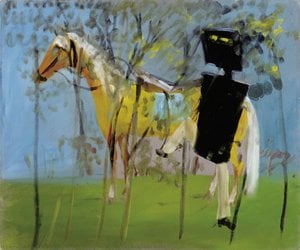
Sir Richard and Lady Devine

Explore Nolan's 'Sir Richard and Lady Devine,' inspired by Marcus Clarke’s convict novel. A powerful depiction of human suffering & survival, reflecting Australian history.

Discover Sir Sidney Nolan (1917-1992), Australia's modernist master! Explore iconic Ned Kelly paintings, vibrant landscapes & his unique vision of Australian history. View works at WahooArt.

Giclée / Art Print

Museum-quality giclée or canvas print with fast production and flexible finish options. ( Buy Hand Made Painting Switch to Digital Image)

Standard
custom
CM
INCH

Pick from our preset sizes that match the artwork's original proportions.

width
height

You may enter your own dimensions to fit a specific frame or space. If your selected size does not match the original image's proportions, we will either crop the artwork or extend the image with a mirrored or solid-fill edge. A digital mockup will be sent for your approval before production begins.
Please note that the on-screen preview does not reflect the actual cropping or extension. Only the mockup will accurately show the final composition.
While custom sizes are available, we recommend selecting a dimension from the predefined list to preserve the original proportions.

Worldwide Delivery () in 2 weeks instead of standard 4/5 weeks. (26 September)

why_choose_icon
Free Worldwide Express Shipping
why_choose_icon
High-Quality Linen Canvas
why_choose_icon
Full Shipping Insurance
why_choose_icon
Customs Tax Refund Guarantee
why_choose_icon
True Color Matching Guarantee
why_choose_icon
100-Day Return Policy (Defects Only)
why_choose_icon
100% Money-Back Guarantee
why_choose_icon
Bulk Discount Offer

Total Price

$ 69

reproduction

Sir Richard and Lady Devine

Giclée / Art Print

Reproduction Size

-

Total Price

$ 69

Quick Facts

  • style: Stylized depiction, dramatic composition
  • influences:
    • Australian history
    • Literature (Marcus Clarke’s ‘His Natural Life’)
    • Themes of human suffering and survival
    • Earlier paintings like 'Mrs Fraser'
  • artist: Sir Sidney Robert Nolan OM AC CBE RA
  • notable_elements:
    • Man pointing at something
    • Woman kneeling and looking up
    • Three handbags visible
    • Two figures in the background
  • medium: Painting
  • title: Sir Richard and Lady Devine

Art Quiz

There is only one correct answer for each question.

Question 1:
What literary work inspired Sidney Nolan to create the 'For the term of his natural life' series?
Question 2:
The artwork depicts themes related to which historical context?
Question 3:
What is a key element depicted in some of Nolan’s drawings that signifies the extreme conditions faced by convicts?
Question 4:
Based on the image description, what is the man in the painting doing?
Question 5:
What artistic style is Sidney Nolan known for, particularly in his depictions of Australian legends?

A Dramatic Encounter: Unraveling "Sir Richard and Lady Devine"

This striking artwork, “Sir Richard and Lady Devine,” is a poignant exploration of human drama rendered by the masterful hand of Sir Sidney Nolan. Created in 1978 as part of a remarkable series of 31 drawings completed within a single week, it draws its narrative inspiration from Marcus Clarke’s seminal novel, "His Natural Life." The novel, a powerful and unflinching depiction of convict life in Tasmania during the 19th century, provides the backdrop for Nolan's evocative portrayal of suffering, survival, and the darker aspects of human nature. This particular drawing captures a pivotal moment within that narrative, hinting at complex relationships and underlying tensions.

Style & Technique: Expressive Lines and Narrative Depth

Nolan’s style in “Sir Richard and Lady Devine” is characterized by its expressive use of line and dynamic composition. The figures are not rendered with meticulous realism but rather through a series of bold, gestural strokes that convey emotion and movement. This approach aligns with Nolan's broader artistic practice, which often prioritized conveying the essence of a subject over photographic accuracy. The drawing’s monochromatic palette – likely charcoal or ink on paper – amplifies its dramatic intensity. The stark contrast between light and shadow emphasizes the figures' postures and expressions, creating a palpable sense of tension. Notice how Nolan uses varying line weights to define form and create depth, guiding the viewer's eye through the scene. The presence of three handbags adds an intriguing layer of detail – are they symbols of status, escape, or something else entirely?

Historical Context & Narrative Significance

To fully appreciate this artwork, understanding its historical context is crucial. "His Natural Life" offered a rare and critical perspective on the brutal realities faced by convicts transported to Australia. Nolan’s series isn't merely an illustration of the novel; it's an interpretation that delves into universal themes of human resilience in the face of adversity. The story revolves around Rufus Dawes, wrongly convicted and subjected to horrific conditions. Nolan focuses on key moments within this narrative, highlighting the psychological toll of imprisonment and the desperation for survival. The inclusion of skeletal figures in other drawings from the series underscores the grim reality of cannibalism that sometimes arose from extreme deprivation – a chilling testament to the depths of human despair. This work, therefore, serves as a powerful commentary on social injustice and the enduring strength of the human spirit.

Emotional Impact & Symbolism

“Sir Richard and Lady Devine” evokes a strong emotional response through its portrayal of an intense interpersonal dynamic. The man’s gesture – pointing or perhaps accusing – combined with the woman's upward gaze, creates a sense of vulnerability and unease. The background figures add to the complexity, suggesting a larger context of power and control. While the specific identities of Richard and Devine remain open to interpretation within the narrative, their interaction speaks to broader themes of guilt, accusation, and the fragility of relationships under duress. The handbags, seemingly out of place in such a stark setting, could symbolize material possessions versus spiritual needs or perhaps represent the characters' attempts to maintain some semblance of normalcy amidst chaos. Ultimately, Nolan’s drawing invites viewers to contemplate the complexities of human behavior when pushed to extremes.

Artist Biography

A Life Painted in Myth and Landscape

Sir Sidney Robert Nolan, born in Melbourne in 1917, stands as a monumental figure in 20th-century Australian art. His journey was not one of conventional artistic training but rather an explosive emergence from the working-class streets of St Kilda into a world of vibrant imagination and relentless experimentation. Nolan wasn’t simply a painter; he was a visual storyteller, a mythmaker who wrestled with Australia's history, its landscapes, and its very identity. From his early days as a runner for an illegal betting ring to his eventual acclaim on the international stage, Nolan’s life was marked by a restless energy and a refusal to be confined by artistic norms. He absorbed influences from diverse sources – the poetry of Rimbaud, the spatial innovations of Cézanne, the raw emotion of Danila Vassilieff – yet forged a style uniquely his own, one that resonated with a distinctly Australian sensibility. His early exposure to the harsh realities of Melbourne life and the allure of its underbelly would profoundly shape his artistic vision, imbuing his work with a sense of both defiance and vulnerability.

The Shaping of an Iconoclast

Nolan’s formative years were steeped in intellectual ferment. The Heide Circle, centered around patrons John and Sunday Reed, proved pivotal. This haven for artists and writers fostered a spirit of radical experimentation and provided Nolan with crucial support during his developing phase. It was at Heide that he encountered kindred spirits – Albert Tucker, Joy Hester, Arthur Boyd – all grappling with the challenge of creating a distinctly Australian modernism. The influence of modernist literature, particularly the Symbolist poets, cannot be overstated. Rimbaud’s call for a “systematic derangement of the senses” became a guiding principle for Nolan, liberating him from representational constraints and encouraging him to explore the emotional power of color, form, and symbolism. His early works demonstrate this influence, often featuring fragmented figures and dreamlike landscapes that hint at deeper psychological truths. He wasn’t interested in merely depicting reality; he sought to capture its essence, its underlying emotions, and its hidden narratives. This period also saw Nolan experimenting with various media, from stage design for the Ballet Russes to commercial art, each experience contributing to his growing technical prowess and artistic vocabulary.

Ned Kelly and the Australian Myth

While Nolan’s oeuvre is remarkably diverse, he is perhaps best known for his series of paintings depicting Ned Kelly, the infamous Australian bushranger. This wasn't simply a historical retelling; it was a profound exploration of Australian identity, lawlessness, and the romanticized figure of the outlaw. Nolan stripped away the conventional heroic imagery associated with Kelly, presenting him as an enigmatic, almost spectral presence encased in iconic armor. The flattened planes of color, the stark contrasts, and the simplified forms create a powerful visual statement that transcends mere representation. The Ned Kelly series became a defining moment in Australian art, transforming the bushranger from a historical figure into a national symbol. It sparked debate, challenged conventional narratives, and forced Australians to confront their complex relationship with their past. Beyond Kelly, Nolan repeatedly returned to themes drawn from Australian history and folklore – The First Fleet, The Burke and Wills Expedition – each series imbued with his signature blend of poetic intensity and historical awareness.

A Prolific and Restless Vision

Nolan’s artistic output was astonishingly prolific, spanning painting, sculpture, ceramics, stage design, and even opera sets. He refused to be pigeonholed, constantly reinventing his style and exploring new avenues of expression. His landscapes, often stark and desolate, capture the vastness and harsh beauty of the Australian outback. Works like “Antarctica” demonstrate his ability to convey a sense of isolation and existential unease through minimalist forms and evocative color palettes. He traveled extensively throughout his life – Europe, Africa, America – each journey informing his art with new perspectives and influences. His later works often reflect a more introspective mood, grappling with themes of mortality, memory, and the search for meaning. Despite achieving international recognition, Nolan remained deeply connected to Australia, viewing his art as a means of understanding and interpreting its unique character. He received numerous accolades throughout his career, including appointments as an Officer of the Order of Merit (OM), a Companion of the Order of Australia (AC), and a Commander of the Order of the British Empire (CBE).

Legacy and Enduring Influence

Sir Sidney Nolan’s impact on Australian art is undeniable. He challenged conventional artistic norms, embraced experimentation, and created a body of work that continues to resonate with audiences today. His bold depictions of Ned Kelly have become iconic images, instantly recognizable as symbols of Australia's rebellious spirit and complex history. His influence can be seen in the work of countless contemporary artists, who continue to draw inspiration from his innovative techniques and his commitment to exploring Australian identity. Nolan’s paintings are held in major museums and collections around the world, ensuring that his legacy will endure for generations to come. To explore more of his artwork, platforms like WahooArt offer a wide range of reproductions, allowing art lovers to experience the power and beauty of his vision firsthand. He left behind not just a collection of paintings but a new way of seeing Australia – a land of myth, mystery, and enduring artistic potential.
Sir Sidney Robert Nolan

Sir Sidney Robert Nolan

1917 - 1992 , Australia

Quick Facts

  • Artistic Movement Or Style: Modernist
  • Artists Who Influenced This Artist:
    • Rimbaud
    • Cézanne
    • Kandinsky
    • Klee
  • Date Of Birth: April 22, 1917
  • Date Of Death: November 28, 1992
  • Full Name: Sir Sidney Robert Nolan
  • Nationality: Australian
  • Notable Artworks:
    • Ned Kelly series
    • Carriers of Horses
    • AFL Series
    • Landscape w/ motif
  • Place Of Birth: Melbourne, Australia
Explore artworks organized by themes, styles, and characteristics.