Preview AR preview Switch to Print Buy Hand Made Painting Send
Details Add to favorites Download Similars X-Ray Diaporama Stats

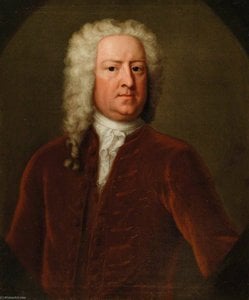
Mrs Livesay

Explore this remarkable portrait by Sir Francis Grant, showcasing Victorian elegance and artistic precision.

Sir Francis Grant (1803-1878): Celebrated Scottish portrait & sporting painter and Royal Academy President, famed for capturing British aristocracy like Queen Victoria. Explore his elegant artworks!

Purchase a high-resolution, enhanced digital image, far superior to the online preview.

Each file is meticulously prepared by our in-house specialists using advanced tools and expert manual retouching. We ensure every image has exceptional clarity, precise color accuracy, and fine detail.

The final file is delivered via email within 72 hours, optimized for immediate use in professional, editorial, and print environments. This is the same quality trusted by top-tier design studios, publishers, and galleries.

Digital Image

Download a high-resolution file for personal display, printing, and creative projects. ( Switch to Print Buy Hand Made Painting)

Total Price

$ 24.90

Included in Every Digital Image Order

Expert Digital Delivery, Guaranteed

When you choose WahooArt.com, you're not just getting an image - you're receiving a professionally enhanced digital artwork, crafted with precision and backed by a satisfaction guarantee. Here's everything that comes with your order, automatically:

shipping_icon
Fast Email Delivery

Your high-resolution digital image file will be emailed to you within 72 hours of ordering - ready for immediate use.

canvas_icon
AI-Enhanced Digital File

Your artwork is professionally optimized using advanced AI tools and manual editing, ensuring maximum detail, clarity, and color accuracy.

insurance_icon
Free Lifetime Re-Delivery

Accidentally deleted or lost your file? No worries - we'll resend it to you anytime, free of charge.

tax_icon
No Import Fees - Ever

Enjoy your artwork instantly with zero customs, duties, or delivery fees - digital downloads are always tax-free.

color_icon
Color Accuracy Guarantee

We ensure your digital image reflects the original colors as closely as possible using professional tools and color management.

return_icon
100-Day Satisfaction Guarantee

If you're not satisfied with your digital image, we'll revise it or refund 100% within 100 days - no questions asked.

guarantee_icon
100% Money-Back Guarantee

Not satisfied? Get a full refund within 100 days of receiving your digital file - no questions asked.

discount_icon
Bulk Order Discounts

Buy 3 images, save 10% - Buy 5, save 15% - Buy 10+, save 20%. Great for creative projects, galleries, and agencies.

Quick Facts

  • Influences: John Ferneley
  • Subject or theme: Formal portrait
  • Title: Mrs Livesay
  • Notable elements or techniques: Layered paint, blending
  • Location: Bristol Museum & Art Gallery
  • Movement: Romanticism
  • Year: 1851

Art Quiz

There is only one correct answer for each question.

Question 1:
What is the primary subject matter depicted in ‘Mrs Livesay’?
Question 2:
In what century was Sir Francis Grant commissioned to paint this portrait?
Question 3:
What artistic style is characteristic of ‘Mrs Livesay’, as evidenced by its meticulous detail and realism?
Question 4:
The artist employed a technique known for blending colors to achieve a smooth appearance. What is this technique called?
Question 5:
What does the setting of ‘Mrs Livesay’ – a tree-shaded garden – symbolize in relation to the subject?

Mrs Livesay - A Portrait of Quiet Dignity

Sir Francis Grant’s “Mrs Livesay,” completed in 1851, stands as a testament to the Victorian obsession with capturing refined beauty and intellectual engagement within meticulously crafted portraits. More than just a likeness, it embodies an atmosphere of contemplative serenity—a snapshot frozen in time amidst the opulent surroundings of Melton Mowbray’s hunting society.

  • Subject Matter & Context: The painting depicts Mrs. Livesay, a woman of considerable social standing and known for her literary pursuits. Grant skillfully portrays her seated beneath a blossoming tree—a deliberate choice reflecting the Victorian fascination with nature as a symbol of moral virtue and intellectual stimulation.
  • Composition & Perspective: Employing a classic three-quarter pose, Grant’s composition prioritizes intimacy and invites viewers into the subject's inner world. The subtle recession of the landscape background—characterized by hazy greens and browns—creates a shallow depth of field, reinforcing this sense of immediacy.
  • Color Palette & Texture: Grant utilizes a muted color palette dominated by creams, blues, and reds. Soft hues envelop Mrs. Livesay’s attire, contrasting beautifully with the bold drapery behind her. Brushwork contributes significantly to textural richness—the smooth surface of the dress juxtaposed against the textured foliage conveys realism and adds visual interest.
  • Technique & Medium: Executed in oil paint on canvas, Grant’s technique demonstrates mastery of blending and layering pigments to achieve subtle gradations of tone. Careful attention is paid to capturing the nuances of light and shadow, particularly illuminating Mrs. Livesay's face and hands—areas deemed crucial for conveying personality and emotion.
  • Symbolism & Emotional Impact: The act of reading itself serves as a powerful symbol – representing knowledge, contemplation, and intellectual refinement. Combined with the tranquil setting of the garden, “Mrs Livesay” evokes feelings of grace, dignity, and inner peace—a timeless depiction of Victorian ideals.

Grant’s meticulous attention to detail elevates this portrait beyond mere representation; it aspires to capture not just what Mrs. Livesay looked like but also the essence of her character – a woman poised between intellect and beauty, bathed in the gentle light of an idyllic afternoon.

Additional Resources: Bristol Museum & Art Gallery offers a detailed examination of this remarkable artwork.


Artist Biography

A Life Dedicated to Portraiture and the Academy

Sir Francis Grant, a name synonymous with refined portraiture and dedicated service to the British art establishment, emerged as one of the most sought-after artists of his era. Born in 1803 into a landed family in Perthshire, Scotland, young Francis initially seemed destined for a career in law. However, the pull of artistic expression proved too strong to resist. Though largely self-taught, he briefly studied under Alexander Nasmyth in Edinburgh, laying an early foundation before forging his own distinctive path. This path wasn’t immediately clear; Grant's initial successes came with sporting scenes, capturing the energy and vibrancy of rural life. A pivotal moment arrived through his marriage, granting him access to the exclusive world of Melton Mowbray’s hunting set. There, he honed his skills under John Ferneley, a master of equestrian art, and began to specialize in depictions of horses and hounds – subjects that would initially define his reputation.

From Sporting Scenes to Aristocratic Likenesses

Grant's artistic evolution wasn’t merely a shift in subject matter; it was a refinement of style. His early sporting scenes, like the celebrated *Melton Breakfast* (1834), demonstrated an eye for detail and composition that quickly garnered attention. However, it was his burgeoning talent for portraiture that truly propelled him to prominence. He possessed a remarkable ability to capture not just physical likeness but also the character and social standing of his sitters. This skill proved particularly valuable in an era obsessed with status and image. Commissions flowed in from the British aristocracy and political elite, including the ultimate accolade: portraits of Queen Victoria herself. His portrait of Lady Glenlyon (1842) served as a watershed moment, solidifying his position among the leading portraitists of the day. Grant’s style blended Neoclassical elegance with a touch of Romantic sensibility, characterized by dramatic lighting and rich detail – tempering the flourishes of artists like Thomas Lawrence with a distinctly Victorian sobriety. He excelled at equestrian portraits, skillfully portraying both the grandeur of his subjects and their noble steeds, as evidenced in his works for Christ's Hospital depicting Queen Victoria and Prince Albert.

Presidency and Legacy: Shaping the Royal Academy

The pinnacle of Grant’s career arrived in 1866 with his election as President of the Royal Academy, following the death of Charles Eastlake. This prestigious position recognized not only his artistic achievements but also his respected standing within the art world. Shortly after assuming the presidency, he was knighted, a testament to his significant contributions. As president, Grant instituted a groundbreaking practice: the holding of major loan exhibitions. These ambitious displays expanded the Academy’s reach and influence, bringing together masterpieces from across Europe and attracting wider public engagement. He wasn't merely a custodian of tradition; he actively sought to broaden the scope and accessibility of art. His leadership helped solidify the Royal Academy as a central force in British artistic life. Grant’s influence extended beyond his own work, impacting artists such as Martin Archer Shee and Solomon Alexander Hart.

A Window into Victorian Society

Sir Francis Grant's legacy extends far beyond the canvases he filled with portraits of prominent figures. His extensive body of work serves as a valuable historical record, offering insights into British society during the 19th century. Through his art, we glimpse the lives and status of aristocracy, politicians, and royalty – individuals who shaped the era. He wasn’t simply painting faces; he was documenting a social order. His presidency of the Royal Academy marked a period of significant development for the institution, cementing its role as a vital cultural hub. Grant's paintings are held in collections worldwide, including the Walker Art Gallery in Liverpool, ensuring that his artistic vision continues to resonate with audiences today. He remains a pivotal figure in Victorian art history – a skilled portraitist, a respected leader, and a chronicler of his time. His work offers not just aesthetic pleasure but also a fascinating glimpse into a bygone era.

Notable Works

  • Melton Breakfast (1834): An early success that established his reputation for sporting scenes.
  • The Meeting of His Majesty's Staghounds on Ascot Heath: A detailed and dynamic depiction of a hunting event.
  • Portrait of Lady Glenlyon (1842): A pivotal work that cemented his status as a leading portraitist.
  • Equestrian Portraits of Queen Victoria and Prince Albert: Demonstrations of his skill in capturing both likenesses and grandeur.
  • Portraits of the Marchioness of Waterford, the Marchioness of Bristol, and Mrs Markham (Daisy Grant): Acclaimed portraits showcasing his ability to capture character and social standing.
Sir Francis Grant

Sir Francis Grant

1803 - 1878 , United Kingdom

Quick Facts

  • Artistic Movement Or Style: Neoclassical, Romanticism
  • Artists Or Movements Influenced By This Artist:
    • Martin Archer Shee
    • Solomon Hart
  • Artists Who Influenced This Artist:
    • Alexander Nasmyth
    • John Ferneley
  • Date Of Birth: January 18, 1803
  • Date Of Death: October 5, 1878
  • Full Name: Sir Francis Grant
  • Nationality: Scottish
  • Notable Artworks:
    • Melton Breakfast
    • Lady Glenlyon
    • Queen Victoria Riding
  • Place Of Birth: United Kingdom