x


Hand-painted oil on canvas in your size and frame, made to order by our artists. ( Buy Print Buy Image)





























Pick from our preset sizes that match the artwork's original proportions.

You may enter your own dimensions to fit a specific frame or space. If your selected size does not match the original image's proportions, we will either crop the artwork or extend the painting with additional hand-painted elements. A digital mockup will be sent for your approval before production begins.
Please note that the on-screen preview does not reflect the actual cropping or extension. Only the mockup will accurately show the final composition.
While custom sizes are available, we recommend selecting a dimension from the predefined list to preserve the original proportions.
Worldwide Delivery () in 3/4 weeks instead of standard 5 weeks. (28 August). No compromise on quality.


Virgin and Child
Reproduction Size
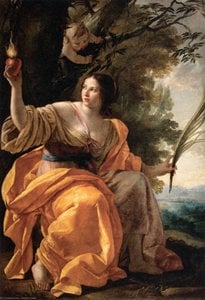
Simon Vouet’s “The Virgin and Child (of the Column),” completed around 1640, stands as a cornerstone of French Baroque painting—a testament to artistic ambition and masterful execution that continues to captivate audiences centuries later. More than just a depiction of biblical iconography, it embodies the spirit of its era: a fervent embrace of dramatic chiaroscuro, opulent color palettes, and an unwavering commitment to conveying profound spiritual emotion.
The painting portrays Mary cradling Jesus Christ against the backdrop of a monumental column—a deliberate allusion to St. Peter’s Basilica in Rome, where Vouet himself had served as papal architect. This architectural reference underscores the artwork's grandeur and elevates it beyond mere narrative illustration. The composition is meticulously balanced, drawing the viewer’s eye towards Mary’s serene gaze and Jesus’ tender gesture of reaching for the lamb—a symbol of Christ’s sacrifice and innocence.
Beyond its formal brilliance, “The Virgin and Child (of the Column)” resonates with profound symbolic significance. The column represents stability and faith—a visual anchor amidst the turbulent currents of religious fervor. Mary’s posture exudes compassion and maternal devotion, embodying the ideal of Christian motherhood. Jesus’ gesture speaks to his divine innocence and foreshadows his future sacrifice.
The painting's enduring appeal lies in its ability to evoke a powerful emotional response—a feeling of awe and reverence for the sacred narrative it portrays. Vouet’s masterful manipulation of light and color creates an atmosphere of warmth and tranquility, inviting contemplation and fostering a connection with timeless spiritual ideals. It remains a stunning example of Baroque artistry, demonstrating Vouet's unparalleled skill in capturing both visual beauty and emotional depth.
Currently housed at the Musée des Beaux-Arts Lyon, France, this masterpiece continues to inspire admiration for its artistic innovation and enduring legacy—a testament to Simon Vouet’s genius as a painter and his contribution to the history of European art.

Simon Vouet was a pivotal figure in the transition of French painting from Mannerism to the Baroque style. Born into an artistic family – his father Laurent was a painter and his brother Aubin also pursued art – Vouet received early training that laid the foundation for his future success. His grandson, Ludovico Dorigny, would continue the family’s artistic legacy.
During his Italian sojourn, Vouet absorbed a diverse range of influences. He studied the dramatic lighting techniques pioneered by Caravaggio, embraced elements of Italian Mannerism, and meticulously analyzed the color palettes and di sotto in su (foreshortened perspective) employed by Paolo Veronese. He also drew inspiration from the works of Carracci, Guercino, Lanfranco, and Guido Reni, synthesizing these diverse styles into a unique artistic vision.
Simon Vouet's legacy rests on his pivotal role as a bridge between Italian and French art. He successfully imported the dynamism and grandeur of the Italian Baroque, transforming it into a style that resonated with the tastes of the French court and aristocracy. His influence is undeniable in the development of French painting during the 17th century, and his contributions continue to be recognized by art historians today.

1590 - 1649 , France

Explore the profound beauty of Marian iconography through an art historian's lens. Discover iconic masterpieces by Raphael and Renaissance masters, celebrating the divine grace and timeless elegance of the Virgin Mary in classical fine art.


Stay updated with the latest art news, exclusive offers, and decoration ideas.
Tell us about your project and our art experts will provide you with 3 personalized art suggestions.
Let Us Curate 3 Options Just for You - Free!

 Preview
 Send
Send Share
Share
 Details

 Download
 Similars
 X-Ray
X-Ray Diaporama

 Read More







 Glass option is only available in size under 110 CM