A Maritime Masterpiece: "A 'Smalschip' with Sail Set at Anchor Close to the Shore, and a ‘Boier’ Laid Ashore" by Willem van de Velde the Elder
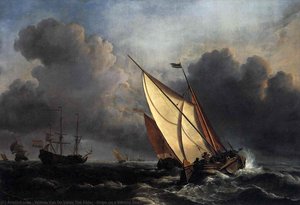
Willem van de Velde the Elder’s “A ‘Smalschip’ with Sail Set at Anchor Close to the Shore, and a ‘Boier’ Laid Ashore” is more than just a depiction of ships; it's a meticulously crafted window into 17th-century Dutch maritime life. Painted in 1650-1660, this oil on panel work captures a fleeting moment along the coastline, imbued with a remarkable sense of realism and atmospheric depth that speaks to the artist’s mastery of his craft. The scene unfolds with quiet drama – two vessels, a ‘smalschip’ (a small coastal trading vessel) and a larger ‘boier’ (a type of merchant ship), are anchored near the shore, while figures bustle about on the sandy beach, suggesting a vibrant exchange between sea and land.
Van de Velde's genius lies in his pioneering use of “penschilderij,” or pen painting. This technique involved creating incredibly detailed images using ink on panel, achieving a level of precision and durability previously unseen. The result is an astonishingly lifelike portrayal of the ships – their rigging, planks, and sails rendered with painstaking accuracy. Notice how Van de Velde doesn’t simply paint the ships; he draws them, capturing the subtle textures and reflections of light with remarkable skill. The artist's attention to detail extends beyond the vessels themselves; the ripples in the water, the texture of the sand, and even the individual folds of the sails are rendered with a level of fidelity that borders on photographic. This meticulous approach was revolutionary for its time, establishing Van de Velde as a leading figure in Dutch maritime art.
The Context of a Busy Age
To fully appreciate “A ‘Smalschip’ with Sail Set at Anchor Close to the Shore, and a ‘Boier’ Laid Ashore,” it's crucial to understand the historical context in which it was created. The 17th century was a period of unprecedented maritime expansion for the Dutch Republic – a golden age of trade, exploration, and naval power. The Netherlands controlled much of Europe’s overseas commerce, and its ships dominated the seas. Van de Velde's work reflects this prosperity and the importance of seafaring to the nation’s identity. The painting isn’t simply a record of a specific event; it embodies the spirit of an era defined by daring voyages, bustling ports, and the constant flow of goods between continents.
The inclusion of figures on the shore adds another layer of meaning. They represent the vital link between maritime commerce and the land-based economy. They are engaged in unloading cargo, repairing ships, or simply enjoying a moment by the water – their presence underscores the interconnectedness of these activities. The scene is not isolated; it’s part of a larger network of trade and exchange that shaped the world.
Symbolism and Emotional Resonance
Beyond its technical brilliance, “A ‘Smalschip’ with Sail Set at Anchor Close to the Shore, and a ‘Boier’ Laid Ashore” is rich in symbolism. The ships themselves represent wealth, power, and connection – symbols of Dutch ambition and global reach. The calm waters suggest stability and prosperity, while the figures on the shore hint at opportunity and progress. There's also a subtle sense of melancholy in the scene—a quiet acknowledgement of the transient nature of life and the inevitable passage of time.
The painting evokes a feeling of nostalgia for a bygone era – a time when seafaring was synonymous with adventure, exploration, and economic prosperity. It’s a reminder of the enduring allure of the sea and the human desire to connect with distant lands. The muted palette—dominated by blues, greys, and browns—contributes to this atmosphere of quiet contemplation, drawing the viewer into the scene and inviting them to reflect on its deeper meaning.
A Timeless Reproduction
Willem van de Velde the Elder’s “A ‘Smalschip’ with Sail Set at Anchor Close to the Shore, and a ‘Boier’ Laid Ashore” is a truly remarkable work of art. Reproductions capture the essence of his meticulous technique and atmospheric vision. Whether displayed in a grand hall or a cozy study, this painting continues to captivate viewers with its beauty, detail, and historical significance. It's a testament to the enduring power of art to transport us to another time and place, allowing us to connect with the past in a meaningful way.



 Preview
 Buy Print
 Send
Send Share
Share
 Details

 Download
 Similars
 X-Ray
X-Ray Diaporama


 Read More






































 Glass option is only available in size under 110 CM