A Glimpse of Life on the Moosi: Raja Deen Dayal’s Masterpiece
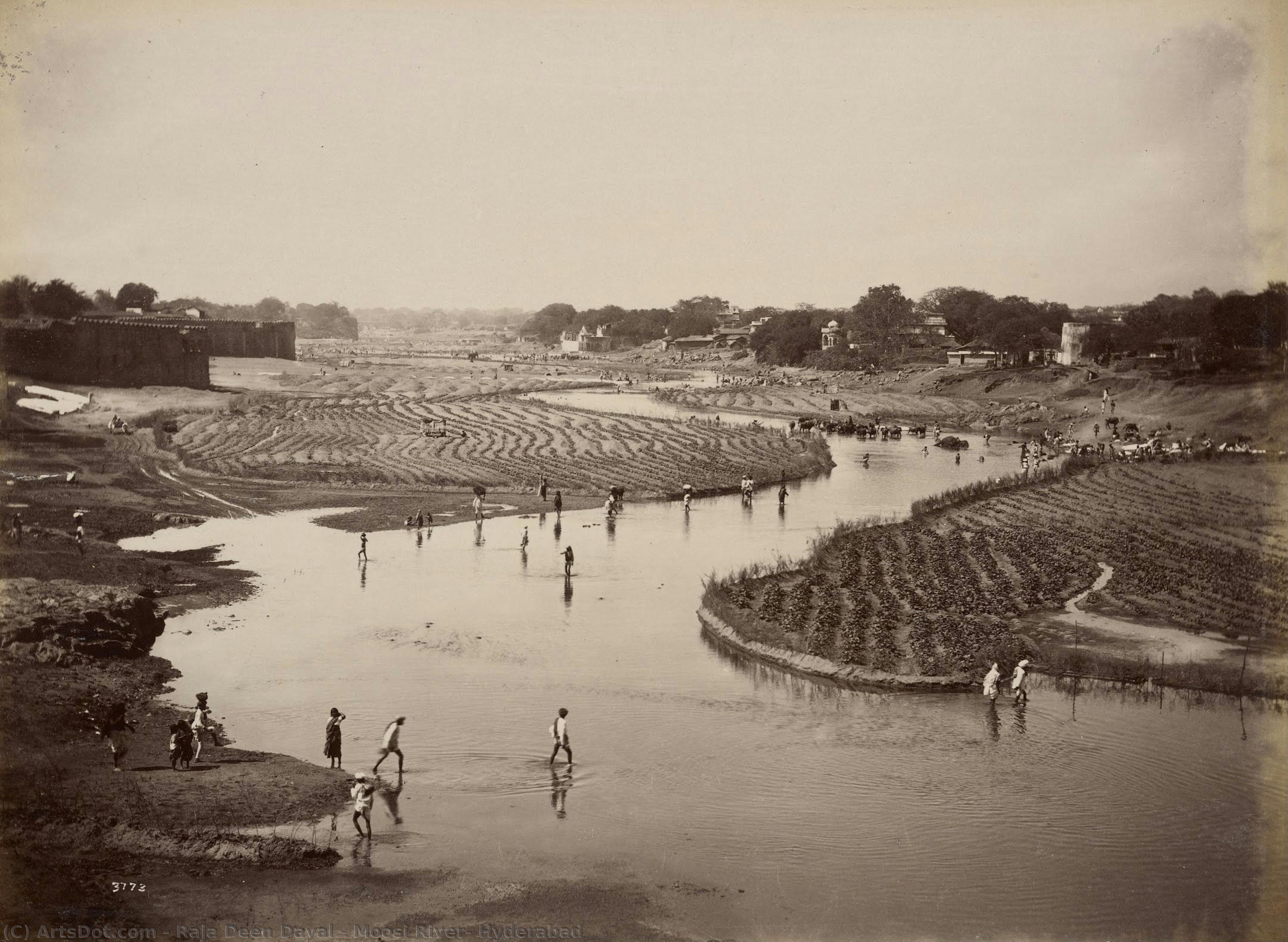
Raja Deen Dayal's “Moosi River, Hyderabad,” painted in 1888, isn’t merely a depiction of a riverbank; it’s a vibrant snapshot of life in late 19th-century India. Created during the reign of Nizam Mahbub Ali Khan, this albumen silver print offers an intimate glimpse into the daily routines and social fabric of Hyderabad – a city poised between tradition and modernity. The scene unfolds with remarkable clarity, capturing a bustling riverbank alive with activity. Figures are engaged in various tasks: some navigate boats laden with goods, others gather along the shore, while children play near the water’s edge. The composition is carefully balanced, drawing the eye across the scene to highlight the interplay of human presence and the natural environment.
- Subject Matter: A lively riverbank scene in Hyderabad, showcasing everyday life and commerce.
- Artist: Raja Deen Dayal (1844-1905), a pioneering Indian photographer and court artist.
- Date: 1888 – a pivotal period of transformation for the Nizam’s state.
The Art of Raja Deen Dayal: Technique and Style
Raja Deen Dayal was renowned for his mastery of albumen printing, a photographic process that produced remarkably detailed and richly toned images. This particular print exemplifies his skill; the subtle gradations of light and shadow create a sense of depth and realism rarely achieved in earlier photographic techniques. The monochrome palette emphasizes the textures of the riverbank – the rough bark of trees, the smooth surface of the water, and the folds of the clothing worn by the figures. His compositions often incorporated elements of traditional Indian art, particularly Mughal miniature painting, evident in the careful arrangement of figures and the use of perspective. He skillfully blended Western photographic techniques with indigenous artistic sensibilities.
Key Techniques:
- Albumen Silver Print: A process known for its detail and tonal range.
- Compositional Elements: Drawing inspiration from Mughal miniature painting.
- Careful Use of Light & Shadow: Creating a sense of depth and realism.
Symbolism and Context: Hyderabad in the Late 19th Century
“Moosi River, Hyderabad” is more than just a picturesque scene; it’s a window into a specific moment in time. The Moosi River played a vital role in the city's economy, serving as a crucial waterway for transporting goods and facilitating trade. The presence of boats laden with merchandise speaks to the thriving commercial activity of the era. The figures depicted represent a diverse cross-section of Hyderabad society – merchants, laborers, and everyday citizens. The Nizam’s court, known for its patronage of art and culture, provided a stable environment that fostered economic growth and artistic expression. The image subtly reflects the complex interplay between tradition and progress during this period.
Historical Significance:
- Reflects the prosperity of Hyderabad under the Nizam’s rule.
- Illustrates the importance of the Moosi River to the city's economy.
- Provides a valuable insight into the daily lives of people in 19th-century Hyderabad.
An Echo of Elegance: The Emotional Impact and Legacy
Looking at “Moosi River, Hyderabad,” one is struck by its quiet dignity and understated beauty. There’s a sense of timelessness about the scene – it feels as if we've stepped back in time to witness a moment of everyday life unfolding on the banks of the Moosi. The image evokes feelings of nostalgia, curiosity, and appreciation for the rich cultural heritage of India. Raja Deen Dayal’s work continues to resonate today, offering a poignant reminder of a bygone era and the enduring power of visual storytelling. Reproductions of this remarkable piece capture not only its aesthetic beauty but also the spirit of a vibrant city at the cusp of change.



 Preview
 Switch to Print
 Send
Send Share
Share
 Details

 Download
 Similars
 X-Ray
X-Ray Diaporama


 Read More






































 Glass option is only available in size under 110 CM





