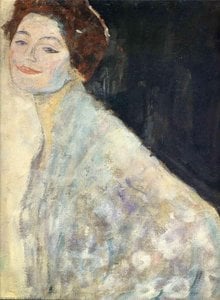
x


Hand-painted oil on canvas in your size and frame, made to order by our artists. ( Buy Print Buy Image)
Pick from our preset sizes that match the artwork's original proportions.

You may enter your own dimensions to fit a specific frame or space. If your selected size does not match the original image's proportions, we will either crop the artwork or extend the painting with additional hand-painted elements. A digital mockup will be sent for your approval before production begins.
Please note that the on-screen preview does not reflect the actual cropping or extension. Only the mockup will accurately show the final composition.
While custom sizes are available, we recommend selecting a dimension from the predefined list to preserve the original proportions.
Worldwide Delivery () in 3/4 weeks instead of standard 5 weeks. (2 September). No compromise on quality.


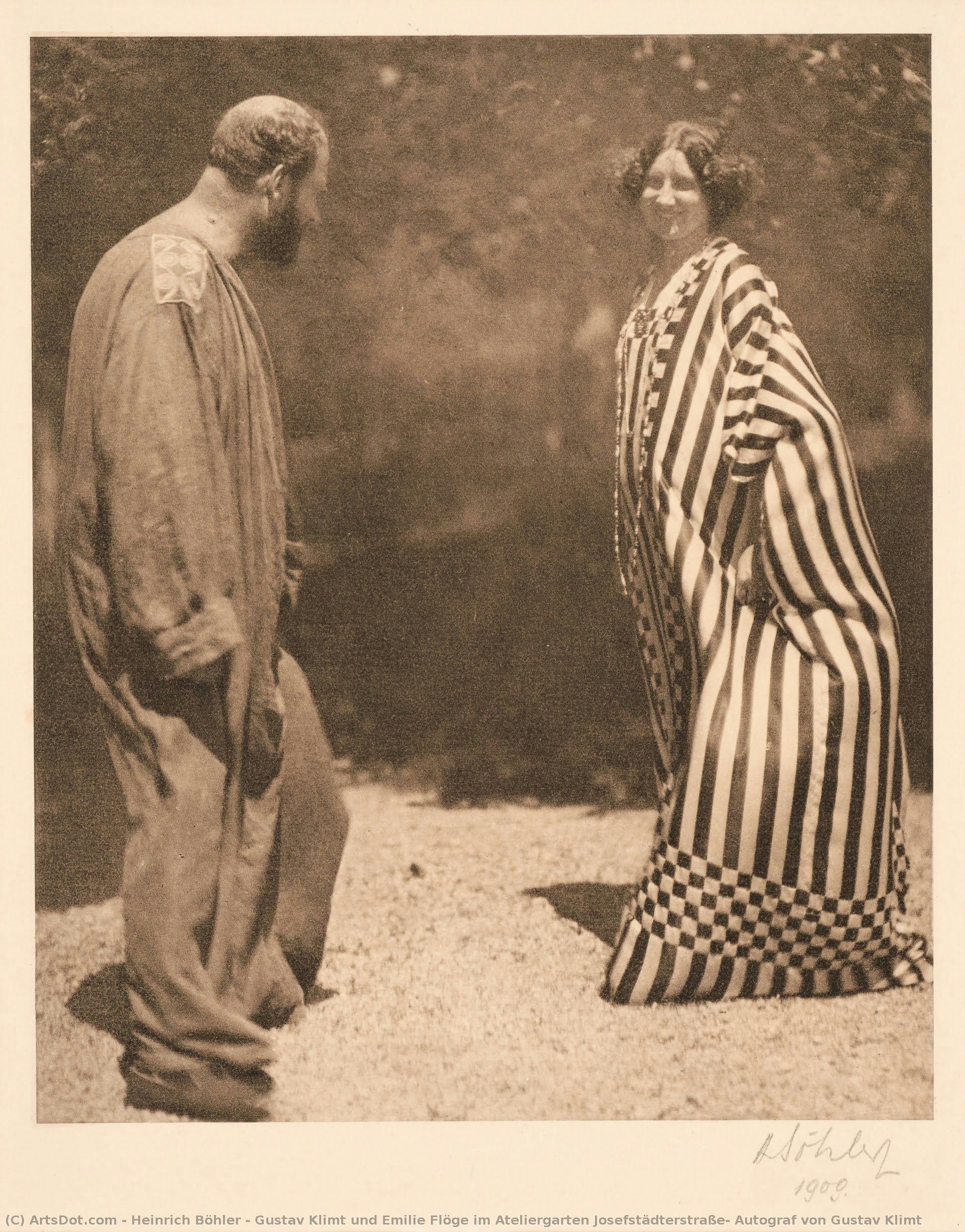
Gustav Klimt und Emilie Flöge im Ateliergarten Josefstädterstraße: Autograf von Gustav Klimt
Reproduction Size
In this evocative black and white photograph captured by Heinrich Böhler in 1909, we are invited into the private sanctuary of the Vienna Secession era. The image presents a profound sense of stillness, capturing Gustav Klimt and Emilie Flöge within the tranquil confines of the atelier garden on Josefstädterstraße. There is an undeniable magnetic pull to this composition; it is not merely a portrait of two individuals, but a window into a lifelong bond that transcended mere friendship. As they stand before the soft textures of a natural backdrop, the photograph breathes with the quiet dignity of a shared history, offering a rare, unvarnished glimpse into the personal world of one of art history's most iconic figures.
The visual narrative is anchored by the striking presence of Emilie Flöge, whose attire serves as a testament to the avant-garde spirit of the time. She wears a celebrated Reformkleid, a revolutionary garment designed by the talented Koloman Moser. This dress, characterized by its flowing lines and rejection of the restrictive corsetry of the era, symbolizes the burgeoning feminist ideals and the aesthetic liberation that defined the Viennese modernism movement. The way the fabric drapes around her silhouette provides a soft, organic contrast to the structured, formal suit worn by Klimt, creating a visual dialogue between tradition and innovation.
Heinrich Böhler, an artist whose work was deeply touched by the raw emotionality of Egon Schiele, brings a unique photographic sensibility to this piece. His ability to capture the human form with both precision and soul allows the subjects to emerge from the shadows of the garden with a haunting clarity. The monochromatic palette strips away the distractions of color, forcing the viewer to focus on the interplay of light, shadow, and texture. This technique emphasizes the structural elements of the scene—the rugged bark of the tree, the delicate folds of the Reformkleid, and the subtle expressions that hint at the complex emotional landscape shared by the subjects.
For the discerning collector or interior designer, this photograph offers much more than a historical record; it provides an atmospheric anchor for any sophisticated space. The image carries an inherent elegance that complements both classical and contemporary decor, acting as a conversation piece that evokes themes of nostalgia, intellectualism, and the enduring power of human connection. To possess a high-quality reproduction of this work is to hold a fragment of the Belle Époque, bringing the sophisticated, rebellious, and deeply romantic spirit of fin-de-siècle Vienna into the modern home.


1881 - 1940 , Austria-Hungary

Explore the profound artistry of black and white photography. From historical mastery to the interplay of light and shadow, discover how monochrome captures timeless emotion and form through a sophisticated lens of art history.

Elevate your most cherished memories with WahooArt’s bespoke service. We transform your personal photos into breathtaking, hand-painted black & white oil masterpieces. Experience museum-quality craftsmanship and timeless elegance for your private collection. Discover the art of legacy.


Stay updated with the latest art news, exclusive offers, and decoration ideas.
Tell us about your project and our art experts will provide you with 3 personalized art suggestions.
Let Us Curate 3 Options Just for You - Free!

 Send
Send Share
Share
 Details

 Download
 Similars
 Diaporama


 Read More




































 Glass option is only available in size under 110 CM