

Hand-painted oil on canvas in your size and frame, made to order by our artists. ( Switch to Print Switch to Digital Image)





























Pick from our preset sizes that match the artwork's original proportions.

You may enter your own dimensions to fit a specific frame or space. If your selected size does not match the original image's proportions, we will either crop the artwork or extend the painting with additional hand-painted elements. A digital mockup will be sent for your approval before production begins.
Please note that the on-screen preview does not reflect the actual cropping or extension. Only the mockup will accurately show the final composition.
While custom sizes are available, we recommend selecting a dimension from the predefined list to preserve the original proportions.
Worldwide Delivery () in 3/4 weeks instead of standard 5 weeks. (25 September). No compromise on quality.


Discovery of Brazil
Reproduction Size
In the grand tapestry of historical painting, few works capture the profound weight of discovery as poignantly as Francisco Aurélio de Figueiredo e Mello’s Discovery of Brazil. Painted in 1887, this masterful oil on canvas serves as a window into the year 1502, transporting the viewer to the deck of a Portuguese vessel navigating the unknown reaches of the Atlantic. The composition is anchored by a commanding figure—a gentleman dressed in the exquisite fashion of the Renaissance—whose profile is etched against the horizon as he points toward the distant, hazy promise of land. This single, decisive gesture acts as the emotional and narrative heartbeat of the piece, signaling not just the sighting of a coastline, but the beginning of an era that would reshape the global map forever.
The scene is teeming with life, creating a sense of shared human experience amidst the vastness of the ocean. Around the central figure, a diverse crew of extras populates the ship; some mirror his gesture of wonder, while others are immersed in the gritty reality of maritime life, tending to barrels and heavy cargo. A religious figure, draped in a somber black habit and clutching a white book, stands as a silent sentinel of faith, reminding the viewer of the spiritual motivations that accompanied these perilous voyages. Through this careful arrangement of figures, De Mello weaves a complex narrative of exploration, religion, and the raw labor required to conquer the seas.
Technically, the painting is a triumph of late 19th-century academic realism blended with an evocative, atmospheric sensibility. De Mello utilizes a palette that breathes with the warmth of a setting or rising sun; the sky is washed in soft, reddish tones that bleed into the distant horizon, creating a sense of infinite depth. This use of light does more than just illuminate the scene; it imbue the painting with a romanticized, almost mythic quality. The way the light catches the textures of the Renaissance clothing, the weathered wood of the ship, and the spray of the sea invites the eye to wander through every meticulously rendered detail.
For the discerning collector or interior designer, this artwork offers more than mere decoration; it provides a profound sense of scale and historical gravity. The movement within the frame—from the soaring birds in the sky to the rhythmic placement of the crew members—creates a dynamic energy that can serve as a sophisticated focal point in any grand room. Whether placed in a library, a study, or a formal living space, a high-quality reproduction of this piece brings with it an air of intellectual curiosity and timeless elegance. It is a work that invites conversation, prompting viewers to contemplate the courage of the explorers and the enduring legacy of the moment captured on canvas.


1854 - 1916 , Brazil

Discover the exquisite world of fashion illustration art. From Art Deco elegance to bespoke oil reproductions, explore how timeless sartorial beauty transforms luxury interiors through masterfully crafted canvas works and curated historical masterpieces.

Explore the dramatic intensity of naval combat through art history. From Romanticism to classical maritime masterpieces, discover how legendary painters captured the chaos, light, and heroism of sea battles in breathtaking oil paintings.

Embark on a visual journey through the evolution of fashion photography. Discover how masters like Gianfranco Ferré blended geometry, surrealism, and texture to redefine high-fashion art for collectors and connoisseurs of luxury imagery.
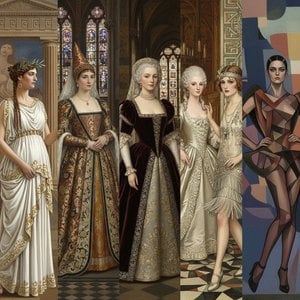
Explore the breathtaking intersection of fine art and high fashion. Discover how iconic masterpieces from Art Deco to Impressionism have shaped the world of luxury couture and timeless design in this curated visual journey.

Discover the unparalleled elegance of Art Deco through the lens of Erté. Explore a masterclass in linear precision, theatrical costume design, and high-fashion illustration that continues to define modern luxury and sophisticated interior aesthetics.

 Preview
 Send
Send Share
Share
 Details
 Guide
Guide

 Download
 Similars
 X-Ray
X-Ray Diaporama
 Stats
Stats


 Read More







 Glass option is only available in size under 110 CM


