A Window into Early Renaissance Florence: Benozzo Gozzoli’s Madonna and Child
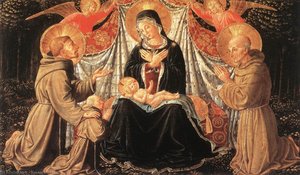
Benozzo Gozzoli's “Madonna and Child,” painted in 1450, is more than just a depiction of the Virgin Mary and her son; it’s a vibrant portal to the burgeoning artistic landscape of Early Renaissance Florence. This fresco, currently housed within the San Fortunato museum in Montefalco, Italy, measures a substantial 250 x 135 cm, immediately conveying the scale and ambition of its creator. Gozzoli, a master of his craft, expertly blends Gothic influences with the nascent innovations of the Renaissance, resulting in a work that is both deeply rooted in tradition and remarkably forward-thinking.
- Subject Matter: The central focus, naturally, is the serene Madonna holding the infant Jesus. This iconic pairing represents not just religious devotion but also themes of motherhood, innocence, and divine grace – motifs consistently explored throughout art history.
- Composition & Technique: Gozzoli’s meticulous attention to detail is immediately apparent. The figures are rendered with a remarkable sense of volume and texture, utilizing layering techniques characteristic of fresco painting. Notice the delicate folds in the Madonna's blue cloak and the soft sheen on the child’s red garment – details that elevate this work beyond simple representation.
- Architectural Setting: The background isn’t merely decorative; it serves to contextualize the scene within a plausible, albeit idealized, architectural setting. Columns and arches evoke classical Roman influences, subtly signaling the humanist revival taking place at the time. Above these structures, three trees flourish, adding an element of natural beauty and symbolizing life, growth, and connection to the divine.
The Artist: Benozzo Gozzoli – A Master of International Gothic
Benozzo Gozzoli (1420-1497) was a pivotal figure in Florentine art during the 15th century. Born in Florence, he received his initial training under Fra Angelico, absorbing the master’s refined style and meticulous approach to detail. This influence is powerfully evident in Gozzoli's work, particularly his celebrated frescoes within the Palazzo Medici-Riccardi – vibrant processions teeming with life and exquisitely rendered figures. Gozzoli’s distinctive style, often described as “International Gothic,” combined a love of opulent decoration with a sophisticated understanding of perspective and color theory. His collaborations, including significant contributions to the Paradise Doors of the Battistero di San Giovanni alongside Lorenzo Ghiberti, further cemented his reputation as one of Florence's most accomplished artists.
Symbolism and Context
The painting’s symbolism is rich with religious meaning. The halos surrounding Mary and Jesus signify their divine status, while the angel holding a lute suggests music – often associated with heavenly realms – playing a role in this sacred event. The architectural elements, referencing classical antiquity, represent order, harmony, and the aspiration towards ideal beauty that was central to Renaissance thought. Created during a period of significant religious and intellectual change, Gozzoli’s “Madonna and Child” reflects both the enduring power of Christian iconography and the burgeoning humanist spirit that would ultimately transform European art.
A Timeless Masterpiece – A Reproduction for Your Collection
WahooArt.com offers a meticulously crafted hand-painted reproduction of Benozzo Gozzoli’s “Madonna and Child,” capturing the essence of this remarkable fresco with unparalleled accuracy and artistry. This reproduction, created using traditional techniques and archival materials, ensures that you can enjoy the beauty and historical significance of this masterpiece for generations to come. Whether adorning a grand salon or adding a touch of Renaissance elegance to a smaller space, this artwork is sure to be a captivating focal point.



 Preview
 Buy Print
 Send
Send Share
Share
 Details

 Download
 Similars
 X-Ray
X-Ray Diaporama


 Read More






































 Glass option is only available in size under 110 CM