
PreviewPreview AR previewAR preview Switch to Print Switch to PrintSwitch to Digital Image Switch to Digital Image SendSend
DetailsDetails Add to favorites Add to favorites DownloadDownload SimilarsSimilars X-RayX-Ray DiaporamaDiaporama StatsStats

BOREE ENLEVANT ORITHYIE

Sebastiano Conca's 'Boreas Abducting Orithyia' (1715-1730) is a dramatic Baroque painting depicting the abduction of Orithyia by Boreas, showcasing dynamic movement and rich color palette.

Sebastiano Conca (1680-1764): Italian Baroque painter renowned for vibrant frescoes & mythological scenes. Influenced by Luca Giordano, he directed the Accademia di San Luca and mentored Battoni & Giaquinto.

Hand Made Oil Reproduction

Hand-painted oil on canvas in your size and frame, made to order by our artists. (Switch to Print Switch to PrintSwitch to Digital Image Switch to Digital Image)

P118B $10
P118H $10
P118W $10
P438Z $10
P508JH $12
P508YH $12
P805H $10
P805Z $10
P919BZ $10
P919G $10
P919XJ $10
P959ZH $10
P968JZ $12
W106C $8
W218G $10
W218JH $8
W218Y $10
W307PJ $10
W316G $10
W316PJ $8
W316Y $10
W398PJ $8
W4111J $10
W500HY $15
W500JH $15
W692G $12
W849H $8
W940BG $15
W953PJ $8

Standard
custom
CM
INCH

Pick from our preset sizes that match the artwork's original proportions.

width
height

You may enter your own dimensions to fit a specific frame or space. If your selected size does not match the original image's proportions, we will either crop the artwork or extend the painting with additional hand-painted elements. A digital mockup will be sent for your approval before production begins.
Please note that the on-screen preview does not reflect the actual cropping or extension. Only the mockup will accurately show the final composition.
While custom sizes are available, we recommend selecting a dimension from the predefined list to preserve the original proportions.

Examples of what can be changed: Replace face with customer photo; Add pet (e.g., replace cat with dog); Include hidden message in background; Change background landscape or elements.
After order, WahooArt.com team will email client for instructions and provide a mockup preview

Worldwide Delivery () in 3/4 weeks instead of standard 5 weeks. (13 September). No compromise on quality.

why_choose_icon
Free Worldwide Express Shipping
why_choose_icon
High-Quality Linen Canvas
why_choose_icon
Full Shipping Insurance
why_choose_icon
Customs Tax Refund Guarantee
why_choose_icon
True Color Matching Guarantee
why_choose_icon
100-Day Return Policy (Defects Only)
why_choose_icon
100% Money-Back Guarantee
why_choose_icon
Bulk Discount Offer

Total Price

$ 447

reproduction

BOREE ENLEVANT ORITHYIE

Reproduction Medium

Reproduction Size

-

Total Price

$ 447

Quick Facts

  • Artistic style: Neoclassical
  • Title: Boree Enlevant Orithyie
  • Artist: Sebastiano Conca
  • Influences:
    • Solimena
    • Ovid
  • Location: Louvre, Paris
  • Notable elements: Dramatic lighting, Dynamic composition
  • Year: 1720-1730

Art Quiz

There is only one correct answer for each question.

Question 1:
What mythological figure is depicted abducting Orithyia in the painting?
Question 2:
The painting exemplifies which artistic style, characterized by dramatic lighting and movement?
Question 3:
What is the primary emotional tone conveyed by the figures below Orithyia in the painting?
Question 4:
The use of atmospheric perspective in the artwork primarily serves to:
Question 5:
Which artist is credited with depicting Boreas as a much younger man in his version of the scene?

The Mythic Embrace: Unveiling Sebastiano Conca’s “Boreas Abducting Orithyia”

Sebastiano Conca's "Boreas Abducting Orithyia," a captivating work painted around 1720, isn’t merely a depiction of a classical myth; it’s a vibrant embodiment of dramatic tension and emotional turmoil. This Baroque masterpiece transports the viewer into a swirling vortex of desire, resistance, and ultimately, surrender, all rendered with Conca's signature mastery of light, color, and dynamic composition. The painting captures a pivotal moment from Ovid’s *Metamorphoses*, where the North Wind, Boreas, forcefully claims Orithyia, daughter of Erechtheus, defying her betrothal and plunging her into an unexpected marriage.

The scene unfolds on a richly textured riverbank, a carefully constructed stage for this tumultuous encounter. Conca skillfully employs atmospheric perspective – the subtle blurring of distant elements – to create a sense of depth that draws the eye towards the central action. The foreground is dominated by a cluster of figures: Orithyia, caught in Boreas’s grasp, her expression a mixture of surprise and burgeoning fear; her attendants, frozen in a desperate attempt to intervene; and the imposing figure of Boreas himself, depicted as a powerfully built man with windswept hair and wings – a potent symbol of untamed nature. The use of chiaroscuro—the dramatic interplay of light and shadow—intensifies the scene’s emotional impact, highlighting Orithyia's vulnerability against the overwhelming force of Boreas.

Baroque Drama: Composition and Technique

Conca’s compositional choices are deliberately theatrical. The painting adheres to a pyramidal structure, a hallmark of Baroque art, directing the viewer’s gaze upwards towards the central figures and reinforcing their importance. The swirling drapery of Boreas' cloak adds to the sense of movement and chaos, mirroring the turbulent emotions at play. Notice the meticulous detail in Conca’s brushwork – the delicate rendering of Orithyia’s skin, the rough texture of the foliage, and the intricate folds of the clothing. The artist masterfully layered oil paints to achieve a remarkable level of realism and luminosity, capturing the sheen of water and the warmth of light.

  • Color Palette: A rich tapestry of warm reds, oranges, and golds contrasts with cooler blues and greens, creating a dynamic visual harmony.
  • Brushwork: Layered and expressive, conveying both texture and movement.
  • Composition: A carefully constructed pyramid drawing the eye to the central figures.

Symbolism of Desire and Fate

Beyond its narrative content, “Boreas Abducting Orithyia” is laden with symbolic meaning. Boreas represents primal desire, untamed power, and the disruption of established order. Orithyia’s resistance, though ultimately futile, embodies a struggle against fate – a poignant reminder of the limitations of human agency in the face of overwhelming forces. The presence of the attendants underscores the social constraints that govern Orithyia's life and highlight the tragedy of her situation. Even the swirling snow suggests the coldness and isolation associated with Boreas’ domain.

The painting also speaks to broader themes of transformation and metamorphosis, central to Ovid’s *Metamorphoses*. Orithyia’s abduction marks a dramatic shift in her life – from a promising future as a bride to an unexpected and potentially unhappy marriage. The scene invites contemplation on the capricious nature of love, the inevitability of change, and the enduring power of myth.

A Legacy of Baroque Grandeur

“Boreas Abducting Orithyia” stands as a testament to Sebastiano Conca’s artistic skill and his ability to capture the drama and emotion of classical mythology. It exemplifies the grandeur and theatricality of the Baroque style, while also revealing a subtle sensitivity to human psychology. Reproductions of this captivating work continue to resonate with viewers today, offering a glimpse into a world of mythic romance, turbulent emotions, and enduring artistic beauty. Its rich colors, dynamic composition, and evocative symbolism make it a compelling addition to any art collection or interior space—a window into the dramatic heart of Baroque artistry.

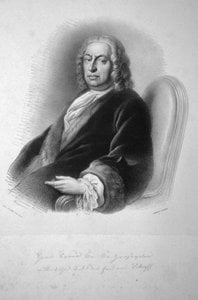
Artist Biography

Early Life and Artistic Formation

Sebastiano Conca emerged into the vibrant artistic landscape of late 17th-century Italy, born in Gaeta, a coastal city within the Kingdom of Naples, in 1680. His initial exposure to the world of art came through his apprenticeship with Francesco Solimena, a leading figure of Neapolitan painting. This formative period deeply ingrained in Conca an understanding of Baroque principles – dramatic compositions, dynamic movement, and rich color palettes that would become hallmarks of his early style. Solimena’s influence provided a solid foundation upon which Conca would build his own unique artistic voice, one that would eventually bridge the gap between the grandeur of the High Baroque and the more delicate sensibilities of the Rococo era. The young artist absorbed not only technical skills but also an appreciation for narrative storytelling within painting, a talent he would hone throughout his prolific career.

Roman Ascendancy and Patronage

In 1706, Conca embarked on a pivotal journey to Rome alongside his brother Giovanni, who served as a valuable assistant in his artistic endeavors. The Eternal City proved to be the crucible where Conca’s talent truly blossomed. Initially, he dedicated himself to mastering drawing, diligently practicing with chalk and honing his observational skills. This period of focused study soon attracted attention, leading to patronage from Cardinal Ottoboni, a powerful figure who facilitated introductions to Pope Clement XI. Commissions followed swiftly – notably “Jeremiah” and the “Assunta,” works that were well-received and established Conca’s reputation within Roman artistic circles. Recognition came in the form of knighthood bestowed by the Pope himself, solidifying his position as an artist of considerable promise. A significant milestone arrived with his collaboration on the "Coronation of Santa Cecilia" (1721–24) alongside Carlo Maratta, a project that showcased Conca’s ability to work within a larger artistic vision while contributing his own distinctive style. His standing within the Roman art community was further cemented by multiple terms as director of the Accademia di San Luca (1729–1731 and 1739–1741), demonstrating both his artistic prowess and leadership qualities.

A Synthesis of Styles: Influences and Artistic Development

Conca’s artistic style was not born in a vacuum; it represented a careful synthesis of influences, most notably the dramatic flair of Luca Giordano. The vibrant colors, energetic compositions, and theatrical lighting characteristic of Giordano's work are readily apparent in Conca’s earlier paintings. However, as his career progressed, Conca’s aesthetic sensibilities began to evolve, embracing elements of the emerging Rococo style. This transition manifested in lighter tones, more graceful figures, and an increased emphasis on decorative details. A recurring motif throughout his oeuvre is the use of allegorical figures – particularly *putti*, or cherubic beings – employed not merely as ornamentation but as vehicles for conveying deeper symbolic meanings. Critics have occasionally noted a tendency towards elaborate detail and sometimes overwrought allegory, even within more intimate scenes, suggesting a desire to imbue every aspect of his work with significance. This meticulous approach, while sometimes criticized, speaks to Conca’s intellectual engagement with the subject matter and his commitment to creating paintings that were both visually stunning and conceptually rich.

Major Commissions and Enduring Legacy

Throughout his career, Sebastiano Conca enjoyed widespread official acclaim and secured prestigious commissions from a diverse range of patrons. His talents were sought after by the Savoy family in Turin, where he undertook projects including the Oratory of San Filippo and Santa Teresa in Venaria (1721–1725) and the Basilica di Superga (1726). He also left his mark on Siena with frescoes at the Ospedale di Santa Maria della Scala, depicting “Probatica” (Pool of Siloam), a testament to his skill in large-scale decorative painting. In Genoa, he created expansive allegorical canvases for Palazzo Lomellini-Doria (1738–1740), showcasing his mastery of composition and narrative storytelling. Upon returning to Naples in 1752 under the patronage of Charles III, Conca produced significant works such as frescoes at the Church of Santa Chiara (1752–1754) and canvases for Caserta Palace, further solidifying his reputation as one of Italy’s leading artists. Beyond his paintings, Conca's influence extended to education; he mentored numerous aspiring artists, including Pompeo Battoni, Andrea Casali, and Corrado Giaquinto, shaping the next generation of Italian painters. His “Ammonimenti” (Admonishments), published in 1739, offered valuable insights into his artistic philosophy and techniques, providing a lasting contribution to art theory. Sebastiano Conca’s ability to navigate the complex world of patronage while consistently producing works of exceptional quality cemented his place as a pivotal figure bridging the late Baroque and Rococo periods, leaving an indelible mark on Italian art history.
Sebastiano Conca

Sebastiano Conca

1680 - 1764 , Italy

Quick Facts

  • Artistic Movement Or Style: Baroque, Rococo
  • Artists Or Movements Influenced By This Artist:
    • Pompeo Battoni
    • Andrea Casali
  • Artists Who Influenced This Artist:
    • Luca Giordano
    • Francesco Solimena
  • Date Of Birth: 1680
  • Date Of Death: 1764
  • Full Name: Sebastiano Conca
  • Nationality: Italian
  • Notable Artworks:
    • Allegoria della Renommee
    • The Fame
    • Annunciation of Mary
  • Place Of Birth: Gaeta, Italy
Explore artworks organized by themes, styles, and characteristics.



































