FREE ART CONSULTATION

x
Buy Painting Buy PaintingBuy Image Buy Image SendSend
DetailsDetails Add to favorites Add to favorites DownloadDownload SimilarsSimilars X-RayX-Ray DiaporamaDiaporama

The Annunciation

Witness the divine! Sandro Botticelli’s "Annunciation" (1489-90) captures Gabriel's momentous announcement to Mary, a masterpiece of Early Renaissance art in Florence.

Discover Sandro Botticelli (1445-1510), Renaissance master of 'Birth of Venus' & 'Primavera'. Explore his elegant style, mythological themes, and lasting influence on art history!

Giclée / Art Print

Museum-quality giclée or canvas print with fast production and flexible finish options.

P118B $10
P118H $10
P118W $10
P438Z $10
P508JH $12
P508YH $12
P805H $10
P805Z $10
P919BZ $10
P919G $10
P919XJ $10
P959ZH $10
P968JZ $12
W106C $8
W218G $10
W218JH $8
W218Y $10
W307PJ $10
W316G $10
W316PJ $8
W316Y $10
W398PJ $8
W4111J $10
W500HY $15
W500JH $15
W692G $12
W849H $8
W940BG $15
W953PJ $8

Standard
custom
CM
INCH

Pick from our preset sizes that match the artwork's original proportions.

width
height

You may enter your own dimensions to fit a specific frame or space. If your selected size does not match the original image's proportions, we will either crop the artwork or extend the image with a mirrored or solid-fill edge. A digital mockup will be sent for your approval before production begins.
Please note that the on-screen preview does not reflect the actual cropping or extension. Only the mockup will accurately show the final composition.
While custom sizes are available, we recommend selecting a dimension from the predefined list to preserve the original proportions.

Worldwide Delivery () in 2 weeks instead of standard 4/5 weeks. (4 July)

why_choose_icon
Free Worldwide Express Shipping
why_choose_icon
High-Quality Linen Canvas
why_choose_icon
Full Shipping Insurance
why_choose_icon
Customs Tax Refund Guarantee
why_choose_icon
True Color Matching Guarantee
why_choose_icon
60-Day Return Policy (Defects Only)
why_choose_icon
100% Money-Back Guarantee
why_choose_icon
Bulk Discount Offer

Total Price

-

reproduction

The Annunciation

Giclée / Art Print

Reproduction Size

-

Total Price

-

Quick Facts

  • Year: 1489-1490
  • Influences:
    • Classical texts
    • Humanism
  • Artist: Sandro Botticelli
  • Movement: Early Renaissance
  • Title: The Annunciation
  • Subject or theme: Annunciation story
  • Location: Uffizi Gallery, Florence

Art Quiz

There is only one correct answer for each question.

Question 1:
What is the primary subject depicted in Sandro Botticelli’s ‘The Annunciation’?
Question 2:
The painting features a complex composition divided by what element?
Question 3:
What is the significance of the Latin text found beneath the original frame of ‘The Annunciation’?

Collectible Description

The Annunciation: A Florentine Vision of Divine Grace

Sandro Botticelli’s “The Annunciation,” painted circa 1489-1490 and now residing within the hallowed halls of the Uffizi Gallery in Florence, is more than just a depiction of a pivotal biblical moment; it's a shimmering distillation of Renaissance ideals – a harmonious blend of classical elegance, burgeoning humanism, and profound spiritual contemplation. This tempera painting, commissioned by the church of the Florentine convent of Cestello, offers a glimpse into Botticelli’s unique artistic vision, one that resonated deeply with his contemporaries and continues to captivate viewers centuries later.

At first glance, the scene unfolds within a meticulously rendered garden setting, a space both earthly and imbued with an ethereal quality. The composition is cleverly divided by a series of elegant pillars, creating two distinct zones: on one side stands the Archangel Gabriel, depicted in motion as he approaches Mary, his gesture conveying urgency and divine revelation. His robes are rich in color – deep blues and purples signifying his celestial origin – while his face holds an expression of solemnity and reverence. Opposite him, we find Mary kneeling at her prie-dieu, a simple wooden bench that symbolizes her humility and devotion. Her posture is one of quiet contemplation as she receives Gabriel’s momentous announcement.

Beneath the figures, the floor is covered with an intricate geometric pattern – a hallmark of Botticelli's style. These repeating shapes aren’t merely decorative; they create a powerful illusion of depth and perspective, drawing the eye into the heart of the scene and reinforcing the sense of spatial harmony. Notably, beneath the original frame of the painting were inscribed words from St. Luke’s Gospel: ‘The Holy Ghost shall come upon thee, and the power of the Highest shalt thou overshadow; therefore also that holy thing which shall be born of thee shall be called the Son of God.’ This inscription underscores the central theological message of the work – the miraculous conception of Jesus through Mary.

Botticelli’s Renaissance Synthesis

Botticelli's artistic journey was deeply influenced by a confluence of factors that defined the Florentine Renaissance. The rediscovery of classical texts and artifacts, particularly those from Greece and Rome, fueled his fascination with idealized beauty and harmonious proportions. Simultaneously, the rise of humanism—a philosophical movement emphasizing human potential and earthly experience—encouraged artists to explore themes of mythology and virtue alongside religious subjects. Botticelli masterfully synthesized these influences in “The Annunciation,” creating a work that is both profoundly spiritual and strikingly beautiful.

He drew upon late Italian Gothic traditions, evident in the flowing drapery and delicate figures, yet he also embraced the innovations of the burgeoning Renaissance, notably the development of linear perspective. This technique—which creates an illusion of depth on a flat surface—is subtly employed here to enhance the painting’s realism and spatial coherence. Botticelli's use of color is equally noteworthy; he favored rich, vibrant hues – particularly blues and reds – that contribute to the work’s overall luminosity and emotional impact.

Symbolism and Spiritual Depth

Beyond its formal beauty, “The Annunciation” is laden with symbolic meaning. The garden setting itself represents paradise, a realm of innocence and divine grace. Gabriel's presence signifies God’s intervention in human affairs, while Mary’s acceptance embodies her willingness to embrace her destiny as the Mother of God. The inclusion of two cherubs—one near the top and another closer to the bottom—adds a touch of youthful exuberance and reinforces the miraculous nature of the event.

The painting also subtly references classical mythology, particularly the story of Joachim and Anna, the biblical parents of Mary. This connection adds layers of meaning and underscores the theme of divine providence – the belief that God orchestrates events in accordance with his plan. The overall effect is a profound meditation on faith, humility, and the transformative power of grace.

Reproductions: Bringing Botticelli’s Vision to Life

Botticelli's “The Annunciation” remains one of the most beloved and enduring works of the Early Renaissance. Its exquisite beauty, intricate detail, and profound symbolism continue to inspire artists and captivate audiences worldwide. WahooArt offers meticulously crafted, hand-painted reproductions that faithfully capture the essence of this masterpiece. Our skilled artisans utilize only the finest materials – traditional oil paints on archival canvas – to create stunning replicas that will grace your home or office for generations to come.

Whether you are a discerning collector, an art enthusiast, or simply seeking a timeless work of art to enhance your space, our “The Annunciation” reproduction provides an unparalleled opportunity to experience the beauty and spiritual depth of Botticelli’s vision. Visit https://WahooArt.com today to explore our selection and bring this iconic masterpiece into your life.


Artist Biography

Early Life and Florentine Beginnings

Sandro Botticelli, born Alessandro di Mariano di Vanni Filipepi around 1445 in Florence, Italy, emerged during a period of extraordinary cultural ferment—the Early Renaissance. His life was deeply rooted in the city’s artistic and social fabric; he never strayed far from his neighborhood of Ognissanti, a testament to both familial ties and the vibrant creative ecosystem that nurtured him. His father, Mariano Filipepi, initially a goldsmith and later a tanner, provided an early exposure to craftsmanship and meticulous detail—qualities that would profoundly influence Botticelli’s artistic approach. Though initial reports suggested training as a goldsmith, he soon found his calling under the tutelage of Fra Filippo Lippi, a leading painter of the time. This apprenticeship proved pivotal, immersing him in the techniques and aesthetics of the Florentine school while also connecting him to influential patrons like the Medici family.

A Style Defined by Grace and Myth

Botticelli’s artistic style is instantly recognizable for its lyrical beauty, characterized by elegant linearity, flowing contours, and a delicate use of color. He masterfully bridged the gap between the late Gothic traditions and the burgeoning Renaissance aesthetic, absorbing influences from masters like Fra Angelico and Paolo Uccello yet forging a uniquely personal vision. His figures possess an ethereal quality, often depicted with elongated proportions and graceful poses that convey both serenity and a subtle melancholy. A defining feature of his work is the frequent incorporation of classical mythology—a reflection of the humanist interests sweeping through Renaissance Florence. He didn’t merely illustrate these ancient tales; he imbued them with new layers of meaning, exploring themes of love, beauty, and spiritual longing.

Botticelli's technique was innovative for its time. He often employed a silverpoint drawing method underpainting his canvases, contributing to the luminosity and delicate detail seen in his finished works. His use of tempera paint allowed for precise rendering and vibrant colors, while his later experiments with oil paints broadened his expressive possibilities.

Iconic Masterpieces and Artistic Development

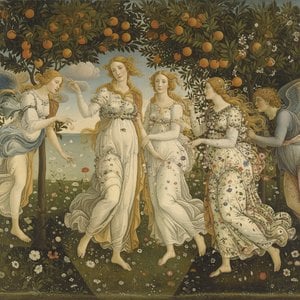
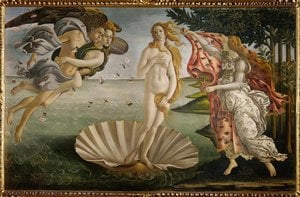
Botticelli’s legacy rests upon a handful of iconic paintings that continue to captivate audiences centuries later. The Birth of Venus, completed around 1486, stands as perhaps his most celebrated work—an allegorical depiction of the goddess emerging from a seashell, embodying Renaissance ideals of beauty and harmony. Its graceful composition, delicate color palette, and evocative symbolism have made it an enduring symbol of the era. Equally renowned is Primavera, created around 1482, a complex and enigmatic painting celebrating spring and love, populated with symbolic figures drawn from classical mythology. These works showcase Botticelli’s mastery of composition, his ability to create atmospheric depth, and his profound understanding of human emotion.

His artistic journey unfolded in distinct phases. The early 1470s saw him focusing on religious subjects, honing his technical skills and establishing a reputation for skillful execution. The 1480s marked the peak of his creative powers, with the creation of his most famous mythological paintings. However, the late 1490s witnessed a shift in his style, influenced by the fervent preaching of Girolamo Savonarola—a Dominican friar who condemned what he saw as the decadence and moral corruption of Florence. This period resulted in more austere and emotionally charged works, reflecting a growing spiritual intensity.

Legacy and Rediscovery

Following his death in 1510, Botticelli’s reputation gradually faded into obscurity. For nearly three centuries, his work was largely forgotten, overshadowed by the achievements of High Renaissance masters like Leonardo da Vinci and Michelangelo. However, a remarkable rediscovery occurred in the late 19th century with the rise of the Pre-Raphaelite Brotherhood—a group of English artists who rejected academic conventions and sought inspiration in the art of the early Italian Renaissance. They were captivated by Botticelli’s linear grace, vibrant colors, and poetic sensibility, recognizing him as a kindred spirit.

This renewed appreciation sparked a widespread reassessment of his work, establishing him as one of the most important artists of the Early Renaissance. Today, Botticelli is celebrated for his unique artistic vision, his masterful technique, and his enduring ability to evoke beauty, emotion, and spiritual contemplation. His influence can be seen in subsequent generations of artists who have sought to capture the same sense of grace and elegance in their own work. He remains a symbol of Florentine artistic achievement and a testament to the power of Renaissance humanism.

Major Works

  • The Birth of Venus (c. 1486): An iconic depiction embodying Renaissance ideals of beauty.
  • Primavera (c. 1482): A complex allegorical painting celebrating spring and love.
  • Adoration of the Magi (1475-1476): Demonstrates early mastery of composition and perspective.
  • Mystic Nativity (1501): Reflects a shift towards spiritual themes in his later career.
Sandro Botticelli

Sandro Botticelli

1445 - 1510 , Italy

Quick Facts

  • Artistic Movement Or Style: Early Renaissance
  • Artists Or Movements Influenced By This Artist: ['Pre-Raphaelites']
  • Artists Who Influenced This Artist:
    • Fra Angelico
    • Paolo Uccello
  • Date Of Birth: c. 1445
  • Date Of Death: 1510
  • Full Name: Alessandro di Mariano Filipepi
  • Nationality: Italian
  • Notable Artworks:
    • Birth of Venus
    • Primavera
    • Adoration of the Magi
    • Mystic Nativity
  • Place Of Birth: Florence, Italy
Explore artworks organized by themes, styles, and characteristics.