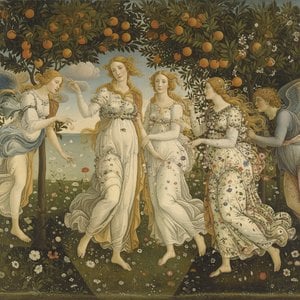
Saint sebastian by Sandro Botticelli, hand-painted oil painting reproduction by a master artist
Preview AR preview Switch to Print Switch to Digital Image Send
Details Guide Add to favorites Download Similars X-Ray Diaporama Q&A Stats

Saint sebastian Hand-painted oil painting reproduction

Witness Botticelli's iconic 'Saint Sebastian'! Admire the Renaissance nude’s serene beauty & mythological symbolism in this masterpiece, meticulously recreated for you.

Discover Sandro Botticelli (1445-1510), Renaissance master of 'Birth of Venus' & 'Primavera'. Explore his elegant style, mythological themes, and lasting influence on art history!

Hand Made Oil Reproduction

Hand-painted oil on canvas in your size and frame, made to order by our artists. ( Switch to Print Switch to Digital Image)

Corner sample of the P118B picture frame: moulded polystyrene, 5 cm wide and 3 cm thick
P118B $10
Corner sample of the P118H picture frame: moulded polystyrene, 5 cm wide and 3 cm thick
P118H $10
Corner sample of the P118W picture frame: moulded polystyrene, 5 cm wide and 3 cm thick
P118W $10
Corner sample of the P438Z picture frame: moulded polystyrene, 5.5 cm wide and 3.5 cm thick
P438Z $10
Corner sample of the P508JH picture frame: moulded polystyrene, 7 cm wide and 3.5 cm thick
P508JH $12
Corner sample of the P508YH picture frame: moulded polystyrene, 7 cm wide and 3.5 cm thick
P508YH $12
Corner sample of the P805H picture frame: moulded polystyrene, 5 cm wide and 3.5 cm thick
P805H $10
Corner sample of the P805Z picture frame: moulded polystyrene, 5 cm wide and 3.5 cm thick
P805Z $10
Corner sample of the P919BZ picture frame: moulded polystyrene, 7 cm wide and 3.5 cm thick
P919BZ $10
Corner sample of the P919G picture frame: moulded polystyrene, 7 cm wide and 3.5 cm thick
P919G $10
Corner sample of the P919XJ picture frame: moulded polystyrene, 7 cm wide and 3.5 cm thick
P919XJ $10
Corner sample of the P959ZH picture frame: moulded polystyrene, 5 cm wide and 3 cm thick
P959ZH $10
Corner sample of the P968JZ picture frame: moulded polystyrene, 6 cm wide and 4 cm thick
P968JZ $12
Corner sample of the W106C picture frame: solid wood, 5 cm wide and 3 cm thick
W106C $8
Corner sample of the W218G picture frame: solid wood, 5 cm wide and 3 cm thick
W218G $10
Corner sample of the W218JH picture frame: solid wood, 5 cm wide and 3 cm thick
W218JH $8
Corner sample of the W218Y picture frame: solid wood, 5 cm wide and 3 cm thick
W218Y $10
Corner sample of the W307PJ picture frame: solid wood, 6 cm wide and 3 cm thick
W307PJ $10
Corner sample of the W316G picture frame: solid wood, 6 cm wide and 3 cm thick
W316G $10
Corner sample of the W316PJ picture frame: solid wood, 6 cm wide and 3 cm thick
W316PJ $8
Corner sample of the W316Y picture frame: solid wood, 6 cm wide and 3 cm thick
W316Y $10
Corner sample of the W398PJ picture frame: solid wood, 5 cm wide and 3 cm thick
W398PJ $8
Corner sample of the W4111J picture frame: solid wood, 6.5 cm wide and 3.5 cm thick
W4111J $10
Corner sample of the W500HY picture frame: solid wood, 7 cm wide and 5 cm thick
W500HY $15
Corner sample of the W500JH picture frame: solid wood, 7 cm wide and 5 cm thick
W500JH $15
Corner sample of the W692G picture frame: solid wood, 8 cm wide and 4 cm thick
W692G $12
Corner sample of the W849H picture frame: solid wood, 5 cm wide and 3 cm thick
W849H $8
Corner sample of the W940BG picture frame: solid wood, 7.5 cm wide and 4.5 cm thick
W940BG $15
Corner sample of the W953PJ picture frame: solid wood, 6 cm wide and 3.5 cm thick
W953PJ $8

Standard
custom
CM
INCH

Pick from our preset sizes that match the artwork's original proportions.

width
height

Type the width and the height you need, to fit your frame or your wall. This is hand-painted, so for a size with a different shape the artist can paint a bit more around the picture, or cut a bit — you choose. We send you a digital mockup to approve before the painting starts. The picture shown on this page does not show the real result — only the mockup does.

Examples of what can be changed: Replace face with customer photo; Add pet (e.g., replace cat with dog); Include hidden message in background; Change background landscape or elements.
After order, WahooArt.com team will email client for instructions and provide a mockup preview

Worldwide Delivery () in 3/4 weeks instead of standard 5 weeks. (2 November). No compromise on quality.

Free Worldwide Express Shipping
High-Quality Linen Canvas
Full Shipping Insurance
Customs Tax Refund Guarantee
True Color Matching Guarantee
100-Day Return Policy (Defects Only)
100% Money-Back Guarantee
Bulk Discount Offer

Total Price

$ 272

Saint sebastian

Reproduction Medium

Reproduction Size

-

Total Price

$ 272

Quick Facts

  • Subject or theme: Religious martyrdom
  • Dimensions: 39 x 75 cm (15.4 x 29.5 in)
  • Movement: Early Renaissance
  • Title: Saint Sebastian
  • Artistic style: Elegant, graceful lines
  • Year: 1474-1482

Art Quiz

There is only one correct answer for each question.

Question 1:
Saint Sebastian is primarily known for which artistic movement?
Question 2:
What is the primary symbolic meaning of the large blue circle/frame in Botticelli’s ‘Saint Sebastian’?
Question 3:
According to traditional accounts, what is the most prominent element of Saint Sebastian’s suffering depicted in this painting?
Question 4:
Which of the following best describes Sandro Botticelli’s artistic style as exemplified in ‘Saint Sebastian’?
Question 5:
The depiction of Saint Sebastian in this painting draws heavily from which religious legend?

The Enigmatic Saint: Botticelli’s Depiction of Sebastian

Sandro Botticelli's “Saint Sebastian,” painted around 1474, is not merely a depiction of a martyred figure; it’s an exquisitely rendered meditation on suffering, faith, and the enduring power of the human spirit. This iconic work, housed within the Gemäldegalerie in Berlin, transcends its religious subject matter to become a timeless exploration of vulnerability and resilience—a testament to Botticelli's mastery of classical form and his profound understanding of human emotion. The painting immediately draws the eye with its strikingly nude figure, standing serenely before a monumental blue circle, an element that has fueled much scholarly debate regarding its precise meaning – perhaps representing the heavens or a symbolic boundary.

Botticelli’s approach to the subject matter diverges significantly from earlier depictions of Sebastian. While previous portrayals often emphasized the brutality of his ordeal—the arrows piercing his flesh, the agonizing expressions of pain—Botticelli presents a remarkably composed and dignified image. The saint's face is devoid of anguish; instead, he gazes outwards with an almost unnerving composure, suggesting a profound acceptance of his fate and a connection to something beyond earthly suffering. This deliberate restraint invites contemplation rather than immediate emotional response, prompting the viewer to consider the deeper spiritual implications of Sebastian’s sacrifice.

A Synthesis of Classical and Renaissance Elements

Botticelli's artistic style in “Saint Sebastian” is a fascinating blend of influences—a harmonious marriage between the elegance of late Gothic tradition and the burgeoning innovations of the Early Renaissance. The figure itself embodies classical ideals of beauty, with its balanced proportions, graceful pose (a subtle contrapposto), and idealized musculature. However, Botticelli doesn’t simply replicate classical forms; he imbues them with a distinctly Italian sensibility. Notice the delicate rendering of skin tones, the meticulous attention to detail in the folds of his loincloth, and the subtly expressive quality of his hands—all hallmarks of Botticelli's unique artistic vision.

Technically, the painting is executed in oil on wood panel, a medium that allowed Botticelli to achieve remarkable luminosity and depth. The use of color is restrained yet sophisticated, with the dominant blue of the surrounding circle creating a dramatic contrast against the pale flesh tones of Sebastian. The artist’s brushwork is remarkably smooth and refined, contributing to the overall sense of serenity and composure. It's a testament to his skill that he manages to convey such intense emotion through subtle gestures and carefully considered details.

Symbolism and Spiritual Resonance

Beyond its formal beauty, “Saint Sebastian” is rich in symbolic meaning. The arrows themselves are often interpreted as representing the wounds of sin and suffering—a reminder of humanity’s fallen state. However, Sebastian's unwavering gaze suggests a transcendence of earthly pain, pointing towards salvation and divine grace. The blue circle surrounding him can be seen as a symbol of heaven or the celestial realm, emphasizing the saint’s ultimate destination. The presence of two figures in the background—one on either side—adds another layer of complexity to the composition, perhaps representing witnesses to Sebastian's sacrifice or symbolizing the broader community of believers.

Interestingly, Botticelli’s depiction of Sebastian aligns with a shift in artistic representation during this period. While earlier portrayals focused heavily on the physical suffering of the saint, Botticelli emphasizes his spiritual fortitude and inner peace. This reflects a growing interest in exploring themes of faith, virtue, and the afterlife within Renaissance art—a move away from purely narrative depictions towards more introspective and symbolic representations.

A Timeless Masterpiece for Reproduction

WahooArt offers meticulously crafted hand-painted reproductions of Botticelli’s “Saint Sebastian,” allowing you to bring this extraordinary artwork into your home or office. Our skilled artists replicate the painting's exquisite detail, luminous colors, and nuanced emotional depth with unparalleled accuracy. Whether you are an art enthusiast, a collector, or simply seeking a stunning piece of décor, our reproductions provide a faithful representation of Botticelli’s masterpiece—a timeless symbol of faith, resilience, and the enduring beauty of the human spirit.

Questions & Answers

What kind of piece is "Saint sebastian"?

"Saint sebastian" is a wall art piece.

What technique was used for "Saint sebastian" by Sandro Botticelli?

"Saint sebastian" is executed in acrylic.

Is "Saint sebastian" more bright or more dark overall?

The recorded values for "Saint sebastian" by Sandro Botticelli are: brilliant brightness, bright balance luminance.


Artist Biography

Early Life and Florentine Beginnings

Sandro Botticelli, born Alessandro di Mariano di Vanni Filipepi around 1445 in Florence, Italy, emerged during a period of extraordinary cultural ferment—the Early Renaissance. His life was deeply rooted in the city’s artistic and social fabric; he never strayed far from his neighborhood of Ognissanti, a testament to both familial ties and the vibrant creative ecosystem that nurtured him. His father, Mariano Filipepi, initially a goldsmith and later a tanner, provided an early exposure to craftsmanship and meticulous detail—qualities that would profoundly influence Botticelli’s artistic approach. Though initial reports suggested training as a goldsmith, he soon found his calling under the tutelage of Fra Filippo Lippi, a leading painter of the time. This apprenticeship proved pivotal, immersing him in the techniques and aesthetics of the Florentine school while also connecting him to influential patrons like the Medici family.

A Style Defined by Grace and Myth

Botticelli’s artistic style is instantly recognizable for its lyrical beauty, characterized by elegant linearity, flowing contours, and a delicate use of color. He masterfully bridged the gap between the late Gothic traditions and the burgeoning Renaissance aesthetic, absorbing influences from masters like Fra Angelico and Paolo Uccello yet forging a uniquely personal vision. His figures possess an ethereal quality, often depicted with elongated proportions and graceful poses that convey both serenity and a subtle melancholy. A defining feature of his work is the frequent incorporation of classical mythology—a reflection of the humanist interests sweeping through Renaissance Florence. He didn’t merely illustrate these ancient tales; he imbued them with new layers of meaning, exploring themes of love, beauty, and spiritual longing.

Botticelli's technique was innovative for its time. He often employed a silverpoint drawing method underpainting his canvases, contributing to the luminosity and delicate detail seen in his finished works. His use of tempera paint allowed for precise rendering and vibrant colors, while his later experiments with oil paints broadened his expressive possibilities.

Iconic Masterpieces and Artistic Development

Botticelli’s legacy rests upon a handful of iconic paintings that continue to captivate audiences centuries later. The Birth of Venus, completed around 1486, stands as perhaps his most celebrated work—an allegorical depiction of the goddess emerging from a seashell, embodying Renaissance ideals of beauty and harmony. Its graceful composition, delicate color palette, and evocative symbolism have made it an enduring symbol of the era. Equally renowned is Primavera, created around 1482, a complex and enigmatic painting celebrating spring and love, populated with symbolic figures drawn from classical mythology. These works showcase Botticelli’s mastery of composition, his ability to create atmospheric depth, and his profound understanding of human emotion.

His artistic journey unfolded in distinct phases. The early 1470s saw him focusing on religious subjects, honing his technical skills and establishing a reputation for skillful execution. The 1480s marked the peak of his creative powers, with the creation of his most famous mythological paintings. However, the late 1490s witnessed a shift in his style, influenced by the fervent preaching of Girolamo Savonarola—a Dominican friar who condemned what he saw as the decadence and moral corruption of Florence. This period resulted in more austere and emotionally charged works, reflecting a growing spiritual intensity.

Legacy and Rediscovery

Following his death in 1510, Botticelli’s reputation gradually faded into obscurity. For nearly three centuries, his work was largely forgotten, overshadowed by the achievements of High Renaissance masters like Leonardo da Vinci and Michelangelo. However, a remarkable rediscovery occurred in the late 19th century with the rise of the Pre-Raphaelite Brotherhood—a group of English artists who rejected academic conventions and sought inspiration in the art of the early Italian Renaissance. They were captivated by Botticelli’s linear grace, vibrant colors, and poetic sensibility, recognizing him as a kindred spirit.

This renewed appreciation sparked a widespread reassessment of his work, establishing him as one of the most important artists of the Early Renaissance. Today, Botticelli is celebrated for his unique artistic vision, his masterful technique, and his enduring ability to evoke beauty, emotion, and spiritual contemplation. His influence can be seen in subsequent generations of artists who have sought to capture the same sense of grace and elegance in their own work. He remains a symbol of Florentine artistic achievement and a testament to the power of Renaissance humanism.

Major Works

  • The Birth of Venus (c. 1486): An iconic depiction embodying Renaissance ideals of beauty.
  • Primavera (c. 1482): A complex allegorical painting celebrating spring and love.
  • Adoration of the Magi (1475-1476): Demonstrates early mastery of composition and perspective.
  • Mystic Nativity (1501): Reflects a shift towards spiritual themes in his later career.
Sandro Botticelli

Sandro Botticelli

1445 - 1510 , Italy

Quick Facts

  • Artistic Movement Or Style: Early Renaissance
  • Artists Or Movements Influenced By This Artist: ['Pre-Raphaelite Brotherhood']
  • Artists Who Influenced This Artist:
    • Fra Filippo Lippi
    • Fra Angelico
    • Paolo Uccello
  • Full Name: Alessandro di Mariano Filipepi
  • Notable Artworks:
    • The Birth of Venus
    • Primavera
    • Adoration of the Magi
    • Mystic Nativity
  • Place Of Birth: Florence, Italy
  • Date Of Birth: 1445
  • Date Of Death: 1510
Explore artworks organized by themes, styles, and characteristics.