
FREE ART CONSULTATION

x
Buy Painting Buy PaintingBuy Image Buy Image SendSend
DetailsDetails Add to favorites Add to favorites DownloadDownload SimilarsSimilars X-RayX-Ray DiaporamaDiaporama

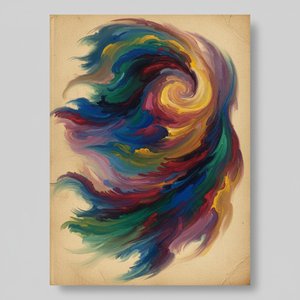
Swing

Experience Sam Gilliam's 'Swing' (1969): A monumental acrylic masterpiece blending abstract expressionism & textile art. Vibrant colors, fluid forms evoke emotion.

Sam Gilliam (1933-2022) redefined painting with his innovative draped canvases & Color Field abstractions. A pioneer of Black art, he broke barriers and inspired generations.

Giclée / Art Print

Museum-quality giclée or canvas print with fast production and flexible finish options.

P118B $10
P118H $10
P118W $10
P438Z $10
P508JH $12
P508YH $12
P805H $10
P805Z $10
P919BZ $10
P919G $10
P919XJ $10
P959ZH $10
P968JZ $12
W106C $8
W218G $10
W218JH $8
W218Y $10
W307PJ $10
W316G $10
W316PJ $8
W316Y $10
W398PJ $8
W4111J $10
W500HY $15
W500JH $15
W692G $12
W849H $8
W940BG $15
W953PJ $8

Standard
custom
CM
INCH

Pick from our preset sizes that match the artwork's original proportions.

width
height

You may enter your own dimensions to fit a specific frame or space. If your selected size does not match the original image's proportions, we will either crop the artwork or extend the image with a mirrored or solid-fill edge. A digital mockup will be sent for your approval before production begins.
Please note that the on-screen preview does not reflect the actual cropping or extension. Only the mockup will accurately show the final composition.
While custom sizes are available, we recommend selecting a dimension from the predefined list to preserve the original proportions.

Worldwide Delivery () in 2 weeks instead of standard 4/5 weeks. (2 July)

why_choose_icon
Free Worldwide Express Shipping
why_choose_icon
High-Quality Linen Canvas
why_choose_icon
Full Shipping Insurance
why_choose_icon
Customs Tax Refund Guarantee
why_choose_icon
True Color Matching Guarantee
why_choose_icon
60-Day Return Policy (Defects Only)
why_choose_icon
100% Money-Back Guarantee
why_choose_icon
Bulk Discount Offer

Total Price

-

reproduction

Swing

Giclée / Art Print

Reproduction Size

-

Total Price

-

Quick Facts

  • Title: Swing
  • Artist: Sam Gilliam
  • Medium: Acrylic on fabric
  • Influences:
    • Morris Louis
    • Kenneth Noland
  • Movement: Abstract Expressionism
  • Dimensions: 304 x 720 cm
  • Location: ArtsDot.com

Art Quiz

There is only one correct answer for each question.

Question 1:
What year was the artwork 'Swing' created?
Question 2:
Which artistic movement is Sam Gilliam’s ‘Swing’ most closely associated with?
Question 3:
What material is primarily used in the creation of 'Swing'?
Question 4:
According to the description, what is a key characteristic of Gilliam’s style?

Collectible Description

The Allure of "Swing" by Sam Gilliam

Sam Gilliam's "Swing," created in 1969, stands as a pivotal work within the landscape of abstract expressionism and post-painterly abstraction. Measuring an impressive 304 x 720 cm, this acrylic masterpiece transcends mere visual representation; it’s an immersive experience that captivates with its vibrant colors, dynamic forms, and profound emotional resonance. Gilliam's innovative approach to canvas manipulation and color application establishes "Swing" as a landmark achievement in modern art.

Artistic Style and Technique

"Swing" exemplifies Gilliam’s signature style characterized by the exploration of color field painting and lyrical abstraction. Unlike traditional canvases stretched on frames, Gilliam liberated his work from rigid structures. He draped and suspended large swathes of painted canvas, allowing gravity and chance to influence the final form. This technique creates a sense of weightlessness and fluidity, as if the colors are floating in space. The application of acrylic paint is layered and blended, resulting in washes that bleed into one another, resembling abstracted landscapes or celestial scenes. The absence of a traditional stretcher bar further emphasizes the materiality of the canvas itself, transforming it from a mere support to an integral part of the artwork's expressive power.

Historical Context and Significance

Created during a period of significant social and political upheaval in the late 1960s, "Swing" reflects the era’s spirit of experimentation and liberation. Gilliam, as a prominent figure within the Washington Color School, challenged conventional artistic norms. His work emerged from a vibrant art scene in Washington D.C., distinct from the more established trends in New York City. The title itself, “Swing,” evokes a sense of rhythm and movement, referencing the bebop and jazz music Gilliam often listened to while painting—a testament to his embrace of improvisation and spontaneity. Being the first African-American artist to represent the US at the Venice Biennale in 1972 further cemented his place as a groundbreaking figure.

Symbolism and Emotional Impact

While abstract, "Swing" is rich with symbolic potential. The swirling colors and organic forms can be interpreted as representations of natural phenomena—a sunset, a flowing river, or the vastness of the cosmos. The work evokes feelings of tranquility, mystery, and boundless energy. The dynamic interplay of color creates an emotional depth that invites viewers to engage in personal interpretation. It's not about depicting a specific object but rather conveying a feeling, a mood—a sense of liberation and movement. The draping technique itself suggests a release from constraints, mirroring the broader societal shifts occurring during its creation.

A Lasting Legacy

"Swing" remains a testament to Sam Gilliam’s artistic genius and his profound impact on modern art. It exemplifies his commitment to innovation, experimentation, and pushing the boundaries of what painting could be. The work's enduring appeal lies in its ability to transcend time and cultural context, continuing to inspire awe and contemplation in viewers today.

Related Artworks


Artist Biography

A Life Painted in Motion: The World of Sam Gilliam

Sam Gilliam, born November 30, 1933, in Tupelo, Mississippi, and passing on June 25, 2022, was more than just a painter; he was an innovator who fundamentally altered our perception of what painting could be. His journey began with humble roots – his father a railroad worker, his mother a homemaker – and a subsequent move to Louisville, Kentucky, shortly after his birth. Even as a child, the seeds of artistic expression were sown, manifesting in early cartoon drawings that hinted at the creative force within. Gilliam’s formal education at the University of Louisville, where he earned both a B.A. (1955) and an M.A. (1961) in Fine Art, provided him with a foundation, but it was his life experiences – including service in the United States Army from 1956 to 1958 – that would truly shape his artistic vision. The move to Washington D.C. in 1962, alongside his wife Dorothy Butler, proved pivotal, placing him at the heart of a burgeoning art scene and setting the stage for a career defined by groundbreaking experimentation.

Breaking Boundaries: From Color Field to Sculptural Space

Gilliam’s early work aligned with the Washington Color School, a movement characterized by its exploration of color field painting – large expanses of flat, saturated hues intended to evoke emotional responses through pure chromatic experience. However, he quickly distinguished himself from his peers. While artists like Morris Louis and Kenneth Noland focused on staining canvases stretched tautly across frames, Gilliam began to question the very necessity of the stretcher itself. Around 1965, a revolutionary idea took hold: what if the canvas could be *freed*? This led to his iconic “Drape Paintings,” works that involved suspending unstretched or loosely draped fabric from ceilings and walls, allowing them to interact dynamically with their surrounding space. These weren’t merely paintings; they were sculptural interventions, shifting and changing with air currents and viewer perspective. It was a radical departure, transforming painting into an immersive, three-dimensional experience. This innovation wasn't born of abstract theory but practical observation – the simple act of laundry billowing in the breeze outside his studio sparked the initial concept. Later explorations saw him incorporating diverse materials—polypropylene, computer-generated imagery, metallic and iridescent acrylics, handmade paper, aluminum, steel, plywood, and plastic—further pushing the boundaries of artistic possibility. The 1970s brought forth the dynamic “Black Paintings,” geometric collages imbued with a jazz-inspired energy reminiscent of Miles Davis and John Coltrane, while the 1980s saw the emergence of "Quilted Paintings," echoing the African patchwork quilts of his childhood.

Recognition and Legacy: A Pioneer’s Impact

Gilliam's artistic courage did not go unnoticed. In 1972, he achieved a historic milestone as the first African American artist to represent the United States at the Venice Biennale, a watershed moment that shattered barriers and paved the way for greater inclusivity in the art world. Throughout his career, accolades continued to accumulate: numerous commissions, grants, awards, exhibitions, and eight honorary doctorates from prestigious institutions including Northwestern University and the University of Louisville. A major retrospective at the Corcoran Gallery of Art in 2005 solidified his place as a leading figure in American art history. He was also honored with the Norman W. Harris Prize from the Art Institute of Chicago and received an Artist's Fellowship from the Washington Gallery of Modern Art. Gilliam’s influence extends far beyond awards and exhibitions, however. His pioneering technique of draping canvases fundamentally impacted not only the Color Field movement but also the development of installation art, challenging traditional notions of painting as a fixed, two-dimensional object.

Echoes of Inspiration: Influences and Artistic Lineage

Gilliam’s artistic journey was informed by a diverse range of influences. He acknowledged early inspiration from Morris Louis and Kenneth Noland, fellow members of the Washington Color School, but his vision extended beyond their aesthetic boundaries. The emotional intensity of German Expressionists like Emil Nolde and Paul Klee resonated with him, as did the work of Nathan Oliveira from the Bay Area figurative school. Further back in art history, he found inspiration in the radical experimentation of Vladimir Tatlin, the geometric precision of Frank Stella, and the formal rigor of Hans Hofmann, Georges Braque, and Pablo Picasso. Even Paul Cézanne’s exploration of form and space left its mark on his evolving style. Yet, Gilliam wasn't simply mimicking these masters; he was synthesizing their lessons into something entirely new—a uniquely American abstract expression that embraced innovation and challenged convention.

A Lasting Impression: The Significance of Sam Gilliam’s Art

Sam Gilliam’s legacy is one of fearless experimentation, unwavering artistic integrity, and a profound contribution to the evolution of abstraction. He didn't just paint; he redefined painting itself, liberating it from its traditional constraints and transforming it into a dynamic, immersive experience. As an African American artist achieving international recognition during a period of significant social change, Gilliam also broke down barriers and inspired generations of artists of color. His work continues to resonate today, reminding us that art has the power to challenge perceptions, expand possibilities, and ultimately, transform the way we see the world. He leaves behind not just a body of stunning artwork but a testament to the enduring power of artistic vision and the courage to forge one’s own path.
Sam Gilliam

Sam Gilliam

1933 - 2022 , United States of America
Quick Facts

  • Artistic Movement Or Style: Color Field Painting
  • Artists Or Movements Influenced By This Artist: ['Installation art']
  • Artists Who Influenced This Artist:
    • Morris Louis
    • Kenneth Noland
    • Emil Nolde
  • Date Of Birth: November 30, 1933
  • Date Of Death: June 25, 2022
  • Full Name: Sam Gilliam
  • Nationality: American
  • Notable Artworks:
    • Swing
    • Shoot Six
    • Open Cylinder
  • Place Of Birth: Tupelo, USA
Explore artworks organized by themes, styles, and characteristics.



































