Preview AR preview Buy Hand Made Painting Switch to Digital Image Send
Details Guide Add to favorites Download Similars X-Ray Diaporama Stats

Tower

Master of Surrealism known for The Persistence of Memory. Dive into his dreamlike world today.

The artwork displayed on this page is protected by copyright law, which means we cannot legally create or sell an identical reproduction. This protection is enforced under international agreements such as the Berne Convention and by national laws, including those outlined by the U.S. Copyright Law - Title 17.

This method fully complies with copyright regulations because it does not involve copying or duplicating the protected artwork. Instead, it is a creative reinterpretation - a new painting that is influenced by the original but not identical to it.

Giclée / Art Print

Museum-quality giclée or canvas print with fast production and flexible finish options. ( Buy Hand Made Painting Switch to Digital Image)

Corner sample of the P118B picture frame: moulded polystyrene, 5 cm wide and 3 cm thick
P118B $10
Corner sample of the P118H picture frame: moulded polystyrene, 5 cm wide and 3 cm thick
P118H $10
Corner sample of the P118W picture frame: moulded polystyrene, 5 cm wide and 3 cm thick
P118W $10
Corner sample of the P438Z picture frame: moulded polystyrene, 5.5 cm wide and 3.5 cm thick
P438Z $10
Corner sample of the P508JH picture frame: moulded polystyrene, 7 cm wide and 3.5 cm thick
P508JH $12
Corner sample of the P508YH picture frame: moulded polystyrene, 7 cm wide and 3.5 cm thick
P508YH $12
Corner sample of the P805H picture frame: moulded polystyrene, 5 cm wide and 3.5 cm thick
P805H $10
Corner sample of the P805Z picture frame: moulded polystyrene, 5 cm wide and 3.5 cm thick
P805Z $10
Corner sample of the P919BZ picture frame: moulded polystyrene, 7 cm wide and 3.5 cm thick
P919BZ $10
Corner sample of the P919G picture frame: moulded polystyrene, 7 cm wide and 3.5 cm thick
P919G $10
Corner sample of the P919XJ picture frame: moulded polystyrene, 7 cm wide and 3.5 cm thick
P919XJ $10
Corner sample of the P959ZH picture frame: moulded polystyrene, 5 cm wide and 3 cm thick
P959ZH $10
Corner sample of the P968JZ picture frame: moulded polystyrene, 6 cm wide and 4 cm thick
P968JZ $12
Corner sample of the W106C picture frame: solid wood, 5 cm wide and 3 cm thick
W106C $8
Corner sample of the W218G picture frame: solid wood, 5 cm wide and 3 cm thick
W218G $10
Corner sample of the W218JH picture frame: solid wood, 5 cm wide and 3 cm thick
W218JH $8
Corner sample of the W218Y picture frame: solid wood, 5 cm wide and 3 cm thick
W218Y $10
Corner sample of the W307PJ picture frame: solid wood, 6 cm wide and 3 cm thick
W307PJ $10
Corner sample of the W316G picture frame: solid wood, 6 cm wide and 3 cm thick
W316G $10
Corner sample of the W316PJ picture frame: solid wood, 6 cm wide and 3 cm thick
W316PJ $8
Corner sample of the W316Y picture frame: solid wood, 6 cm wide and 3 cm thick
W316Y $10
Corner sample of the W398PJ picture frame: solid wood, 5 cm wide and 3 cm thick
W398PJ $8
Corner sample of the W4111J picture frame: solid wood, 6.5 cm wide and 3.5 cm thick
W4111J $10
Corner sample of the W500HY picture frame: solid wood, 7 cm wide and 5 cm thick
W500HY $15
Corner sample of the W500JH picture frame: solid wood, 7 cm wide and 5 cm thick
W500JH $15
Corner sample of the W692G picture frame: solid wood, 8 cm wide and 4 cm thick
W692G $12
Corner sample of the W849H picture frame: solid wood, 5 cm wide and 3 cm thick
W849H $8
Corner sample of the W940BG picture frame: solid wood, 7.5 cm wide and 4.5 cm thick
W940BG $15
Corner sample of the W953PJ picture frame: solid wood, 6 cm wide and 3.5 cm thick
W953PJ $8

Standard
custom
CM
INCH

Pick from our preset sizes that match the artwork's original proportions.

width
height

Type the width and the height you need, to fit your frame or your wall. A print can only be cut, never made bigger than the picture, so a size with a different shape loses a part of the image. We send you a digital mockup to approve before we print anything. The picture shown on this page does not show the real cut — only the mockup does.

Worldwide Delivery () in 2 weeks instead of standard 4/5 weeks. (26 October)

Free Worldwide Express Shipping
High-Quality Linen Canvas
Full Shipping Insurance
Customs Tax Refund Guarantee
True Color Matching Guarantee
100-Day Return Policy (Defects Only)
100% Money-Back Guarantee
Bulk Discount Offer

Total Price

$ 69

Tower

Giclée / Art Print

Reproduction Size

-

Total Price

$ 69

Quick Facts

  • Influences: Cubism
  • Year: 1981
  • Title: Tower
  • Artistic style: Dreamlike
  • Medium: Oil on canvas

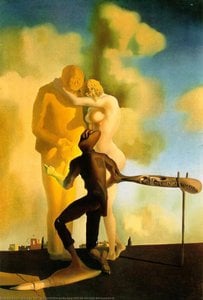
A Monumental Dreamscape: Exploring Salvador Dalí’s “Tower”

The painting "Tower," executed by Salvador Dalí in 1981, stands as a quintessential example of Surrealist artistry—a visual manifestation of the subconscious mind grappling with anxieties surrounding mortality and transformation. More than just an image, it's a meticulously crafted puzzle designed to provoke contemplation and elicit emotional resonance within the viewer. This essay delves into the multifaceted layers of meaning embedded within Dalí’s masterpiece, examining its stylistic innovations, technical prowess, and enduring significance in the broader context of Surrealist art history.

The Style and Technique: Precision Amidst Illusion

Dalí's signature style—characterized by meticulous realism juxtaposed with fantastical distortions—is powerfully evident in “Tower.” While seemingly rooted in observation, the painting abandons conventional perspective, creating a disconcerting sense of spatial ambiguity. The tower itself is rendered with painstaking detail, employing oil paints on canvas to achieve an astonishing level of textural accuracy. Bricks and concrete textures dominate the structure, grounding it in an industrial aesthetic that subtly contrasts with the dreamlike atmosphere surrounding it. However, this apparent solidity is undermined by Dali’s masterful manipulation of scale and proportion—the tower looms disproportionately large against the diminutive figure positioned at its base, furthering the unsettling feeling of imbalance.

Historical Context: Surrealism's Quest for Inner Truth

“Tower” emerged during Dalí’s prolific period following World War II, a time when Surrealist artists were actively engaged in exploring psychoanalytic theories championed by Sigmund Freud. Freud’s concept of the unconscious—the realm of repressed desires and irrational impulses—provided inspiration for Surrealists to liberate their imaginations from the constraints of logic and reason. Dalí's work aligns perfectly with this intellectual movement, reflecting a preoccupation with themes of decay, fragmentation, and metamorphosis – mirroring anxieties prevalent in post-war Europe. The painting’s imagery speaks directly to the existential concerns of its era, questioning notions of stability and confronting viewers with unsettling visions of vulnerability.

Symbolism: Fractured Time and Ascending Fear

The symbolism within “Tower” is rich and complex. The tower itself represents ambition, aspiration, and perhaps even obsession—a futile attempt to conquer time and achieve unattainable heights. Its staircase ascends relentlessly upward, symbolizing a perilous journey towards an unknown destination, fraught with obstacles and anxieties. The solitary figure at the base embodies human insignificance against the backdrop of monumental forces – representing fear and vulnerability in the face of overwhelming grandeur. Furthermore, the prominent sun—positioned high above the tower—suggests illumination but also casts long shadows, hinting at impending darkness and highlighting the duality inherent in Dalí’s artistic vision.

Emotional Impact: A Portrait of Psychological Tension

Ultimately, “Tower” succeeds in conveying a palpable sense of psychological tension. The painting's unsettling composition compels viewers to confront uncomfortable truths about mortality and the limitations of human endeavor. It evokes feelings of disorientation, apprehension, and perhaps even dread—a testament to Dalí’s ability to tap into primal emotions and translate them into unforgettable visual imagery. Its enduring appeal lies in its capacity to provoke introspection and stimulate dialogue about the nature of consciousness and the anxieties that underpin our deepest desires. “Tower” remains a powerful reminder that art can serve as a conduit for exploring the hidden recesses of the human psyche—a monumental dreamscape frozen in time, forever captivating those who appreciate its profound artistic merit.

Questions & Answers

How do I download the image of "Tower" by Salvador Dalí?

The image of "Tower" by Salvador Dalí can be downloaded from the artwork's Download page: a high-resolution digital image download.

What is the emotional tone of "Tower" by Salvador Dalí?

The emotional tone recorded for "Tower" by Salvador Dalí is mysterious. It summarizes the feeling the work expresses.

Is "Tower" by Salvador Dalí in the public domain, and why?

"Tower" by Salvador Dalí is still protected by copyright. Copyright terms are measured from the artist's death, and Salvador Dalí died in 1989.


Artist Biography

A Life Shaped by Shadows and Dreams

In the sun-drenched town of Figueres, Spain, a child arrived into a world already marked by a profound sense of loss. Nine months before his birth, an older brother, also named Salvador, had passed away, leaving behind a heavy shadow that would later haunt the artist's canvases with themes of duality and replacement. This early trauma, set against the backdrop of a strict father and a nurturing mother, forged a spirit that was simultaneously flamboyant and deeply intros Century-old memories of his brother would resurface decades later in works like Portrait of My Dead Brother.

His path toward the canvas began with formal training at the San Fernando Academy of Fine Arts in Madrid. While he initially drew strength from the traditions of the Renaissance masters and the light of the Impressionists, a restless curiosity drove him toward the edges of the known. A move to Paris in 1926 placed him in the center of a cultural earthquake. There, amidst the rebellious energy of Dadaism, he found the seeds of his own revolution. He did not merely join the Surrealist group; he transformed it through his invention of the paranoiac-critical method, a way to access the irrationality of the subconscious by inducing a state of controlled delirium.

The Language of the Subconscious

To look upon his work is to witness the precise rendering of the impossible. He possessed a technical skill that allowed him to paint dreams with the clarity of a photograph, making the most unsettling visions feel tangibly real. His canvases became populated by a private vocabulary of symbols: ants representing decay, eggs signifying new life, and the famous melting clocks that suggest the instability of time itself. In The Persistence of Memory, completed in 1931, these elements coalesce to explore the fragility of human perception.

His creative reach extended far beyond the limits of oil on canvas. He moved through various mediums with an almost frantic energy, producing:

  • Sculptures and objects d'art that brought his dreamscapes into three dimensions
  • Film collaborations, including work with figures like Alfred Hitchcock and Walt Disney
  • Graphic arts, jewelry design, and even stage sets for ballet
  • Illustrations for books and various commercial designs

As his career progressed, he moved toward a style some called "nuclear mysticism," where his interest in science and the Catholic faith began to merge with his earlier surrealist obsessions. This period saw him applying his meticulous draftsmanship to religious themes, as seen in The Sacrament of the Last Supper.

Gala and the Final Act

No account of his life is complete without mentioning Gala. She was much more than his wife; she was his muse, his business manager, and the steadying force behind his eccentric public persona. Their bond, which began in 1929, provided the emotional and structural foundation for his most prolific years. She appeared frequently in his paintings, often cast in roles of religious or maternal importance, such as in The Madonna of Port Lligat.

His later years were marked by a complex relationship with fame and controversy, yet his influence remained undeniable. He had become a cultural icon whose imagery leaked into fashion, advertising, and popular culture. When he passed away in 1989, he left behind a massive body of work that continues to challenge the boundaries between the waking world and the deep, dark recesses of the human mind.
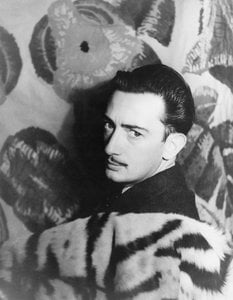
Salvador Dalí

Salvador Dalí

1904 - 1989 , Spain

Quick Facts

  • Full Name: Salvador Domingo Felipe Jacinto Dalí i Domènech
  • Nationality: Spanish
  • Date Of Birth: 1904
  • Date Of Death: 1989
  • Place Of Birth: Figueres, Spain
  • Notable Artworks:
    • Persistence of Memory
    • Juliet's Tomb
    • Mannequin
    • Landscape with Flies
    • The Angelus of Gala
  • Artistic Movement Or Style: Surrealism
  • Artists Who Influenced This Artist:
    • Cubism
    • Dada
    • Pablo Picasso
  • Artists Or Movements Influenced By This Artist:
    • Pop art
    • Contemporary artists
Explore artworks organized by themes, styles, and characteristics.